Illegal Gold Mining Surges Around Johannesburg as High Prices Fuel Shaft Incursions
A surge in gold prices is driving informal miners into abandoned shafts near Johannesburg, leaving communities grappling with scarred land and sinkholes as police interventions prove largely ineffective.
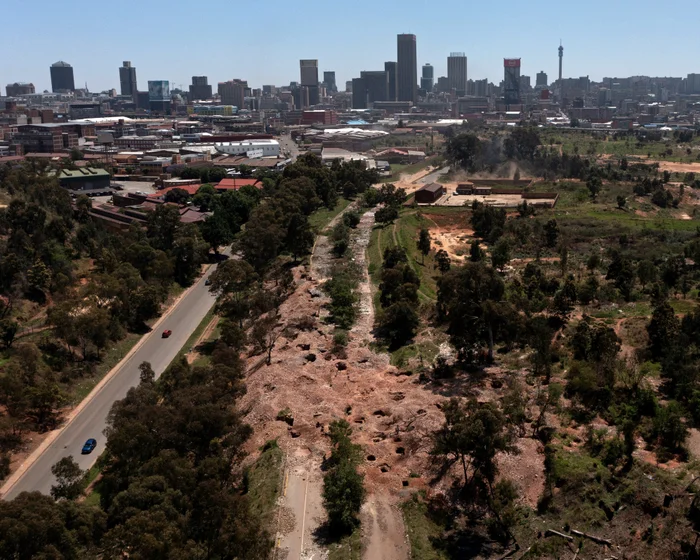
Dozens of informal miners arrived in late September to dig for gold across a dirt road from an animal welfare charity near Roodepoort, west of Johannesburg. The sudden surge in digging marks the latest escalation in a persistent wave of unauthorized extraction across the region's abandoned mine shafts. As the global price of gold continues to soar, unregulated mining operations have intensified across historical mining corridors, bringing dangerous excavation work directly to the edges of settled township communities.
The activity unfolded directly opposite the headquarters of Claw, short for Community Led Animal Welfare, a long-standing charity dedicated to caring for injured animals. Cora Bailey, who founded the organization and began treating animals in the townships around Roodepoort in 1991, has encountered illegal miners for more than three decades. Over that time, she has witnessed the informal trade evolve from occasional prospecting into an expansive and deeply entrenched subterranean economy.
Known across South Africa as zama zamas—a Zulu phrase that translates roughly to "taking a chance"—the miners venture into neglected shafts and surface deposits in search of leftover gold ore. The work is physically punishing and perilous, carrying severe risks of tunnel collapses, toxic gas exposure, and underground violence. Yet as bullion values hover near historic records, the promise of striking viable seams continues to draw waves of workers into hazardous underground passages.
The unchecked mining activity has left visible physical scars across the landscapes west of Johannesburg. Decades of formal industrial extraction, followed by years of chaotic artisanal burrowing, have weakened the surrounding soil and created deep surface craters. The proliferation of sinkholes and unstable terrain poses immediate threats to nearby residential areas, weakening foundational earth and damaging local transit routes.
For surrounding neighborhoods and civic organizations like Claw, the proximity of active digging sites complicates everyday life and community safety. Unregulated excavation often destabilizes local roads, tears up public spaces, and exposes open trenches that endanger domestic animals and local residents alike. Navigating the degraded terrain has become an ongoing trial for township populations living adjacent to disused mining properties.
Efforts by law enforcement to curb the informal operations appear largely ineffective in stemming the ongoing rush. Although police have launched periodic operations and targeted subterranean sites, unauthorized mining quickly resumes once patrols depart. The sheer scale of the abandoned shaft networks, combined with the difficulty of policing underground labyrinths, leaves security forces struggling to maintain control over the affected territories.
The recurring confrontations highlight how deeply economic pressures drive the illicit mining phenomenon. Analysts and observers point out that frontline diggers frequently become convenient scapegoats in public debates over crime and urban decay. While political discourse often focuses on arresting individual laborers at the bottom of the hierarchy, the broader international syndicates and market structures that profit from the illicit metal trade frequently escape meaningful accountability.
Compounding the crisis is the lingering legacy of South Africa's historic mining decline, which has left hundreds of shafts unrehabilitated and poorly secured. Decades after major commercial conglomerates ceased operations along the Witwatersrand basin, the state and corporate successors remain burdened by the vast cost of sealing and restoring damaged ground. In the absence of proper environmental remediation, these dormant sites remain magnet areas for informal prospectors seeking a livelihood.
With market prices for precious metals remaining elevated and structural economic pressures showing little relief, there is no end in sight for the drivers behind the illegal mining crisis. Without comprehensive policies that address environmental rehabilitation, community welfare, and root economic drivers, the cycle of degradation is expected to persist. For the communities bordering Roodepoort and Johannesburg's scarred outskirts, the ongoing struggle over gold will continue to shape the fragile landscape for the foreseeable future.
Primary source: The Guardian World. Newzly rewrites and structures source reporting for clarity; verify critical details at the original.