Illinois Prepares for Iowa Munitions Detonation as Officials Track Potential Lead Plume
Illinois emergency and environmental agencies placed border regions on alert ahead of the U.S. Army's detonation of 10,000 pounds of lead azide in Iowa, despite weather models suggesting wind will keep toxic fallout out of the state.
In this piece
Illinois officials mobilized air monitoring teams and issued public health guidance as the U.S. Army prepared to detonate 10,000 pounds of degraded lead azide…
Illinois environmental and public health agencies mobilized emergency response protocols this week as the U.S. Army prepared to detonate approximately 10,000 pounds of unstable explosives at a munitions facility in southeastern Iowa. While military atmospheric modeling indicates prevailing winds should carry toxic lead residue away from Illinois, state officials established specialized air monitoring networks along the Mississippi River border as a precaution. State leaders emphasized that potential shifts in local weather patterns warranted immediate readiness.
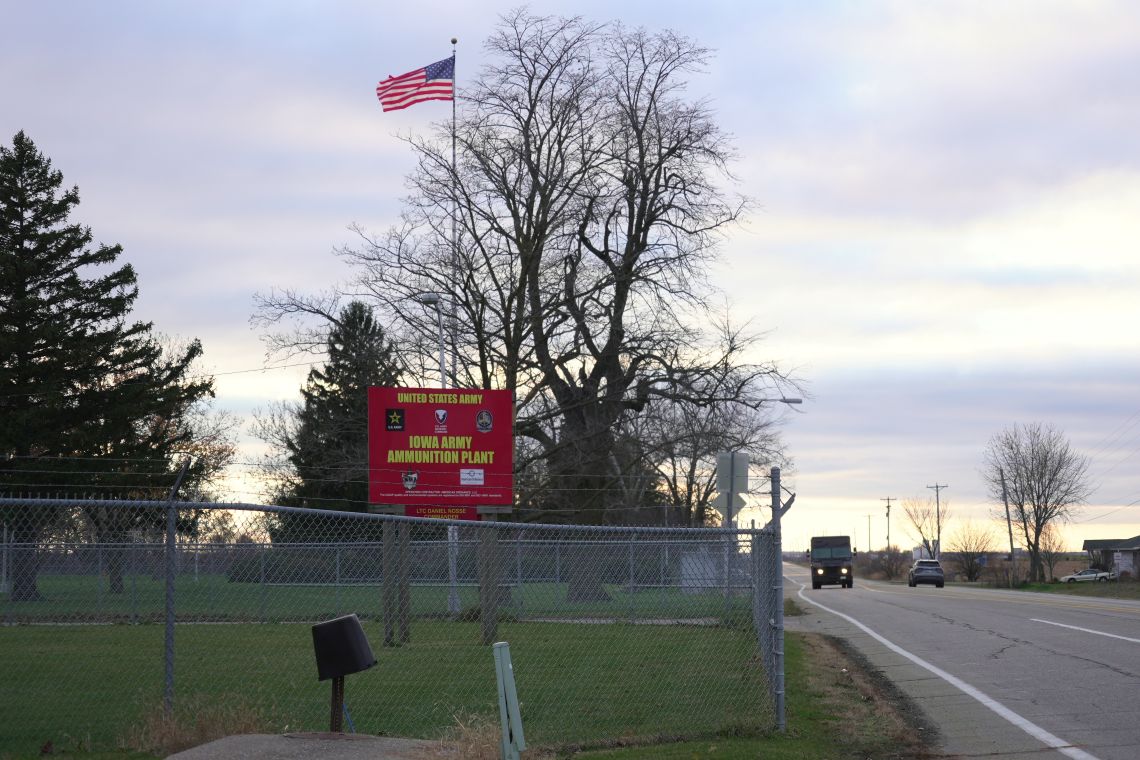
The planned operation involves the controlled open-air detonation of degraded lead azide stored at the Iowa Army Ammunition Plant in Middletown, located roughly ten miles west of the Illinois state line. Military officials determined the shock-sensitive compound, historically used in munitions primers and detonators, had deteriorated to the point where safe transport or chemical neutralization was no longer feasible. Federal commanders concluded that an on-site controlled blast remained the safest available method to eliminate the risk of accidental explosion.
The impending detonation triggered intense regional concern because the chemical breakdown of lead azide disperses microscopic particulate lead into the atmosphere. Public health experts warn that airborne lead poses severe health hazards, especially for infants, young children, and pregnant women, as even low-level exposure can cause lasting neurological and cognitive impairment. Although military planners timed the blast to minimize off-site fallout, nearby communities expressed alarm over the release of heavy metals into the open air.
According to updated trajectory models released by the Army, localized wind currents were projected to direct the post-blast plume toward rural sections of southeastern Iowa and northeastern Missouri. Meteorologists tracking the conditions noted that northeasterly breezes would effectively shield communities in western Illinois from direct airborne fallout. Despite those favorable projections, Illinois regulators cautioned that unpredictable thermal drafts along the river corridor could still alter dispersal patterns.
In response to the operation, Governor JB Pritzker directed the Illinois Environmental Protection Agency and the Illinois Department of Public Health to coordinate continuous oversight with emergency management officials. The state deployed mobile air sampling units across western counties to capture real-time particulate readings before, during, and after the scheduled blast. Emergency coordinators also opened direct communication channels with county health administrators and municipal first responders.
State health officials issued targeted advisories for western border areas, including Hancock and Mercer counties, detailing precautionary steps for local residents. The guidance recommended that individuals living near the river close windows, turn air systems to recirculate, and avoid outdoor recreation during the blast window if wind patterns shifted. Childcare providers and schools in the region were also advised on inspecting outdoor play equipment and washing surfaces.
The detonation plan drew sharp rebukes from Illinois political leaders who voiced frustration over what they described as inadequate federal notice and insufficient intergovernmental coordination. U.S. Senators Dick Durbin and Tammy Duckworth joined state officials in questioning the military's initial transparency and demanded comprehensive environmental oversight throughout the disposal process. Lawmakers argued that neighboring jurisdictions should have been fully integrated into the risk assessment long before final operational orders were issued.
The path to the detonation followed weeks of contentious legal maneuvering and community challenges aimed at halting the open burn. Environmental advocacy organizations had previously secured a temporary stay from the 8th U.S. Circuit Court of Appeals, arguing that the Army failed to thoroughly examine contained destruction alternatives. However, federal judges ultimately cleared the military to proceed after finding that the deteriorating explosive presented an immediate hazard on base.
Following the completion of the blast, Illinois environmental teams plan to analyze filter samples collected from field monitors to verify that airborne lead thresholds were not exceeded. State authorities reiterated that monitoring data will be made public once laboratory processing concludes, ensuring accountability for border residents. Meanwhile, regional officials continue to press the Department of Defense for permanent reforms regarding how hazardous munitions stockpiles are decommissioned near populated areas.
Primary source: Google News Illinois. Newzly rewrites and structures source reporting for clarity; verify critical details at the original.