In Canada, Quebec’s Religious Symbols Ban Faces Supreme Court Test
The Supreme Court of Canada is reviewing Quebec’s Bill 21, testing the constitutional limits of the controversial secularism law that restricts religious symbols for public sector workers and impacts Muslim women nationwide.
In this piece
Canada’s top court is weighing the constitutionality of Quebec’s Bill 21, a contentious secularism law barring public workers in authority from wearing…
The Supreme Court of Canada is examining Quebec's controversial religious symbols law, widely known as Bill 21, in a pivotal legal challenge with nationwide implications for civil liberties and minority rights. The legislation prohibits certain public servants in positions of authority from wearing visible religious garments and symbols while on duty. The top court's consideration marks a critical juncture in an enduring debate over secularism and constitutional protections across Canada.
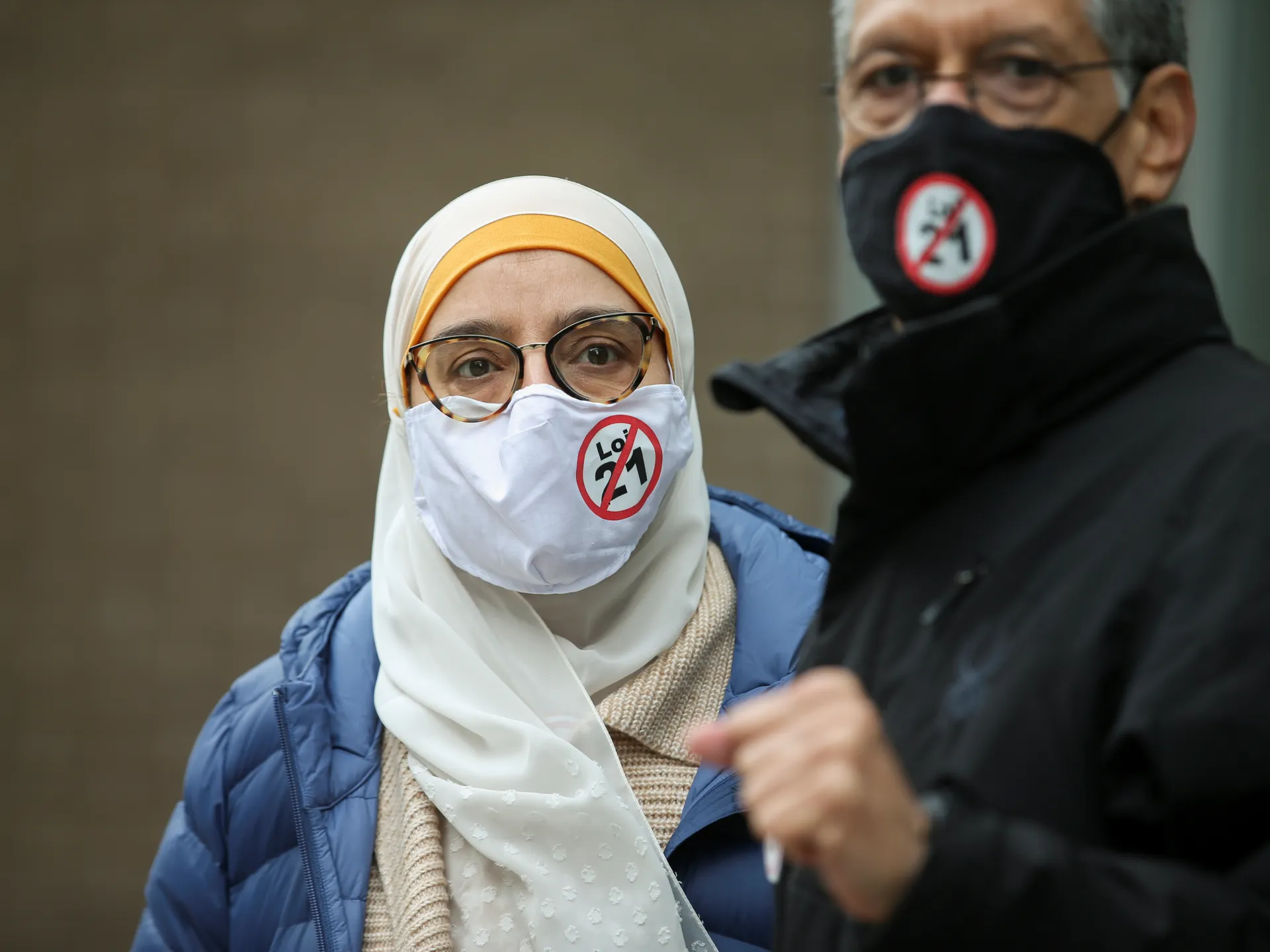
At the heart of the proceedings is the far-reaching impact of the provincial law on public sector workers, particularly Muslim women who wear the hijab. Under the statute, affected professionals including public school teachers, police officers, and government prosecutors cannot display religious symbols on the job. Critics emphasize that this restriction disproportionately constrains career opportunities and employment mobility for religious minority communities.
Quebec enacted the legislation under the banner of state secularism, arguing that public institutions must maintain absolute religious neutrality in their visual representation. Supporters of the measure contend that individuals exercising coercive or educational authority on behalf of the state should project an entirely non-denominational appearance. Proponents have framed the ban as a necessary continuation of Quebec's historical push toward secular civic governance.
Conversely, civil liberties organizations, legal advocates, and affected workers argue that the prohibition infringes upon fundamental freedoms of religion and equality. Many affected women have reported feelings of marginalization and professional exclusion, noting that the law forces them to choose between their faith and their chosen careers. Community representatives have highlighted that the law significantly influences where Muslim women and other religious minorities feel welcome to live and work.
The legal battle over Bill 21 has traversed multiple provincial court levels, generating fierce constitutional scrutiny. Central to the judicial examination is Quebec's preemptive invocation of the Canadian Charter of Rights and Freedoms' notwithstanding clause. That controversial constitutional mechanism allows provincial legislatures to temporarily override certain protected rights and insulate domestic statutes from judicial invalidation.
Because the notwithstanding clause was utilized to shield the secularism law, the legal challenge poses profound systemic questions for Canada's constitutional framework. Judicial review must address the permissible boundaries and scope of legislative overrides when fundamental rights are curtailed. Legal analysts observe that the Supreme Court's assessment could redefine the balance between parliamentary supremacy and the judicial protection of minority communities nationwide.
Beyond the courtroom, the law has exposed deep political and cultural divisions both within Quebec and between the province and the rest of Canada. Federal leaders and human rights advocates have expressed deep concern over state-mandated restrictions on personal religious expression. Meanwhile, Quebec provincial authorities have repeatedly asserted their sovereign jurisdiction over social and cultural policy, rejecting external intervention.
For public sector professionals on the ground, the continued enforcement of the law has created sustained professional and personal uncertainty. Some educators and civil servants have relocated to other Canadian provinces to continue their careers without compromising their religious practices. Others have opted out of public sector roles entirely, shifting to private institutions where the restrictions do not apply.
The Supreme Court's deliberation represents the culmination of years of grassroots campaigning and constitutional litigation brought forward by civil society groups. As the justices weigh the statutory arguments, observers emphasize that the ultimate determination will carry enduring consequences for Canadian jurisprudence. The final decision will establish whether provincial secularism mandates can withstand top-tier judicial scrutiny or if constitutional limits will redefine their application.
Primary source: Al Jazeera. Newzly rewrites and structures source reporting for clarity; verify critical details at the original.