India's Quest for Global Gaming Hits Faces Capital and Creative Hurdles
Despite boasting hundreds of millions of players and world-class technical talent, India's game development sector struggles with low monetization, a drought of patient capital, and leadership gaps as it attempts to build global hits.
In this piece
India remains one of the world's largest mobile gaming markets by downloads, but domestic studios have yet to produce globally recognized original titles.…
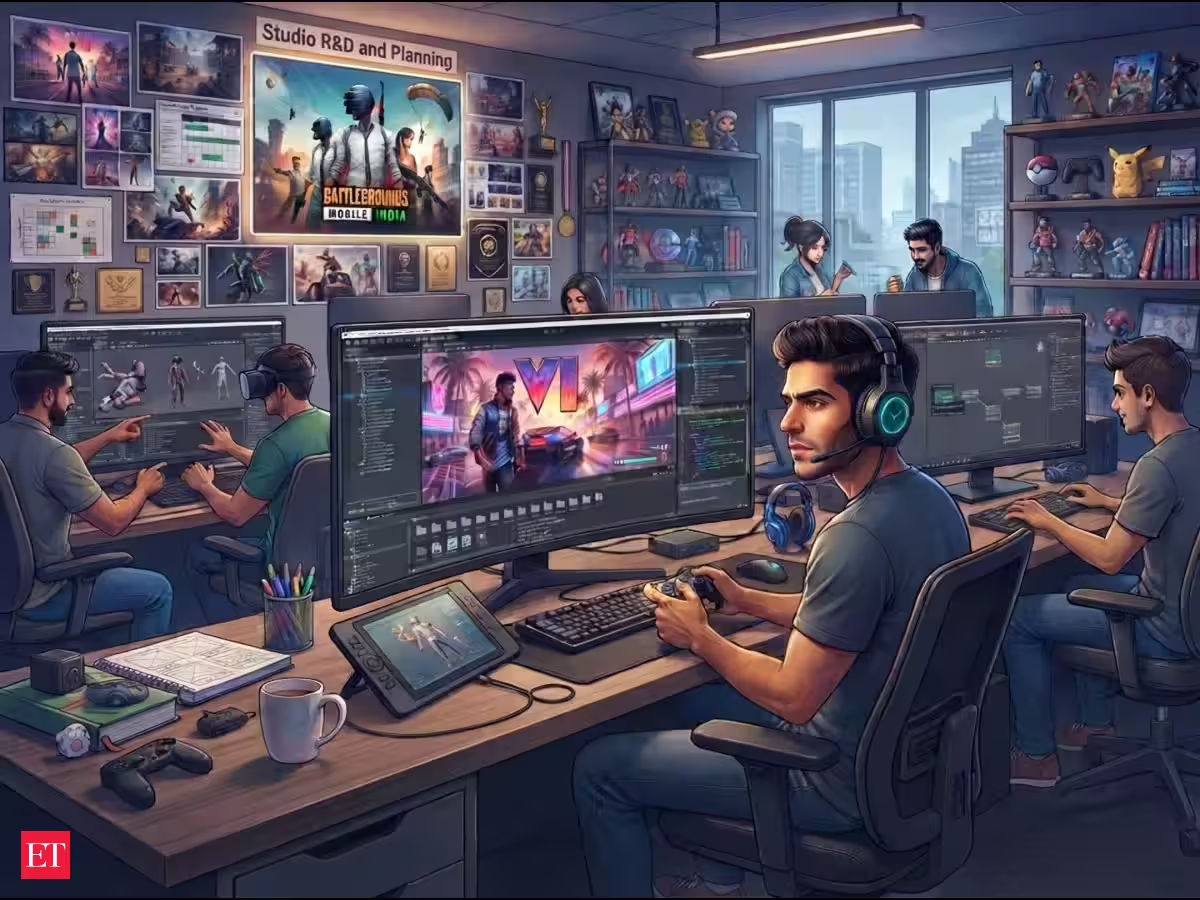
India's ambitions to become a global hub for video game development under the Make-in-India banner continue to face substantial hurdles, even as the country cements its status as one of the world's largest consumer markets for interactive entertainment. Despite hosting over 500 million active players and generating billions of mobile downloads each year, domestic studios have yet to produce an internationally acclaimed hit franchise capable of rivaling global blockbusters like Grand Theft Auto or PUBG.
The shortfall is not due to an absence of technical talent or engineering infrastructure. Thousands of Indian programmers, digital animators, and software engineers already contribute extensive backend code and complex visual assets to major Western releases through local branches of multinational developers. However, the domestic industry remains largely confined to back-office execution and support roles rather than pioneering original intellectual property from inception to release.
A primary economic bottleneck stems from the severe disparity between user volume and commercial returns within the domestic market. While domestic download figures consistently break records, India's average revenue per user remains anchored around two dollars, far behind established markets in North America, Europe, and East Asia. The vast majority of domestic players favor free-to-play mobile titles and show sharp reluctance toward upfront purchases or high-tier microtransactions, squeezing local margins.
That low monetization profile has exacerbated a persistent funding deficit for ambitious domestic game developers. Building high-end productions requires years of heavy capital expenditure, massive production teams, and rigorous multi-stage testing before seeing any financial return. Traditional venture capital firms operating in India have typically preferred asset-light software or short-horizon returns, leaving a conspicuous drought of patient capital needed to sustain multi-year game development cycles.
For years, available domestic investment flowed heavily toward casual card games, fantasy sports, and real-money gaming formats rather than narrative-driven PC or console titles. Those products offered immediate user acquisition and rapid monetization loops, pulling engineering and design talent away from long-term creative worldbuilding. When regulatory tightening and shifting tax regimes impacted real-money platforms, the broader ecosystem was left without a mature pipeline of mid-core and core studios ready to fill the vacuum.
Beyond capital constraints, industry insiders point to an acute shortage of senior creative leadership with hands-on experience directing complex titles. While local teams excel in modular tasks like 3D modeling, environment art, and quality assurance, few domestic professionals have steered an original large-scale project across full production, narrative design, sound engineering, and post-launch live operations. This creative director deficit creates execution risks that make both domestic and international financiers hesitant to greenlight large projects.
Distribution and global marketing present another steep barrier for homegrown developers seeking to break into foreign territories. Navigating console certification with major platform holders, managing community relations across diverse language markets, and competing against well-funded international advertising campaigns demand specialized publishing expertise that few Indian studios possess internally. Without strategic global publishing partners, promising Indian titles struggle to gain visibility on storefronts dominated by legacy Western and East Asian franchises.
In response to these structural challenges, momentum is beginning to recalibrate around more realistic developmental milestones. Industry associations and studio founders are increasingly advocating for high-quality intermediate titles, often termed double-A games, which require modest budgets but feature distinctive art directions and focused mechanics. Concurrently, government initiatives promoting the animation, visual effects, gaming, and comics sector aim to bolster grassroots incubation and institutional training.
International publishers are also testing the waters by establishing local publishing divisions and incubators to discover indigenous talent tailored for global export. While the transition from a service-driven gaming economy to an intellectual property powerhouse will require persistent capital and creative maturation, stakeholders maintain that targeted projects could pave the way for India's first genuine global breakthrough.
Primary source: Economic Times. Newzly rewrites and structures source reporting for clarity; verify critical details at the original.