Indian Tourist Killed After Two Helicopters Collide Near Everest Base Camp
An Indian tourist has died after two helicopters collided just metres from the ground while attempting to touch down at the same spot near Everest base camp.
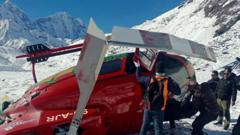
An Indian tourist has been killed after two helicopters collided near Mount Everest base camp while attempting to touch down at the same location. The two aircraft crashed just metres above the ground, according to initial reports from BBC World. Emergency responses were mobilized immediately following the low-altitude impact in the remote mountain area.
Preliminary information indicates that both helicopters were maneuvering toward the same landing zone when the accident occurred. As the aircraft converged near the ground, they made contact and crashed onto the rugged alpine terrain. Officials confirmed that an Indian national lost their life, while full details regarding injuries to other passengers and crew members were not immediately clear.
Helicopter flights around Everest base camp serve as critical transit links for mountaineers, trekkers, and essential supply chains. Given the roadless terrain and extreme elevation of the Khumbu region, chartered rotorcraft frequently transport gear, provide medical evacuations, and ferry tourists seeking views of the world's highest peak. Landing zones in these high valleys are typically compact, consisting of small cleared pads or gravel patches on glacial moraine.
During peak trekking and climbing periods, airspace around the Everest massif experiences substantial congestion. Multiple commercial operators run daily shuttle flights through narrow Himalayan valleys where unpredictable winds and rapidly shifting weather are common. Operating under visual flight rules, pilots must maintain constant visual awareness and coordinate approaches carefully in restricted airspace.
Touching down at extreme altitudes presents severe aerodynamic challenges for helicopter operations. Thinner air at high elevations diminishes engine output and reduces rotor blade lift, leaving pilots with reduced power margins during low-speed hover and landing maneuvers. The physical constraints of mountain helipads require precise timing and separation when multiple aircraft approach simultaneously.
Aviation safety in the Himalayas has long faced heightened scrutiny from global travel groups and aviation regulators. Because forward landing clearings lack traditional air traffic control towers, pilots rely heavily on direct radio communication and visual tracking to manage landing sequencing. When flight traffic surges, coordination demands on crews operating near forward camps increase significantly.
The accident highlights persistent concerns surrounding aerial tourism and transport logistics across high-altitude destinations. India represents one of the largest sources of travelers to the Himalayas, with growing numbers utilizing helicopter charters to bypass arduous multi-day treks. A fatal collision at such a prominent international destination draws renewed focus to commercial safety standards and pad management.
Official confirmation regarding technical conditions, weather factors, and communications prior to the crash will depend on forthcoming aviation inquiries. Crash investigators routinely examine aircraft maintenance logs, pilot flight hours, and local landing procedures to establish the sequence of events. At present, authorities have not issued detailed statements regarding mechanical factors or potential contributing causes.
In the aftermath of the crash, regional civil aviation officials are expected to review operational protocols and airspace separation rules at forward landing sites near Everest base camp. Measures may include revised coordination procedures for high-altitude pads to prevent overlapping approaches. The fatal incident serves as a stark reminder of the unforgiving environment and narrow safety margins inherent to Himalayan rotary aviation.
Primary source: BBC World. Newzly rewrites and structures source reporting for clarity; verify critical details at the original.