world·Jammu and Kashmir·Srinagar District
Jammu and Kashmir Leaders Condemn Police Summons to Cleric Over Vande Mataram Objection
Prominent political and religious leaders across Jammu and Kashmir have sharply condemned police summoning Islamic scholar Maulana Rehmatullah Qasmi after he raised theological objections to playing Vande Mataram at an official Waqf Board event.
In this piece
Political leaders and clergy in Jammu and Kashmir have voiced strong condemnation after police summoned revered Islamic scholar Maulana Rehmatullah Qasmi for…
Political and religious figures across Jammu and Kashmir have voiced strong condemnation following the police summoning of respected Islamic scholar Maulana Rehmatullah Qasmi. Authorities questioned the prominent cleric after he publicly objected to the singing of the national song Vande Mataram during an official event organized by the Jammu and Kashmir Waqf Board in Srinagar.
Maulana Qasmi, who heads Darul Uloom Raheemiyyah in Bandipora and serves on the executive body of the Muttahida Majlis-e-Ulama, was directed to appear before police officials in Srinagar. The summons triggered an immediate wave of indignation across the Kashmir Valley, where regional leaders described the police intervention as administrative overreach against a venerable religious institution.
The controversy stems from a gathering hosted by the Waqf Board on November 23, during which organizers played all stanzas of the song. Maulana Qasmi and other clerics in attendance voiced reservations over the performance, asserting that certain verses conflicted with core monotheistic tenets of Islamic theology.
The Muttahida Majlis-e-Ulama, an influential conglomerate of major Islamic bodies in the region, subsequently underscored that while citizens maintain deep respect and loyalty for their nation, attributing divinity to the homeland runs contrary to the concept of Tawheed. Religious scholars emphasized that freedom of religion protects individuals from being compelled to recite texts that contradict their fundamental theological convictions.
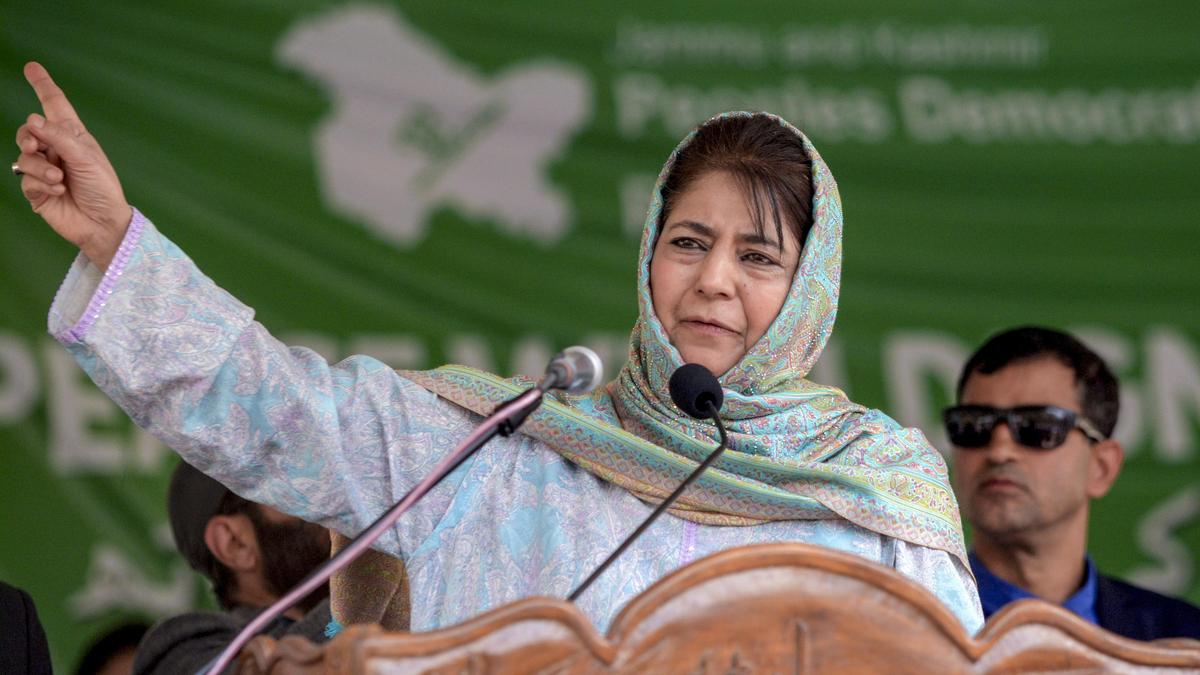
The police action quickly drew fierce criticism from political parties across the union territory. Peoples Democratic Party president Mehbooba Mufti denounced the summons as an overt attempt to harass religious figures and stifle peaceful expression, asserting that subjecting a revered scholar to police questioning undermines constitutional safeguards.
Srinagar Member of Parliament Aga Syed Ruhullah Mehdi of the National Conference similarly condemned the move, demanding an immediate public explanation regarding the legal justification for the interrogation. Mehdi warned that using the law enforcement apparatus against respected scholars alienates local populations and creates an atmosphere of fear and coercion.
Valley chief cleric and Mirwaiz Umar Farooq also expressed profound alarm over the growing official scrutiny faced by Islamic leaders who address faith-related grievances. Mirwaiz alleged that authorities placed him under house detention to prevent him from voicing solidarity and speaking publicly on the widening row during congregational prayers.
The episode highlights persistent ideological friction in Jammu and Kashmir regarding the enforcement of national symbols and patriotic recitations at state-administered religious institutions. Critics note that official mandates under the Waqf administration have increasingly collided with local customs, turning ceremonial functions into delicate political flashpoints.
As community leaders call for an end to administrative pressure, regional representatives have urged authorities to withdraw arbitrary proceedings and respect religious autonomy. Observers note that how the administration navigates the fallout will serve as an important gauge of free expression and communal dialogue in the sensitive region.
Primary source: Google News Jammu and Kashmir. Newzly rewrites and structures source reporting for clarity; verify critical details at the original.