Jammu and Kashmir Leaders Condemn Police Summons to Cleric Who Opposed Vande Mataram at Waqf Event
Political leaders across Jammu and Kashmir have sharply condemned police for summoning prominent Islamic scholar Maulana Rahmatullah Mir Qasmi after he objected to the playing of Vande Mataram at an official Waqf Board gathering in Srinagar.
In this piece
Mainstream political leaders in Jammu and Kashmir, including former Chief Minister Mehbooba Mufti and MP Aga Syed Ruhullah Mehdi, have condemned the police…
Political leaders across Jammu and Kashmir have sharply condemned authorities after police summoned prominent Islamic scholar Maulana Rahmatullah Mir Qasmi for questioning. The summons followed public objections raised by the cleric regarding the playing of the national song Vande Mataram at a government-backed Waqf Board gathering in Srinagar. Regional political parties described the law enforcement action as an alarming attempt to silence independent religious scholarship.
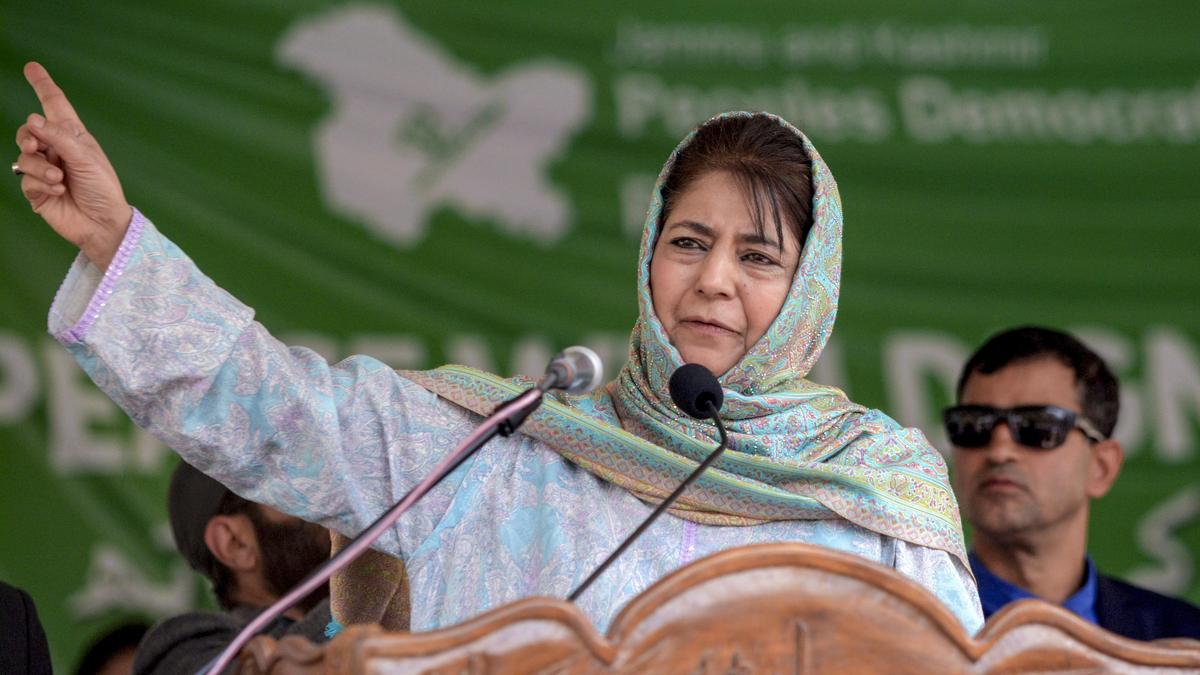
Peoples Democratic Party president and former Jammu and Kashmir Chief Minister Mehbooba Mufti led the criticism, warning that the administration is systematically targeting faith leaders. Mufti stated that the Bharatiya Janata Party's agenda to saffronise Islamic scholars and bring religious voices under its political control has become unmistakable. She warned that state machinery is increasingly deployed to compel conformity among traditional institutions.
Mufti further emphasized that intimidating an elderly, widely respected religious figure constitutes an unacceptable crossing of red lines. She argued that scholars have a constitutional and moral right to express theological viewpoints without fear of police intimidation or administrative retribution.
National Conference leader and Srinagar Member of Parliament Aga Syed Ruhullah Mehdi also strongly denounced the summons, characterizing it as unjustified harassment. Mehdi questioned the legal authority under which the police initiated questioning against a religious figure for discussing spiritual principles. He maintained that using coercive state apparatus against scholars reveals growing intolerance toward constitutional freedoms in the region.
The controversy originated earlier this month during an official Waqf Board function held in Srinagar, which was attended by Union Minister for Minority Affairs Kiren Rijiju. During the proceedings, organizers played the full version of Vande Mataram in the presence of attending clerics, scholars, and administrative officials. The inclusion of the song quickly sparked intense debate across the Kashmir Valley over protocol and religious doctrine.
Prominent religious conglomerate Muttahida Majlis-e-Ulama, which represents various Islamic schools of thought in Jammu and Kashmir, raised serious theological concerns regarding the event. The body pointed out that certain stanzas of the song conflict directly with the Islamic concept of Tawheed, the fundamental belief in the indivisible oneness of God. Religious leaders stressed that compelling or pressuring believers to participate in such recitations infringes upon basic freedom of religion.
The public outcry intensified after video footage of the gathering circulated widely on social media platforms across the Union Territory. Several clerics who had been present on the stage subsequently issued clarifications and held public prayers of repentance, explaining that they were unaware the song would be played. In that charged atmosphere, Maulana Qasmi, who heads the renowned Darul Uloom Raheemiyyah seminary, emerged as an outspoken voice defending theological boundaries.
Political analysts point out that the episode underscores simmering unease in Jammu and Kashmir over official interventions into religious and cultural life. Since the constitutional changes of August 2019, regional parties have frequently accused central authorities of attempting to homogenize cultural practices and reshape indigenous institutions. The summoning of a prominent rector has amplified fears that administrative powers are being wielded to enforce political narratives.
The controversy continues to resonate across the Kashmir Valley, with regional representatives demanding an immediate end to the harassment of faith leaders. As calls mount for police to drop all inquiries, political observers note that the issue has created a rare unified front among regional parties determined to protect clerical independence.
Primary source: The Hindu. Newzly rewrites and structures source reporting for clarity; verify critical details at the original.