Jharkhand's Legacy Must Not Be Separated From Birsa Munda's Vision
Jharkhand's modern governance and developmental trajectory cannot be divorced from the foundational vision of Bhagwan Birsa Munda, whose historic struggle for indigenous autonomy defined the state's creation, an analysis shows.
In this piece
An analysis published by The Indian Express emphasizes that Jharkhand's political and economic trajectory must remain anchored to the principles of Bhagwan…
Jharkhand's contemporary political trajectory and developmental identity cannot be divorced from the foundational ideals championed by legendary tribal leader Bhagwan Birsa Munda, according to an analytical assessment published by The Indian Express. The commentary underscores that viewing the state through a purely administrative lens risks eroding the constitutional and moral mandate upon which it was established.
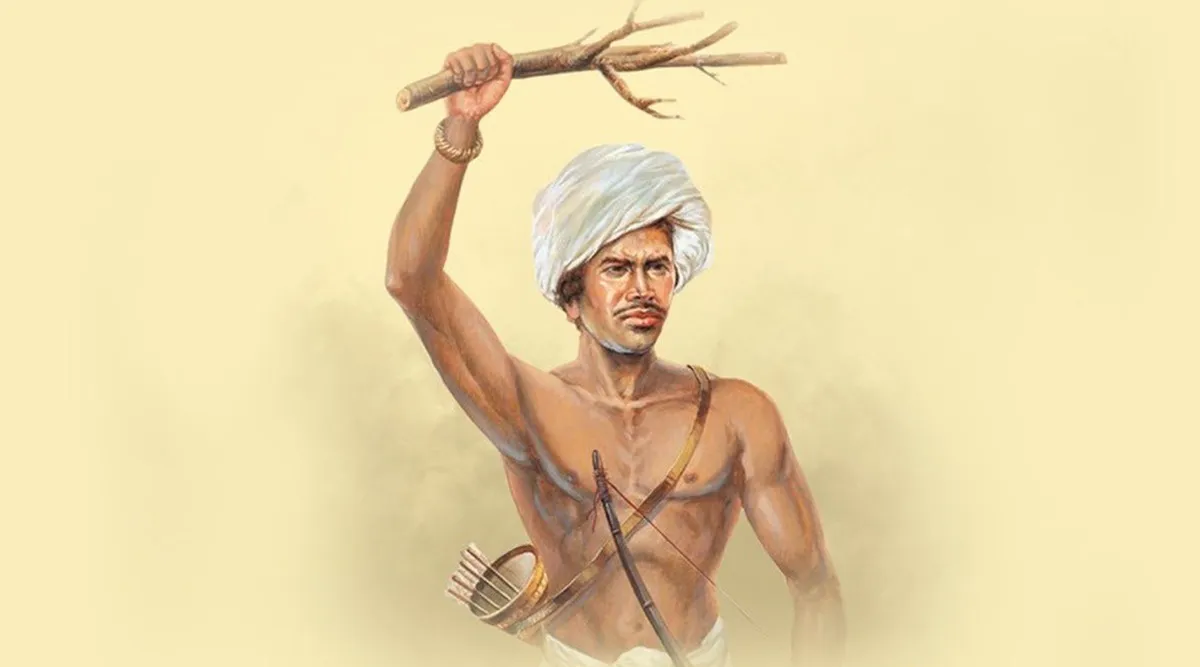
Carved out of Bihar on November 15, 2000, Jharkhand was intentionally inaugurated on the birth anniversary of Birsa Munda, the revered nineteenth-century folk hero known as Dharti Aaba, or Father of the Earth. The timing of the state's creation symbolized the culmination of a decades-long struggle for indigenous autonomy, cultural dignity, and administrative self-governance.
Birsa Munda led the historic Ulgulan, or Great Tumult, against British colonial authorities and exploitative intermediaries during the late 1890s. His movement was anchored in the preservation of traditional tribal land systems, indigenous self-determination, and the enduring ethos of jal, jungle, and jameen—water, forest, and land.
The resistance spearheaded by Birsa Munda directly prompted colonial authorities to enact the Chotanagpur Tenancy Act of 1908, a landmark statute designed to restrict the alienation of tribal lands. Together with the Santhal Pargana Tenancy Act, these frameworks established critical statutory guardrails to protect indigenous communities from predatory dispossession and agrarian displacement.
In recent decades, however, public debates across Jharkhand have intensified over whether economic expansion and resource extraction have compromised these founding principles. As one of India's most mineral-rich states, Jharkhand routinely faces friction between large-scale industrialization and the statutory land protections guaranteed to Adivasi populations.
Commentary in The Indian Express points out that discussions surrounding tribal identity, forest governance, and special legal protections remain central to the state's civic fabric. Ongoing political debates over land acquisition rules and local self-rule frequently test the resilience of protective measures originally inspired by Birsa Munda's anti-exploitation crusade.
Beyond economic concerns, the legacy of Birsa Munda represents an essential spiritual and cultural anchor for indigenous heritage across eastern India. Analysts observe that reducing his philosophy to symbolic ceremonial tributes undermines the substantive demands of tribal welfare, linguistic preservation, and grassroots democratic empowerment.
The commentary argues that regional policymakers and civic institutions must measure development progress against the lived reality of tribal communities rather than macroeconomic indicators alone. Ensuring community consent, safeguarding natural resources, and reinforcing educational and healthcare access are framed as central obligations to honoring the state's origin story.
As Jharkhand navigates future demographic and industrial shifts, observers maintain that Birsa Munda's call for Abua Disum, Abua Raj—our land, our rule—remains an indispensable constitutional compass. Upholding that standard will ultimately determine whether statehood fulfills its historic commitment to equity, indigenous dignity, and sustainable stewardship.
Primary source: Google News Jharkhand. Newzly rewrites and structures source reporting for clarity; verify critical details at the original.