Judge Extends Order Blocking Trump's D.C. Memorial Arch
A federal judge in Washington extended an order blocking groundbreaking on a proposed 250-foot memorial arch near Arlington National Cemetery, keeping the Trump administration project on hold through early December.
In this piece
U.S. District Judge Tanya Chutkan extended a temporary restraining order blocking construction of Donald Trump's proposed 250-foot memorial arch near Arlington…
A federal judge in Washington, D.C., has extended a temporary restraining order blocking the Trump administration from breaking ground on a proposed 250-foot memorial arch near Arlington National Cemetery. U.S. District Judge Tanya Chutkan granted a 14-day extension, keeping the construction freeze in place as the court weighs whether to impose a longer-term preliminary injunction against the monument.
Judge Chutkan determined that the core legal circumstances had not changed since she initially halted preliminary work on November 5. The two-week extension preserves the status quo until December 3, providing the court with additional time to review extensive filings submitted by multiple parties challenging the initiative.
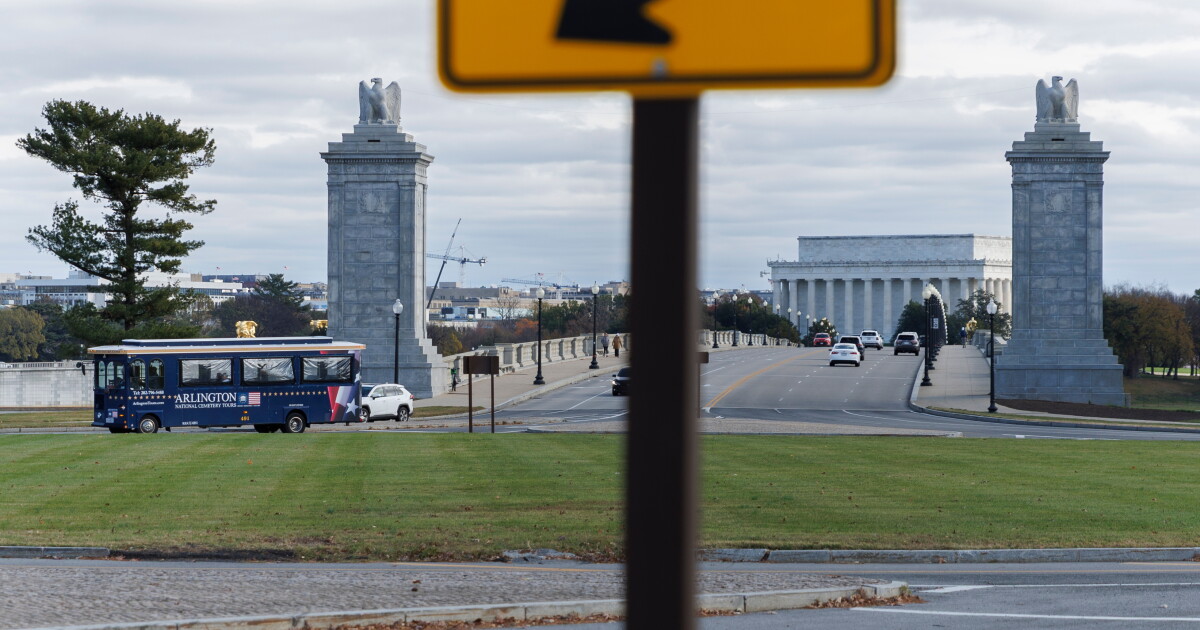
The planned structure, championed by President Donald Trump as a centerpiece for the nation's 250th anniversary celebrations, was designed as a massive triumphal arch situated at Memorial Circle. Backers envisioned the monument as a grand entryway celebrating American history, intended to stand alongside major federal landmarks lining the capital's ceremonial corridors.
The project quickly met fierce opposition from local governments, historic preservationists, and civil society groups, prompting a wave of lawsuits in federal court. Challengers include the District of Columbia, the Commonwealth of Virginia, and veteran organizations, all arguing that the administration moved to begin construction without completing legally required environmental and historic reviews.
Prominent opposition also arose from members of the Kennedy family, who voiced deep concerns over the monument's placement near the gates of Arlington National Cemetery. Critics argued that the 250-foot arch would dominate the surrounding landscape, casting long shadows over solemn burial grounds and obstructing sightlines toward President John F. Kennedy's Eternal Flame.
Plaintiffs contend that federal authorities attempted to bypass the National Environmental Policy Act and standard advisory protocols established by the National Capital Planning Commission and the Commission of Fine Arts. The legal challenges claim that fast-tracking groundbreaking on federal parkland strips the public and local jurisdictions of standard review periods and statutory oversight.
The ruling in the District of Columbia coincides with separate legal resistance across the Potomac River in Virginia. In Alexandria, U.S. District Judge Leonie Brinkema signaled plans to grant an indefinite preliminary injunction in response to a lawsuit brought by the Arlington County Board, which cited serious concerns regarding traffic congestion, local infrastructure strain, and public safety.
Government attorneys have defended the administration's authority to initiate preparatory activities on federal land, arguing that initial surveys and groundwork would not inflict irreparable harm. Proponents of the arch maintain that commemorating the United States semiquincentennial requires ambitious public works and that preliminary steps should proceed while procedural reviews advance.
The temporary freeze ensures that no bulldozers or heavy machinery can disturb Memorial Circle while Judge Chutkan formulates a ruling on the broader preliminary injunction. With overlapping federal court challenges now pending in both Washington and Virginia, the administration faces significant legal hurdles before any construction on the commemorative arch can officially begin.
Primary source: Google News District of Columbia. Newzly rewrites and structures source reporting for clarity; verify critical details at the original.