Karnataka Contractual Healthcare Workers Demand Permanent Government Jobs
Nearly 28,000 contractual healthcare workers under the National Health Mission in Karnataka are pressing the state government for permanent absorption, urging leaders to fulfill manifesto promises and adopt regularisation models seen in neighbouring states.
In this piece
Around 28,000 contractual employees under Karnataka's National Health Mission are demanding regularisation and permanent government jobs. The workers cite…
Nearly 28,000 contractual healthcare workers employed under the National Health Mission across Karnataka are intensifying their demand for permanent job regularisation from the state government. Represented by the Karnataka State Health and Family Welfare Department NHM Contract Employees Association, the workers have called on the administration to end years of employment uncertainty and provide stable civil service status.
The workforce has pointed to explicit commitments outlined in the ruling Congress party's election manifesto, alongside subsequent verbal assurances delivered by senior leadership. Chief Minister Siddaramaiah had previously indicated that contractual staff grievances would be addressed, raising expectations among personnel who have waited years for official absorption into the state health machinery.
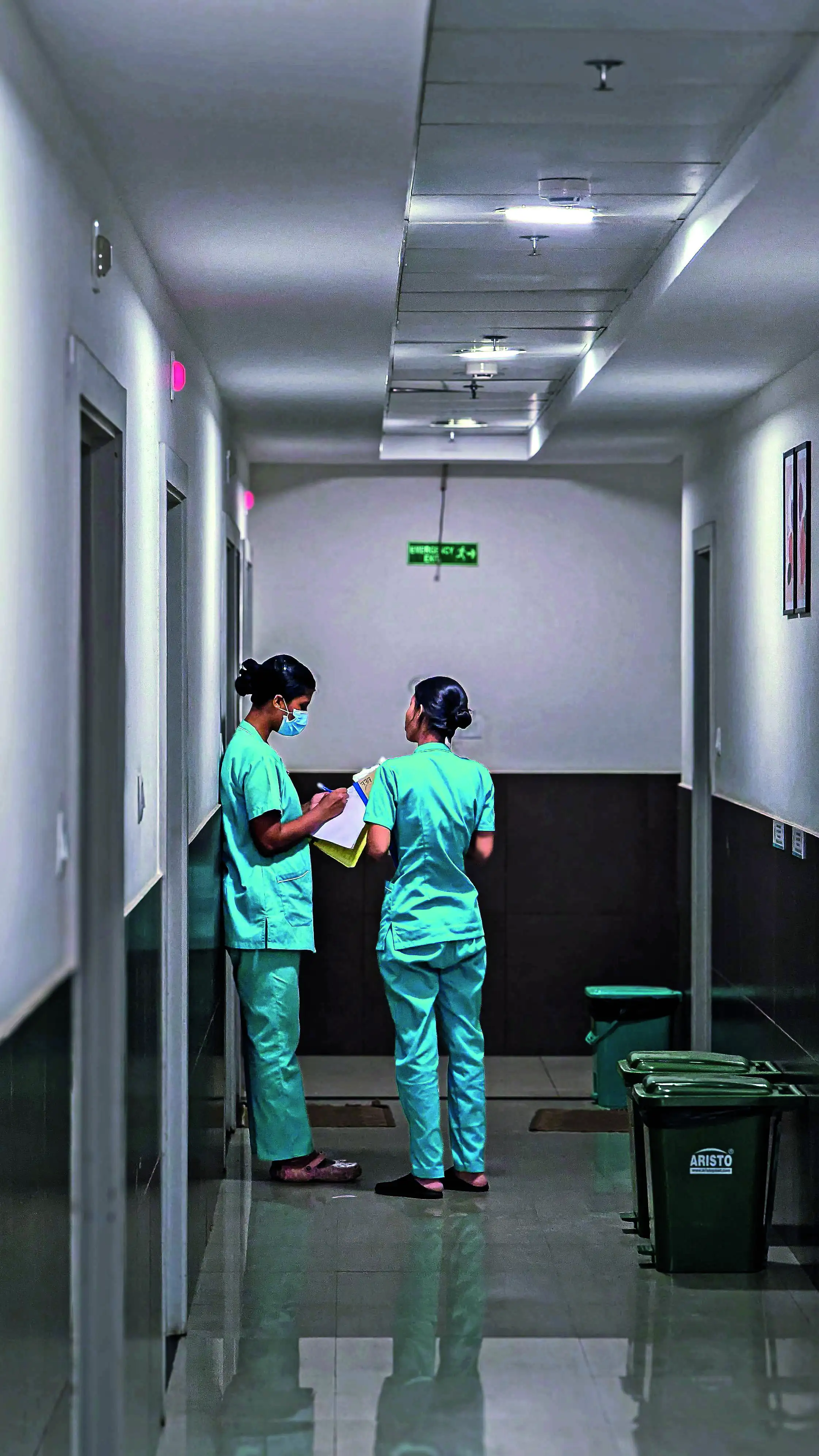
These contractual employees form the backbone of Karnataka's public healthcare infrastructure across both rural primary health centres and urban municipal clinics. Their responsibilities span critical community health delivery, including maternal and child healthcare, immunization programs, disease surveillance, and administrative record-keeping across all districts.
Association representatives emphasized that thousands of these workers served on the frontline during the height of the COVID-19 pandemic, often under perilous conditions with minimal protective resources. Despite risking their personal safety and sustaining public health operations during repeated crisis waves, many have remained stuck in temporary contractual arrangements without parity in benefits or retirement safeguards.
Contract workers report persistent wage disparities when compared to permanent colleagues performing identical clinical and administrative tasks. With inflation and the cost of living rising steadily, employees argue that static stipends and lack of annual increments compound their economic strain, leaving households vulnerable to sudden medical or financial emergencies.
To substantiate their appeal, the employees association has highlighted recent policy interventions enacted in neighbouring Maharashtra. The Maharashtra government approved an order establishing supernumerary posts with equivalent pay scales to regularise more than 15,000 National Health Mission contractual employees who had completed over a decade of continuous service.
The association argues that Karnataka possesses both the fiscal capacity and the administrative precedent to design an identical regularization model. By instituting supernumerary posts or a phased absorption mechanism, the state could safeguard experienced staff while institutionalising long-term healthcare delivery capabilities without violating service recruitment jurisprudence.
The dispute highlights a growing structural dilemma within India's decentralized public health framework, where centrally sponsored schemes rely heavily on non-permanent staffing to control fixed costs. Industry observers note that chronic turnover and worker dissatisfaction within the National Health Mission threaten the retention of experienced staff in underserved rural and taluk hospitals.
Union representatives have expressed deep frustration over protracted bureaucratic reviews and committee formations that have yielded little tangible progress. The association has warned that prolonged delays and unfulfilled promises could force healthcare staff to consider broader state-wide demonstrations if constructive administrative steps are not taken swiftly.
Health department officials and state ministers face mounting political and administrative pressure to formulate a clear policy roadmap ahead of upcoming legislative sessions. While contractual personnel remain on duty across clinics and hospitals, their leadership maintains that only concrete executive notifications and binding timetables will resolve the longstanding dispute.
Primary source: Google News Karnataka. Newzly rewrites and structures source reporting for clarity; verify critical details at the original.