Kimpa Vita: The 18th-Century Prophet Celebrated as the 'Kongolese Joan of Arc'
Burned at the stake 320 years ago after championing an Indigenous African Christianity, Dona Beatriz Kimpa Vita is commemorated today as a visionary leader and symbol of spiritual resistance.
In this piece
Three centuries after she was burned at the stake, 18th-century religious leader Dona Beatriz Kimpa Vita is celebrated as the Kongolese Joan of Arc. Her…
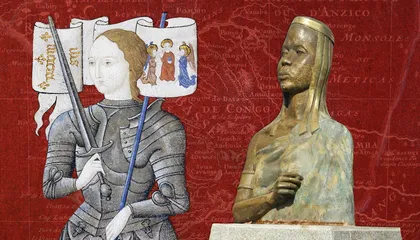
More than three centuries after she was condemned and executed, Dona Beatriz Kimpa Vita is increasingly honored as a pioneering spiritual leader and resistance figure often hailed as the Kongolese Joan of Arc. A retrospective by Smithsonian History examines how the 18th-century religious leader challenged colonial and ecclesiastical conventions across the Kingdom of Kongo. Today, cultural historians and communities celebrate her memory as an enduring emblem of spiritual sovereignty and Indigenous self-determination.
Kimpa Vita was burned at the stake roughly 320 years ago in the early 1700s after ecclesiastical and political authorities moved decisively against her burgeoning ministry. Her execution marked a violent climax to official efforts to suppress her teachings, which had rapidly galvanized widespread devotion across the region. Despite her untimely death, her radical vision endured as a profound turning point in central African religious history.
Central to her ministry was Kimpa Vita's conviction that she had been called by divine power and possessed by the spirit of St. Anthony. Claiming to convey messages directly from the saint, she stepped into the religious sphere with a profound sense of spiritual authority and urgency. This transformative experience shaped every facet of her message and provided the moral foundation for her public leadership.
Drawing on this divine guidance, Kimpa Vita spearheaded a faith movement that promoted an Indigenous African interpretation of Christianity. Rather than accepting the rigid doctrines imposed by foreign missionaries, her followers embraced a localized theological framework that reflected their own cultural reality. This Africanized practice positioned local believers not merely as recipients of outside dogmas, but as integral custodians of the sacred tradition.
The rise of her movement occurred against a backdrop of deep social and political instability across the Kongo region during the early modern era. Internal unrest, foreign religious interference, and fractures among local elites created fertile ground for a message centered on spiritual unity and renewal. In stepping forward, Kimpa Vita offered a unifying vision to ordinary people seeking moral grounding amid severe dislocation.
Her bold assertion of spiritual legitimacy quickly posed a direct challenge to established colonial and clerical hierarchies. European church authorities viewed her claims of divine possession and her Africanized teachings with fierce hostility, labeling her movement a dangerous heresy. For established rulers and foreign friars alike, her ability to inspire widespread popular loyalty threatened existing structures of power.
The enduring parallel drawn between Kimpa Vita and Joan of Arc underscores shared themes of youth, divine revelation, and tragic martyrdom at the hands of threatened institutions. Like her European counterpart, the Kongolese prophet combined deep spiritual conviction with a wider cultural and collective awakening. The comparison reflects both her extraordinary courage in confronting entrenched power and the heavy price she paid for her convictions.
Centuries after her death, scholars and cultural institutions are increasingly revisiting Kimpa Vita's life to understand the deeper roots of African religious independence. Her story illustrates that resistance to foreign dominance took many forms, including theology, visionary leadership, and grassroots mobilization. For modern observers, she stands as an early and uncompromising voice for African agency within the global history of faith.
As historical research continues to illuminate her legacy, Kimpa Vita's memory remains deeply woven into regional heritage and pan-African discourse. Cultural commentators emphasize that remembering figures who were once silenced by imperial and clerical authorities is vital to reclaiming a more complete historical record. Over three centuries after she was put to death, the Kongolese prophet continues to inspire contemporary discussions on identity, faith, and liberation.
Primary source: Smithsonian History. Newzly rewrites and structures source reporting for clarity; verify critical details at the original.