Kore-eda Hirokazu Says He Chooses Not to Film Children Crying
The Japanese director discussed his approach to young performers in Singapore, describing lessons from Ken Loach and Hou Hsiao-hsien about trust, observation and adapting to each child.
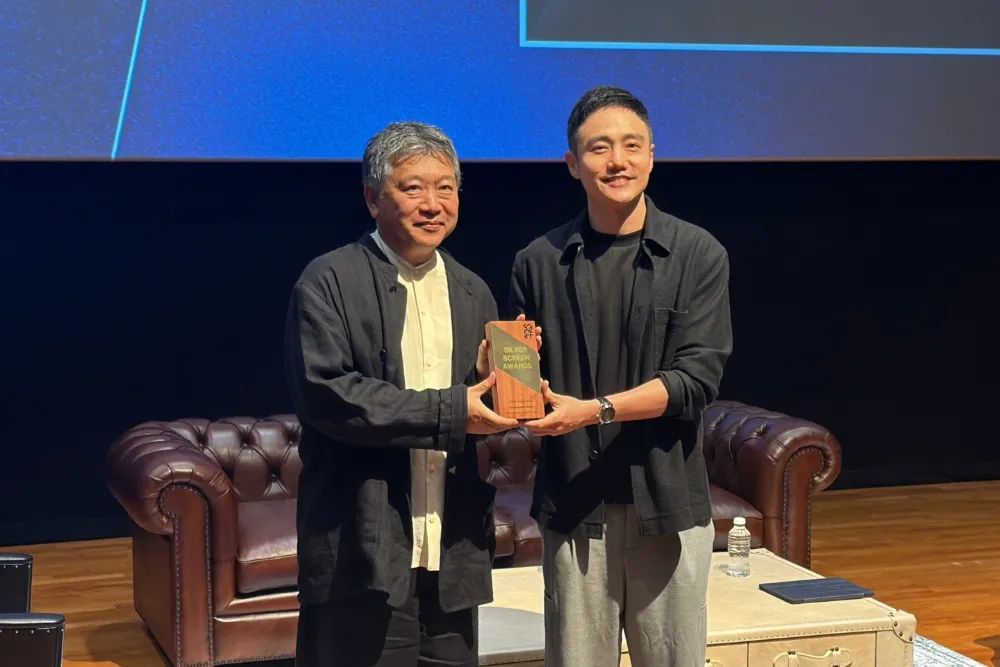
Kore-eda Hirokazu says he deliberately avoids filming children crying, drawing a boundary around an emotional image often used in screen drama. Speaking at the Singapore International Film Festival, the Japanese director described the decision as a choice rather than a difficulty, according to Variety.
“It’s not that I can’t, or that it’s difficult. I don’t shoot it,” he said. His comments placed the responsibility of directing young performers alongside the artistic question of how audiences experience their emotions.
Kore-eda credited Ken Loach with teaching him to assess the risks of a scene individually, rather than assume a technique that worked before would suit another child. From Hou Hsiao-hsien, he learned to join children’s play before withdrawing as filming begins, allowing their activity to continue.
That emphasis on individual personalities has a long history in his work. In the official production notes for “Like Father, Like Son,” Kore-eda said he wanted the two central children to have contrasting characters, with their own personalities emerging through their performances rather than disappearing into a uniform dramatic register.
The film follows families who discover that their sons were switched at birth, confronting the adults with a choice between biological ties and the relationships built through raising a child. Kore-eda explained in those notes that, because the children were six, he wanted their response to convey confusion rather than sadness.
His interest in that distinction was also personal. Writing about the film in 2013, he described wondering whether fatherhood came from shared blood or time spent together, and said the story grew from questions about his own experience as a parent. He presented those questions as unresolved, not as problems the finished film had definitively answered.
The practical responsibility extends beyond what reaches the screen. In a separate interview with The Associated Press, Kore-eda said a film crew may be among the first adults children encounter outside their parents and teachers. He wanted young performers to leave with the impression that the adults around them worked hard and enjoyed doing so.
That concern matters particularly in films where children encounter difficult circumstances. “Nobody Knows,” for example, follows children surviving without adult supervision. The distinction is between portraying a character’s vulnerability and deciding what experience a young performer should have while helping create that portrayal.
His methods nevertheless remain open to revision. Variety reported that Kore-eda now decides whether to give children scripts according to the performer and the project, rather than applying one rule across every production. The broader principle is consistent: natural-looking acting does not remove the need for deliberate decisions behind the camera.
Looking ahead, Kore-eda said he hopes to shoot another project as early as next year, although it could take longer, according to Variety. His account of directing children suggests that future work will continue to depend less on a fixed formula than on the particular people and circumstances of each film.
Primary source: Variety. Newzly rewrites and structures source reporting for clarity; verify critical details at the original.