Sacha Baron Cohen Says Critics Underestimated Donald Trump’s ‘Elements of Brilliance’
Promoting his new film, satirist Sacha Baron Cohen warned that critics underestimated Donald Trump by labeling him a nincompoop, arguing the former president possesses elements of brilliance that explain his enduring political appeal.
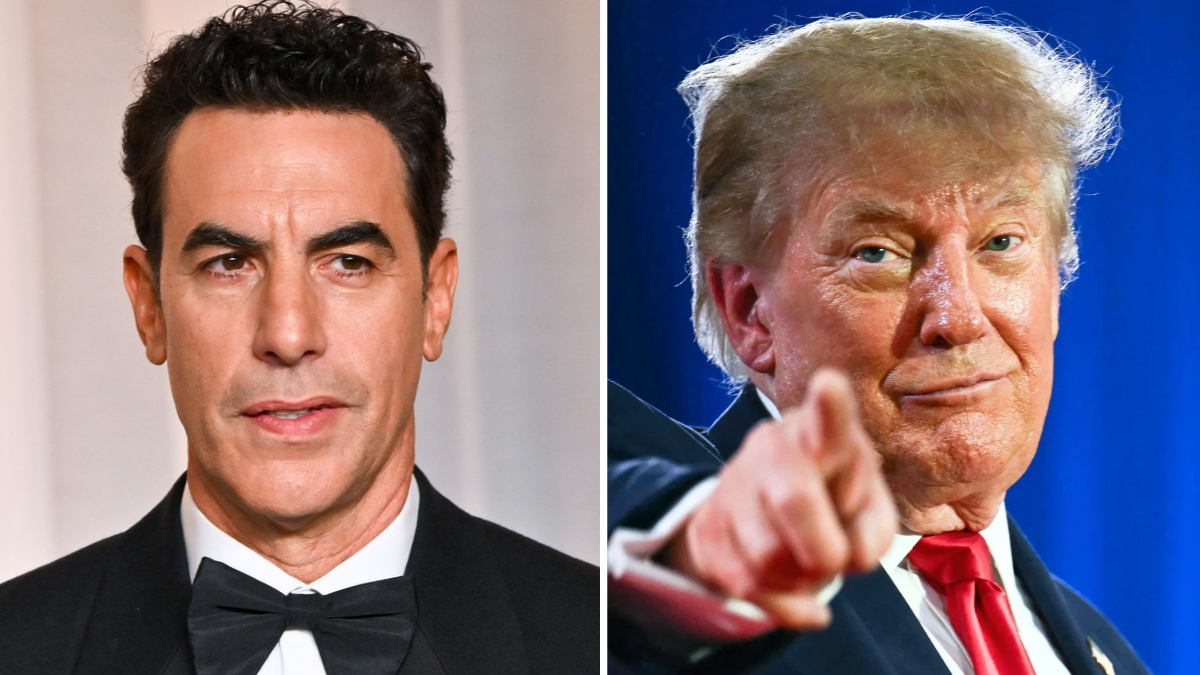
Comedian Sacha Baron Cohen said Donald Trump possesses elements of brilliance, arguing that critics and political opponents erred by underestimating him during his political rise. Speaking during a promotional appearance for his new film, Baron Cohen reflected on Trump's durability and cautioned against brushing the leader aside as a buffoon. His observations offer a rare candid assessment from one of political satire's most prominent figures.
The British satirist made the remarks while discussing his career on Josh Horowitz's Happy Sad Confused podcast. Baron Cohen questioned how Trump managed to survive politically into a second presidential term, observing that commentators were far too quick to dismiss him as a nincompoop. He emphasized that failing to recognize a political opponent's strengths makes it impossible to understand their broader appeal.
Baron Cohen explained that Trump's political resilience demonstrates an underlying shrewdness that resonated deeply with millions of voters. He added that recognizing those elements of brilliance helps explain Trump's enduring public standing and his profound transformation of the American political landscape. In his view, superficial mockery has often blinded political analysts to the effective instincts driving Trump's success.
The comments carry particular resonance given Baron Cohen's own history with Trump dating back more than two decades. In 2003, Baron Cohen donned his yellow tracksuit and oversized glasses as Ali G on Da Ali G Show, attempting to pitch Trump on an investment in ice cream gloves. The encounter remains one of the comedian's most famous television segments.
During that encounter, Trump listened for roughly a minute before abruptly ending the mock interview and walking off the set. Trump later claimed publicly that he was the only interview subject to immediately see through the comedian's eccentric guise. Baron Cohen has pushed back against that narrative in subsequent interviews, maintaining that Trump took the bizarre pitch seriously before losing patience.
The reflection comes as Baron Cohen resurrects his breakout persona two decades after officially retiring the character. His latest project, Ali G: Who Iz I?, marks Baron Cohen's feature directorial debut and brings the faux-gangster back into contemporary culture. The storyline follows the suburban character as he confronts adulthood and impending fatherhood.
Produced by Amazon MGM Studios, the new mockumentary blends narrative comedy with Baron Cohen's trademark ambush interviews of unsuspecting public figures. The release marks the first major standalone screen outing for the Staines-based alter ego since the 2002 comedy Ali G Indahouse. The production attempts to test whether Baron Cohen's vintage street satire still works in a fundamentally changed media landscape.
Over the past three decades, Baron Cohen has used satirical personas like Ali G, Borat Sagdiyev, and Bruno to expose political hypocrisy and social prejudices across the Western world. His recent comments indicate a more analytical approach toward the cultural and psychological dynamics that sustain modern political movements. Rather than relying solely on mockery, the satirist acknowledged the strategic instincts behind populist messaging.
Ali G: Who Iz I? is currently playing in theaters before making its global streaming debut on Amazon Prime on Oct. 30. As Baron Cohen returns to the pop culture spotlight, his reflections highlight an ongoing conversation among satirists about how comedy intersects with real-world power. Industry observers will be watching closely to see whether audiences embrace the return of Ali G in an era of heightened political polarization.
Primary source: Variety. Newzly rewrites and structures source reporting for clarity; verify critical details at the original.