Mizoram BJP MLA Accuses ZPM Government of Falling Short on Welfare Promises
Mizoram BJP legislator K. Hrahmo has criticized the ruling ZPM government over its signature welfare schemes, alleging that key programs exclude thousands of agricultural workers and suffer from recurring funding reductions.
In this piece
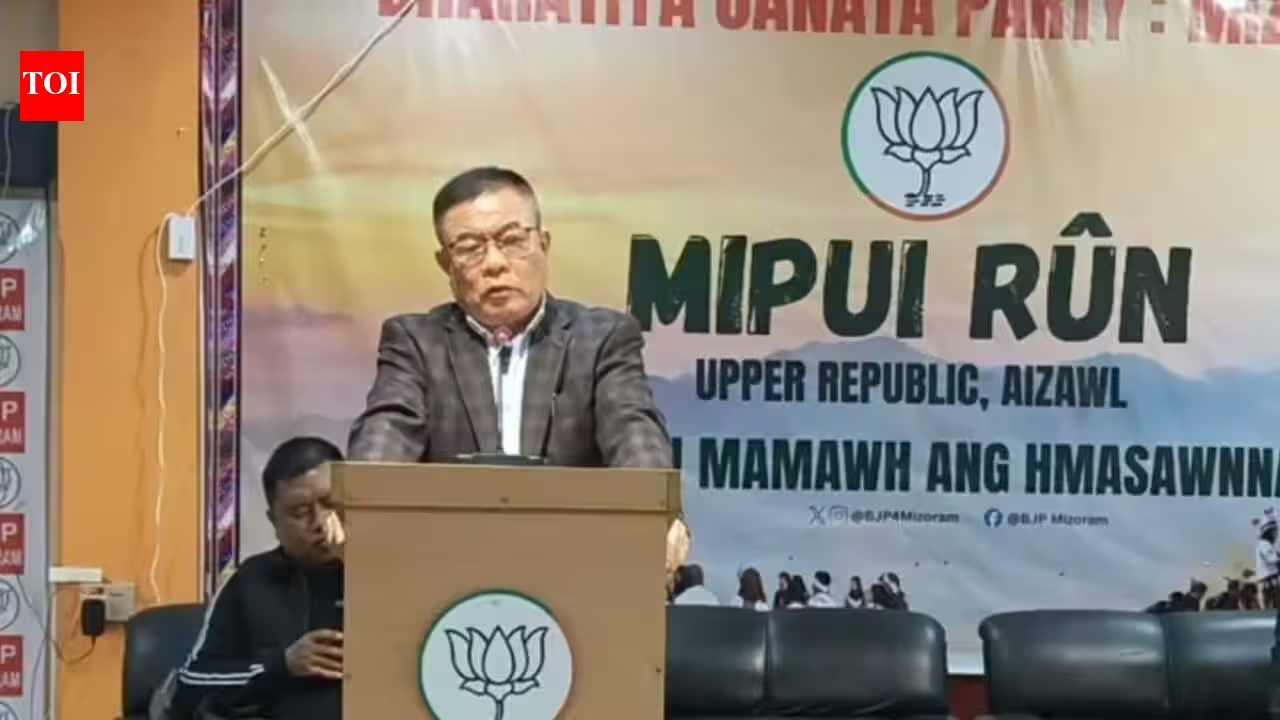
Mizoram BJP MLA K. Hrahmo has accused the ruling Zoram People's Movement of misrepresenting the success of its flagship welfare programs. Hrahmo claimed that…
Mizoram Bharatiya Janata Party legislator K. Hrahmo has launched a sharp critique against the ruling Zoram People's Movement government, accusing it of exaggerating the reach and impact of its flagship welfare programs. The opposition lawmaker claimed that major state-sponsored initiatives are currently bypassing a majority of intended beneficiaries across rural communities. He maintained that the government has failed to provide equitable relief despite substantial campaign pledges.
At the center of the dispute is the administration's primary agricultural initiative, known as the Bana Kaih or handholding scheme. Designed to stabilize farmer incomes, the program offers minimum support prices for designated crops including ginger, turmeric, onion, and chilli. However, Hrahmo asserted that the scope of the program is far too narrow to generate widespread agricultural transformation in the state.
Citing figures from the Socio Economic and Caste Census of 2011, Hrahmo noted that Mizoram is home to more than 2.7 lakh agricultural laborers and cultivators. According to the legislator, enrollment under the Bana Kaih initiative has reached only around 20,000 workers, leaving roughly 2.5 lakh rural laborers excluded from official price support mechanisms. This disproportionate gap, he argued, undermines official claims of comprehensive rural development.
The BJP legislator also accused the ZPM leadership of ideological inconsistency regarding direct financial assistance programs. Before securing power, the ZPM had vocally criticized the welfare distribution models run by past regimes, notably the Mizo National Front's Socio-Economic Development Policy and the Congress party's New Land Use Policy. Hrahmo pointed out that the ruling party has now adopted a similar mechanism through the Chief Minister's special package.
Hrahmo alleged that the rollout of the Chief Minister's financial assistance package has been plagued by severe budget shortfalls. Initial promises of one lakh rupees per beneficiary were subsequently cut to fifty thousand rupees, before being slashed further to twenty-five thousand rupees in regions such as Siaha district. He emphasized that these successive reductions reflect fundamental planning deficits within the state's fiscal framework.
In addition to the scaled-back grant amounts, the opposition legislator criticized the execution and delivery of the funds to eligible recipients. He argued that poor disbursement schedules and procedural hurdles have left many deserving families without timely assistance. Consequently, rural households that had anticipated robust economic support are now grappling with reduced allocations and persistent delays.
Turning to public health initiatives, Hrahmo examined the operational standing of the Mizoram Universal Health Care Scheme. While conceding that the healthcare program has delivered measurable relief to patients seeking medical care, he raised concerns over its systemic execution. He called for a thorough review of the scheme's financial sustainability and its ability to function effectively alongside other state programs.
The allegations arrive amid heightened political debates over fiscal management and rural welfare delivery across the northeastern state. Having come to power on a platform of anti-corruption and governance reform, the ZPM government now faces pressure from multiple opposition parties over the viability of its signature schemes. Critics argue that public assistance programs must be expanded to safeguard vulnerable households in border and interior districts.
The controversy places renewed attention on how the state government plans to fund and administer its development roadmap going forward. Political observers anticipate that opposition members will press the administration for transparent enrollment audits and budgetary clarifications during upcoming legislative proceedings. Whether the ZPM leadership adjusts its program criteria or refines disbursement protocols will likely shape welfare debates in the months ahead.
Primary source: Google News Mizoram. Newzly rewrites and structures source reporting for clarity; verify critical details at the original.