More Than 2.36 Million End-of-Life Vehicles Still Plying Delhi-NCR Roads, CAQM Tells Supreme Court
More than 2.36 million end-of-life vehicles remain in operation across Delhi-NCR despite statutory bans, the Commission for Air Quality Management told the Supreme Court, terming regional disposal and scrapping efforts far from satisfactory.
In this piece
The Commission for Air Quality Management informed the Supreme Court that over 2.36 million end-of-life vehicles are actively plying roads across Delhi-NCR.…
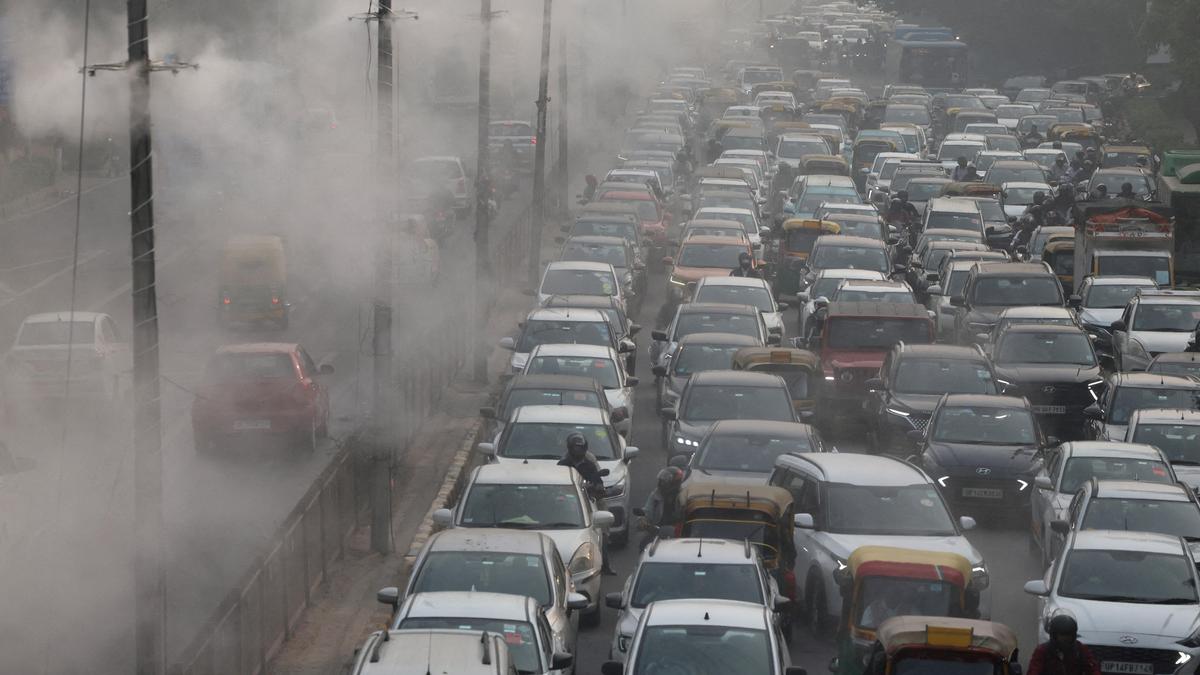
More than 2.36 million end-of-life vehicles continue to operate across the roads of Delhi and the National Capital Region, the Commission for Air Quality Management informed the Supreme Court in a detailed affidavit. The statutory air quality regulator disclosed that despite long-standing legal prohibitions on aging automobiles, the vast majority remain in active circulation. The revelation underscores the enduring difficulty of curbing vehicular emissions across northern India's most populous metropolitan zone.
According to the commission's submission, regional transport authorities identified roughly 2.54 million overage vehicles across Delhi and the adjoining sub-regions of Haryana, Uttar Pradesh, and Rajasthan. Of that total, only about 185,000 vehicles have been officially scrapped or issued No-Objection Certificates allowing their transfer outside the region. The commission described the current pace of disposal and enforcement as far from satisfactory, pointing out massive deficits in regional compliance.
The data was submitted as part of ongoing suo motu proceedings before the Supreme Court regarding north India's chronic air pollution emergency. The top court has repeatedly scrutinized government responses to seasonal and year-round toxic smog, pressing regulators for actionable strategies to curb hazardous air quality. Judges have placed particular emphasis on the transport sector, noting that vehicular exhaust remains one of the largest and most persistent contributors to surface-level pollution.
Records from the central government's VAHAN vehicle registry highlighted during the proceedings reveal the sheer scale of transport in the National Capital Region. Delhi-NCR hosts a total registered vehicle population surpassing 17.17 million units. Two-wheelers form the overwhelming majority of the registered fleet at 65.2 percent, while four-wheeled light motor vehicles account for another 28.9 percent of the total volume.
The regulatory prohibitions on aging automobiles trace back to landmark directives issued by the National Green Tribunal and affirmed by the Supreme Court. Under these judicial orders, diesel vehicles older than 10 years and petrol vehicles older than 15 years are entirely barred from operating in Delhi-NCR. The directives were designed to purge outdated powertrains that lack the catalytic conversion and filtration technologies found in contemporary vehicles.
During the proceedings, the bench highlighted the sharp technological gulf between generations of motor vehicles, pointing out that legacy Bharat Stage models pollute at drastically higher rates. Older vehicles conforming to BS-I, BS-II, or BS-III specifications release disproportionate amounts of nitrogen oxides and fine particulate matter compared to BS-VI vehicles. Supreme Court judges observed that allowing millions of obsolete engines to remain on the road directly undermines regional clean air initiatives.
Enforcement remains an immense administrative challenge given the seamless geography of the urban cluster, where millions of vehicles crisscross state borders daily between Delhi, Noida, Gurugram, and Faridabad. State transport departments and traffic police units have struggled to track overage vehicles once their registrations lapse in official registries. Without unified, automated scanning at every border entry point, thousands of non-compliant vehicles slip past manual police checkpoints each day.
Confronted with the massive enforcement gap, the Supreme Court has expressed an inclination toward adopting significantly more aggressive restrictions. During recent hearings, the bench signaled it could explore limiting vehicular entry into the national capital exclusively to BS-VI compliant automobiles. Such an order would represent an unprecedented tightening of regional mobility rules, effectively barring even newer BS-IV models from entering Delhi.
The judicial bench has directed authorities to present comprehensive plans to accelerate the impounding of illegal vehicles and improve the accessibility of registered vehicle scrapping facilities. State governments across the capital region must now demonstrate enhanced inter-agency coordination, automated surveillance, and strict compliance reporting. Unless authorities establish an effective mechanism to retire millions of end-of-life engines, toxic exhaust will continue to threaten the health of tens of millions of residents.
Primary source: Google News Delhi. Newzly rewrites and structures source reporting for clarity; verify critical details at the original.