world·Nebraska·a town or county
Nebraska Medicine tells residents what to know about an Iowa lead azide detonation
An Omaha health system has published guidance for Nebraskans after a lead azide detonation in Iowa. The news-feed listing names the topic but does not include the advisory’s detailed findings.
In this piece
Nebraska Medicine in Omaha has issued an explainer for Nebraskans about a lead azide detonation in Iowa. The available listing does not state the Iowa…
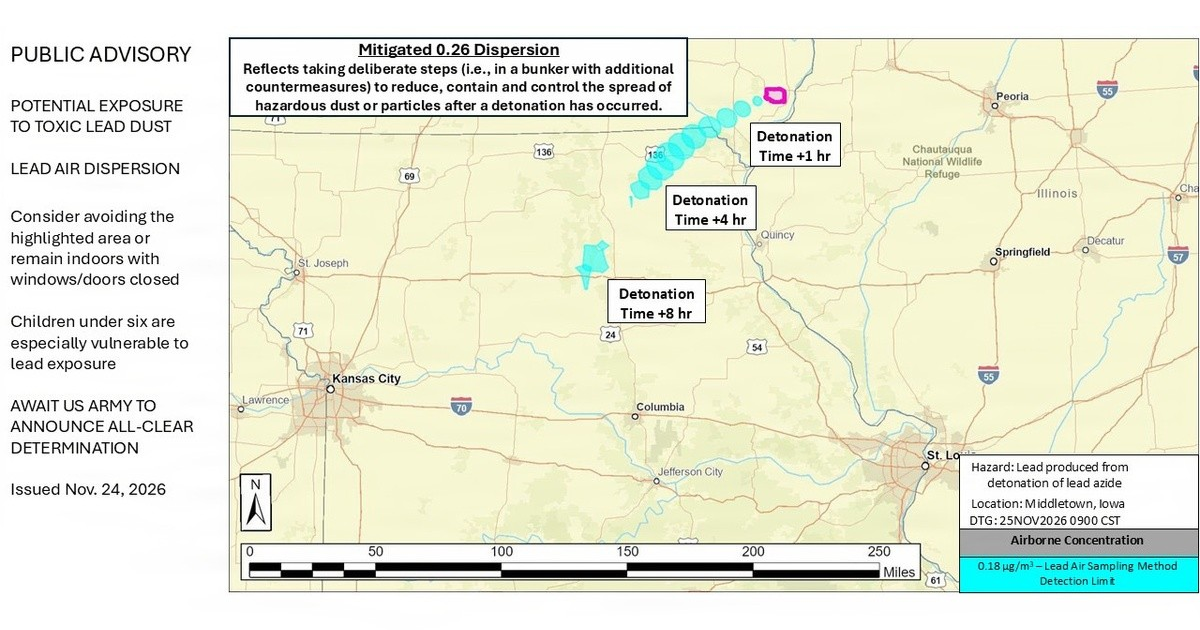
Nebraska Medicine in Omaha has published guidance for Nebraskans about a lead azide detonation in Iowa, according to a Google News listing of the hospital system’s advisory. The item is framed as practical information for residents on the Nebraska side of the state line. The feed entry available here carries the headline and the Omaha credit, not the full text of the explainer.
The listing identifies Nebraska Medicine as the publisher. It does not include casualty figures, a town or county inside Iowa, a time for the blast, or any official measurements of exposure. Those details, if they exist, would have to come from the advisory itself or from the public agencies handling the response.
Lead azide is a long-established primary explosive, a compound sensitive enough to set off other explosives in detonators and similar devices. An event described as a detonation of that material is both a safety incident and an environmental question, because the compound contains lead, a toxic metal. That general chemistry is why a health system would address the public at all.
Worry after a blast of this kind often centers on whether dust, smoke, or residue could move beyond the immediate site. Iowa and Nebraska share a long border, and people in eastern Nebraska routinely cross into Iowa for work, school, and medical care. That geography is a straightforward reason for an Omaha health system to speak to Nebraskans about an incident reported in Iowa.
The listing does not establish whether any plume, debris, or contamination reached Nebraska. It also does not say whether authorities have limited travel, outdoor activity, water use, or food. Judgments of that kind depend on sampling at the site, weather at the time, and statements from the agencies in charge. None of those findings appear in the headline-level feed.
In ordinary public-health terms, lead exposure is treated seriously because lead can harm the nervous system, and children and pregnant people are considered more vulnerable than healthy adults. That is why hospitals explain warning signs and when to seek care after a lead-related event. Background of that sort is not evidence that people in Nebraska were exposed in this case.
As the headline frames it, Nebraska Medicine’s role is to turn a hazardous-materials event into information patients and families can use: what is known, what is still being assessed, and when to contact a clinician. Without the body of the advisory, specific instructions, clinic arrangements, or hotline details cannot be restated here.
Readers who need direction should use the full Nebraska Medicine item and updates from Iowa and Nebraska public health and emergency management agencies, rather than a shortened news-feed headline. If those sources name a city, a county, or a monitoring area, that detail is the one that governs, ahead of any general mention of the two states.
Until those primary documents are in hand, the confirmed summary stays narrow. The public record in this feed is that a lead azide detonation was significant enough for Nebraska Medicine to tell Nebraskans what they should know. The scale, the precise place in Iowa, any injuries, and any effect across the border are not stated in the source used for this account.
What happens next rests with the response agencies and with the health system that issued the explainer. Sampling results, a clearer location, and any change in precautions would be expected in later notices from those organizations. Advisories they publish are the record of what has been confirmed.
Primary source: Google News Nebraska. Newzly rewrites and structures source reporting for clarity; verify critical details at the original.