world·Delhi·New Delhi District
Nepal PM Balendra Shah Secures Major Pacts in Landmark Delhi Visit
Nepal’s Prime Minister Balendra Shah wrapped up a landmark New Delhi visit, securing a ₹15,000 crore development package and signing eight bilateral pacts that signal a pragmatic reset in India–Nepal relations.
In this piece
Nepal Prime Minister Balendra Shah concluded his first official bilateral visit to New Delhi, meeting with Indian Prime Minister Narendra Modi at Hyderabad…
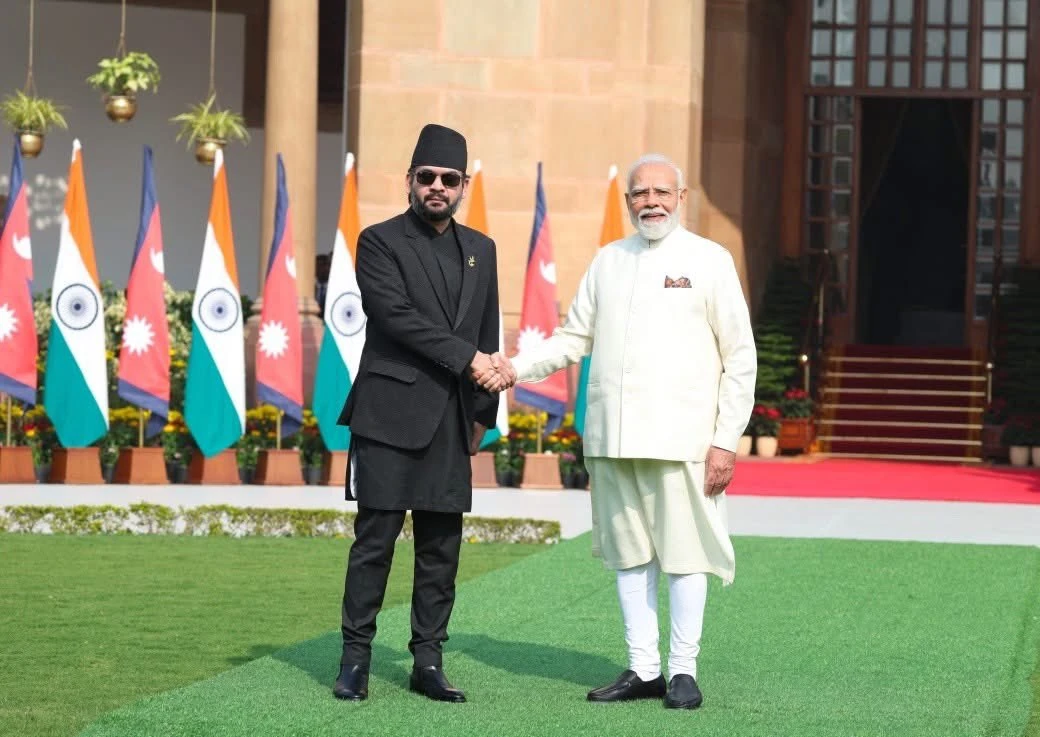
Nepal’s Prime Minister Balendra Shah concluded high-level bilateral discussions in New Delhi with Indian Prime Minister Narendra Modi, marking his first official foreign visit since taking office in March 2026. The diplomatic summit culminated in a significant ₹15,000 crore development cooperation package from India and the signing of eight bilateral agreements designed to deepen strategic and economic ties between the neighboring nations.
The development package announced by New Delhi will primarily support post-disaster reconstruction across Nepal following devastating floods in August 2026, alongside long-term infrastructure and energy credit lines. Indian officials emphasized their commitment to acting as a dependable first responder, while Shah praised India’s prompt humanitarian and infrastructural backing during critical crises.
Cross-border transit and cultural connectivity featured prominently during the delegation-level talks held at Hyderabad House. Both leaders virtually flagged off the Saryu-Kamala Express, a weekly passenger train linking Ayodhya with Janakpur along the historic Ramayana Circuit, while also inaugurating the newly constructed Dharchula road bridge connecting Uttarakhand and western Nepal.
In a move aimed at lowering logistics costs and expediting freight movement, New Delhi agreed to expand Nepal’s transit access to Indian maritime gateways, formally adding Deendayal Port in Gujarat and Paradip Port in Odisha. The leaders also reviewed progress on the proposed broad-gauge electrified railway connecting Raxaul and Kathmandu, approving the completion of its critical field location survey.
Beyond physical transit, the eight memorandums of understanding signed during the visit established frameworks for expanded cooperation in space technology with the Indian Space Research Organisation, digital public infrastructure, and healthcare. Additional agreements focused on police training, civil service capacity-building, sustainable urban planning, and academic partnerships, including preliminary discussions for an offshore Indian Institute of Technology campus in Nepal.
Underpinning the agreements was the formal adoption of a joint vision document titled "Viksit Bharat and Samunnat Nepal," which charts a comprehensive bilateral roadmap across trade, innovation, and clean energy transition. The document reflects an intentional pivot by both capitals to frame bilateral relations around shared technological advancement and economic interdependence rather than traditional geopolitical anxieties.
The visit carried substantial geopolitical significance given Shah’s transition from an anti-establishment municipal reformer as Kathmandu’s mayor to the leader of Nepal’s national government. Observers in both capitals had watched closely to see how the younger political leadership would balance historic sensitivities and domestic political pressures against the practical necessity of robust economic relations with India.
Relations between New Delhi and Kathmandu have experienced recurring periods of diplomatic friction over territorial borders, trade blockades, and Beijing's expanding footprint in the Himalayas. By securing concrete financial commitments and prioritizing high-visibility connectivity projects, the summit signaled a pragmatic reset aimed at resolving lingering trust deficits through tangible economic integration.
Following meetings with Indian President Droupadi Murmu, Shah extended an official invitation for Prime Minister Modi to visit Nepal, which New Delhi accepted in principle with dates to be finalized through diplomatic channels. Bilateral working groups are now tasked with translating the eight pacts into operational projects, setting the stage for measurable implementation in cross-border energy trade and regional transit over the coming year.
Primary source: Google News Delhi. Newzly rewrites and structures source reporting for clarity; verify critical details at the original.