Netanyahu and Eisenkot meet on possible unity government with rotation
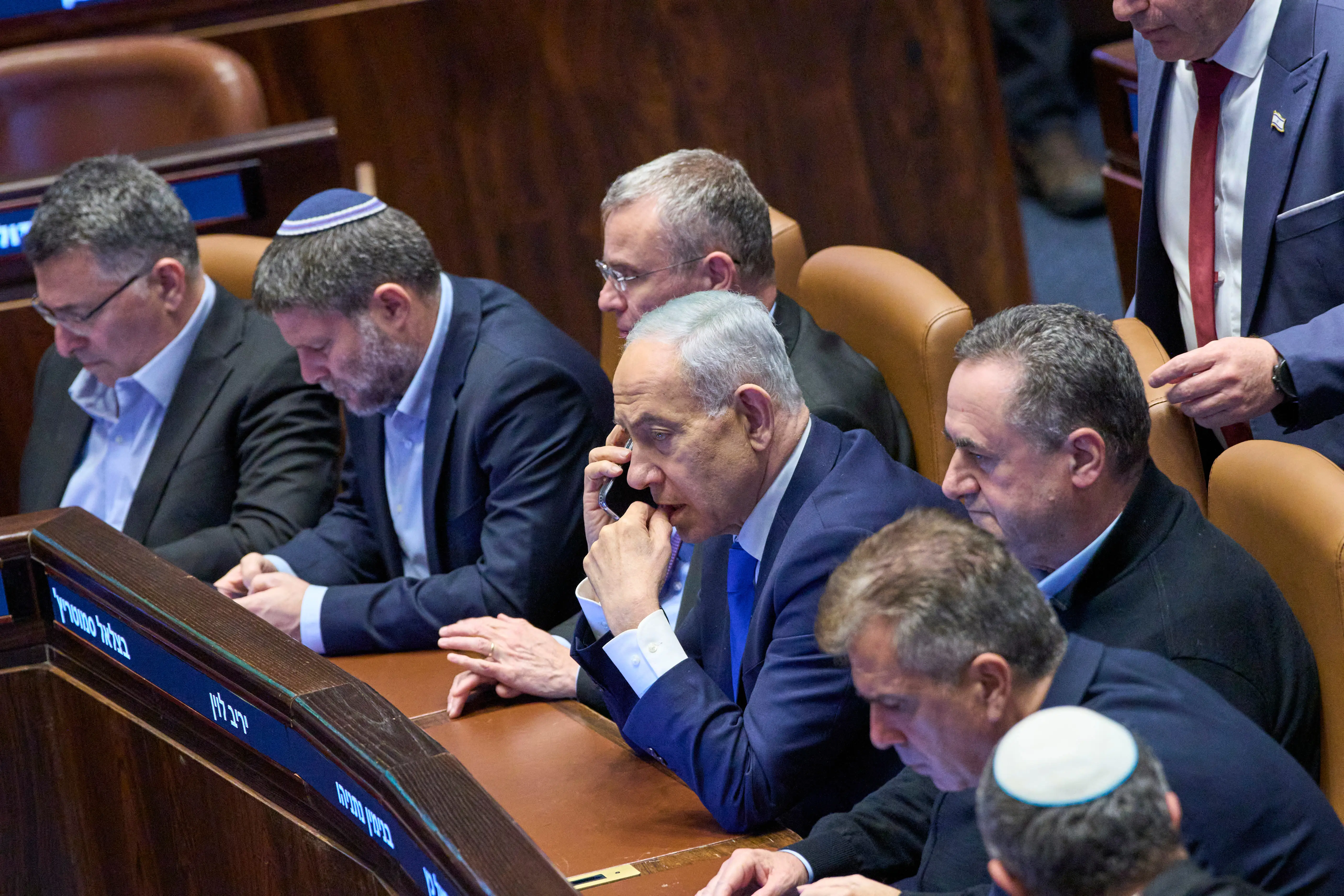
Benjamin Netanyahu and Gadi Eisenkot met to discuss an Israeli unity government. Netanyahu said Saturday night he was willing for Eisenkot to serve first as prime minister in a rotation.
In this piece
Benjamin Netanyahu and Gadi Eisenkot have met to discuss forming an Israeli unity government, NPR reported. Netanyahu said Saturday night he was willing to let…
Israeli Prime Minister Benjamin Netanyahu and Gadi Eisenkot met to discuss forming a unity government, NPR reported. Netanyahu said Saturday night that he was willing to have Eisenkot become prime minister first in a rotation arrangement under a possible unity deal. The report did not describe where the meeting took place, how long it lasted, or who else attended.
Netanyahu's remark is the most specific public element of the account. It places Eisenkot ahead of him in the order of a shared premiership if a unity deal is reached. NPR presented the idea as part of a possible arrangement, and the report did not describe a signed coalition agreement or a date for any handover.
Unity governments are a recurring feature of Israeli politics. Rival camps have joined a single cabinet when forming a narrow majority proved difficult, or when leaders argued that a national emergency required a broader base. A rotation adds a further commitment: the partners must agree on the order of the premiership and on the rules that govern the transfer of office.
Israel has used a rotation inside a unity government before. A deal reached in 2020 wrote a handover of the premiership into an emergency coalition formed after repeated elections and during the coronavirus pandemic. That arrangement later came apart amid disputes over budgets, appointments, and the timing of the transfer, a reminder that power-sharing formulas depend on continued political trust.
Eisenkot is a former chief of the Israel Defense Forces who later entered electoral politics and has been associated with centrist and opposition forces critical of Netanyahu's governments. Netanyahu, the Likud leader and Israel's longest-serving prime minister, remains the dominant figure on the right. A cabinet pairing the two would have to span deep differences over security policy, the judiciary, and the makeup of the government.
The NPR report does not say whether an agreement is close, which parties would sit in a unity cabinet, or how a rotation would be written into coalition guidelines or law. It also does not include a statement from Eisenkot confirming that he would take the premiership first or setting out his conditions. Saturday night's comments can therefore be read as an opening position whose political weight is still unclear.
The stakes are substantial for Israel's executive branch. A unity government built on a rotation could change who holds the premiership and who sets the security and legislative agenda without an immediate election. Backers of such deals have generally argued that a wider coalition gives difficult decisions broader consent. Critics have argued that shared cabinets can blur responsibility and delay a clear verdict from voters.
For Netanyahu, a durable offer to let Eisenkot serve first would hand the premiership to a political rival before Likud's leader returned to it. For Eisenkot, taking that role would mean governing alongside a leader he has opposed, and only if enough lawmakers backed the arrangement in the Knesset. Neither man's next move, nor the parliamentary arithmetic, is established in the brief report.
What follows is not set out. Any path to a new government would still require agreement on the length of each turn in a rotation, the distribution of ministries, and the legislative commitments binding the partners. Until those terms are public, the meeting and Netanyahu's Saturday night statement indicate talks under way. They do not, on the available account, show a unity government already formed.
Primary source: NPR News. Newzly rewrites and structures source reporting for clarity; verify critical details at the original.