Netanyahu offers rival Eisenkot the premiership first in a unity rotation
Major outlets report that Benjamin Netanyahu, under political pressure, has proposed a power-sharing government in which Gadi Eisenkot would serve as prime minister before any rotation.
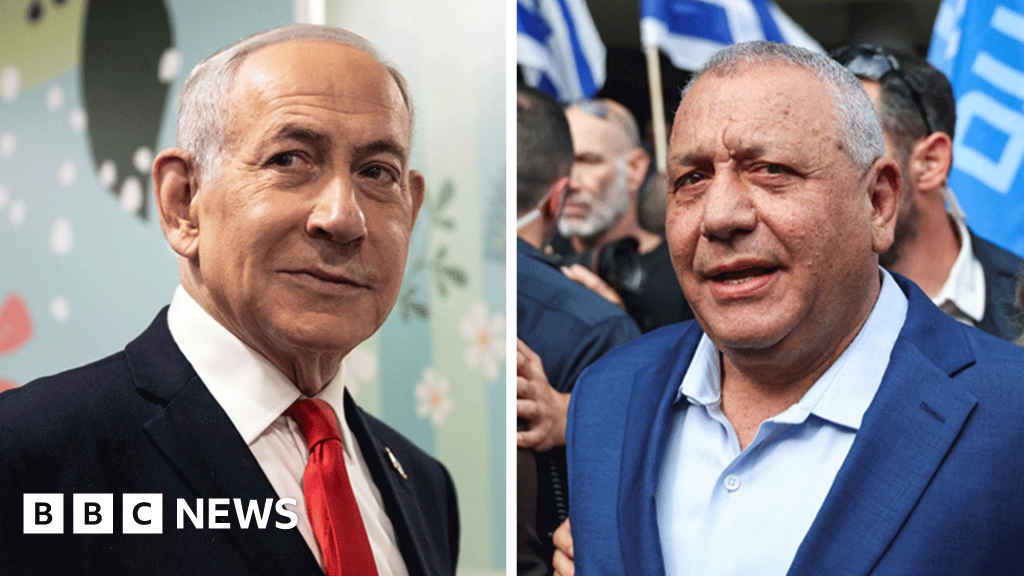
In this piece
BBC, The New York Times, Al Jazeera and CNN report that Israel’s Benjamin Netanyahu has offered main rival Gadi Eisenkot the lead role in a unity government,…
Benjamin Netanyahu has proposed an Israeli unity government in which political rival Gadi Eisenkot would become prime minister first, according to reports from the BBC, The New York Times, Al Jazeera and CNN.
The accounts describe a power-sharing arrangement rather than a conventional offer to keep Netanyahu in the top job from the outset. Al Jazeera reported that Netanyahu offered to rotate the premiership with Eisenkot. The BBC said the proposal would place Eisenkot in the prime minister’s post first.
CNN characterized the move as Netanyahu running out of options and offering a power-sharing deal to his main rival. The New York Times similarly reported that Netanyahu, under pressure, offered a rival the lead in a unity government. Those headlines indicate the offer is being read as a concession made from a weakened political position.
A unity government of this kind would bring rival camps into the same cabinet and split leadership over time. In the version described by the outlets, Eisenkot would take the premiership before any handoff, reversing the usual expectation that the incumbent holds the office at the start of a coalition.
The Washington Post, in a related report, framed Israel’s “odd-couple” politics as a force that could be close to toppling Netanyahu. That analysis sits alongside the news reports of the offer, but the headlines available here do not spell out a timetable, a list of partners, or a formal agreement.
Public details of the proposal remain thin. The reports do not, in the material reviewed here, quote a joint statement, set out how long each leader would serve, or confirm which parties would have to sign on for a rotation to take effect. Any such terms would matter as much as the headline offer itself.
It is also not established in these accounts whether Eisenkot has accepted. An offer of the premiership first is politically significant, yet a unity government still depends on the rival’s response and on enough support to form and sustain a cabinet. Until those steps are clear, the proposal is a reported opening, not a completed change of government.
The stakes are immediate for Israel’s leadership. If the offer were taken up, the country would move from a Netanyahu-led government to one headed, at least at the start, by a figure the same outlets describe as his main rival. If it is rejected, the pressure described by CNN and The New York Times would remain the backdrop for whatever Netanyahu tries next.
For now, the reporting converges on a narrow set of facts: Netanyahu has floated a unity deal, Eisenkot would go first under the rotation that has been described, and the prime minister is portrayed as acting under strain. Broader claims about motive, vote counts or the war and domestic fights that may sit behind the pressure are not specified in the headlines used for this account and are not asserted here.
What happens next turns on Eisenkot and on whether any rotation can be translated into a working coalition. Readers should treat the story as a developing political offer reported by several major news organizations, with acceptance, terms and parliamentary support still to be shown.
Primary source: Google News U.S.. Newzly rewrites and structures source reporting for clarity; verify critical details at the original.