New draft deal aims to keep COP31 climate talks from collapse
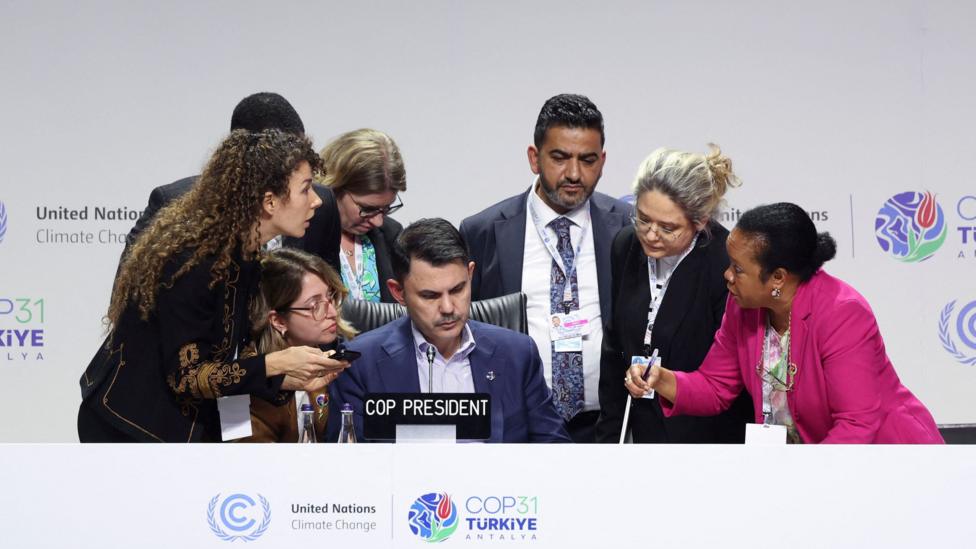
Negotiators at the UN climate summit in Turkey are working from a fresh draft as COP31 enters a second day of overtime, with countries still short of an agreement.
In this piece
A new draft deal is on the table at the UN COP31 climate summit in Turkey as talks run into a second day of overtime. Countries have not yet reached an…
A new draft deal is circulating at the UN climate summit in Turkey as COP31 moves into a second day of overtime, with countries still struggling to reach an agreement. The text is meant to keep the talks from collapsing after scheduled negotiations ran long.
The BBC reported that the meeting had entered another day beyond its planned close while governments tried to bridge remaining gaps. Public accounts available with that report do not set out the draft’s clauses, the size of any remaining disputes, or which delegations are holding out.
In UN climate diplomacy, a “draft deal” is usually a chair’s or presidency text offered when formal sessions have stalled. It is a working document, not a finished treaty. Parties can accept it, amend it, or reject it. Until a closing decision is adopted, nothing in such a text is agreed.
COP meetings are the annual conferences of parties to the UN Framework Convention on Climate Change. They are where governments try to turn broad climate goals into decisions on mitigation, adaptation, finance, and how progress is reviewed. COP31 is the latest in that sequence; this report places the session in Turkey and describes it as already in overtime.
Overtime is common when consensus is required and many issues are linked. A holdup on one paragraph can freeze the package. Extending the clock gives facilitators time to test compromises, but it also raises the chance that exhausted delegations leave without a decision or accept language too vague to guide later work.
The immediate aim described in the headline account is narrow: avert a collapse of the talks. A collapse would mean the summit ends without an agreed outcome, sending unresolved questions back to later meetings. That does not, by itself, cancel existing treaties. It does delay any new instructions governments had hoped to leave with.
Why the gap remains is not specified in the reporting used here. Climate summits often divide over how quickly emissions should fall, who pays for adaptation and loss and damage, and how strongly national pledges are reviewed. Those are familiar fault lines. They should not be read as a confirmed list of what is blocking COP31 unless negotiators say so.
For governments, businesses, and communities watching the summit, the practical question is whether the overtime draft produces a decision others can plan around. A thin agreement can still matter if it sets a timetable. No agreement leaves that timetable blank. Either result will be clearer only when the text is published and parties react.
What happens next is procedural. Delegations are expected to review the draft, raise objections, and decide whether a revised version can pass by consensus. The BBC account frames the second overtime day as an active struggle for agreement, not as a concluded deal.
Until a final decision is gavelled, the outcome stays open. The draft’s purpose, as described, is to stop the talks from failing outright. Whether it does that depends on negotiations still underway in Turkey, and on details this report does not yet provide.
Primary source: BBC World. Newzly rewrites and structures source reporting for clarity; verify critical details at the original.