The Datacentre Next Door: Newport Residents Push Back Against the AI Building Boom
A 23-metre-high hyperscale datacentre has swallowed the skyline of a quiet Newport suburb, and the residents living in its shadow say they were never properly consulted.
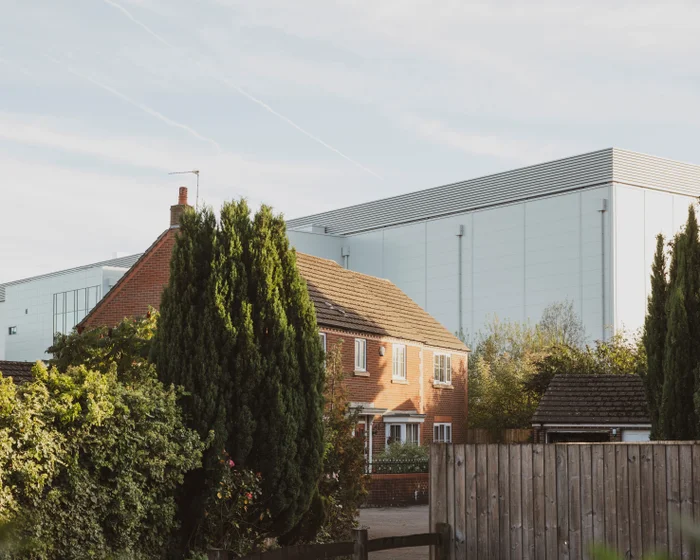
A suburban garden on the western fringes of Newport, South Wales, is not where most people would expect to find themselves on the front line of the global artificial intelligence race. Yet for Dale Johnston, the evidence is impossible to ignore: a 23-metre-high wall of prefabricated grey panels now dominates what was once an open sky above his lawn.
Johnston's garden — trampoline, slide, and chairs kept ready for visiting grandchildren — sits hard against a hyperscale datacentre, one of the vast warehouse-like buildings that technology companies are racing to build across the UK and beyond to satisfy the insatiable energy and computing demands of AI systems. "Before, the sun used to come around here and it was lovely," he said. The way local residents have been treated, he added, is "disgusting".
Hyperscale datacentres are the physical backbone of the modern internet and, increasingly, of AI. They house the servers, cooling systems, and power infrastructure required to run large language models and cloud services at industrial scale. A single facility can consume as much electricity as a small city, and the industry is growing at a pace that planning systems in many countries were never designed to accommodate.
The AI investment surge has made the UK — and Wales in particular, with its relatively affordable land and access to renewable energy connections — an attractive destination for American and Asian technology giants. Newport has emerged as a notable cluster, drawing significant corporate interest over recent years.
Local Labour politicians have publicly welcomed the development, framing it as a source of jobs and inward investment for a region that has historically struggled with economic underinvestment since the decline of heavy industry. A promotional reel circulated on social media shows elected figures speaking positively about the facilities and the opportunities they represent.
But Johnston and his neighbours tell a different story. Residents say they had little meaningful input into a planning process that ultimately approved a structure taller than a five-storey building directly adjacent to homes. The sense of powerlessness in the face of large corporate and political interests is a common thread in communities where datacentres have been approved at speed.
The tension is not unique to Newport. Across Ireland, the Netherlands, the United States, and elsewhere, communities living near proposed or completed datacentres have raised concerns about noise from cooling fans, heavy water usage, strain on local electricity grids, and the sheer visual bulk of the structures. In some European jurisdictions, authorities have moved to restrict new builds; in others, economic arguments have consistently prevailed.
Critics argue that planning frameworks have failed to keep pace with the pace of AI-driven construction. By the time communities become aware of an approved application, the legal window for challenge is often already closed. Campaigners in Newport and other affected areas have been pushing for stronger consultation requirements and mandatory impact assessments that account for the cumulative effect of multiple large facilities in a single area.
The jobs argument, residents say, also deserves scrutiny. Hyperscale datacentres are highly automated operations that typically employ relatively small permanent workforces once construction is complete. Proponents counter that the facilities support a broader ecosystem of construction, maintenance, and associated services jobs, and that high-technology investment strengthens regional economic profiles over the long term.
For Johnston, the policy debate is somewhat abstract. Standing in his garden, the grey panels fill the frame in every direction he looks. What he wants, he says, is simply what he had before: the afternoon sun moving across a modest suburban lawn, and the sense that the place where he lives belongs, in some small measure, to the people who live there.
Primary source: The Guardian Business. Newzly rewrites and structures source reporting for clarity; verify critical details at the original.