Nicholas Mulder Re-evaluates Marc Bloch’s Legacy of Total History
In an essay for The Ideas Letter, historian Nicholas Mulder assesses Marc Bloch’s pioneering methodology, wartime resistance, and enduring relevance following the scholar’s historic enshrinement in the French Pantheon.
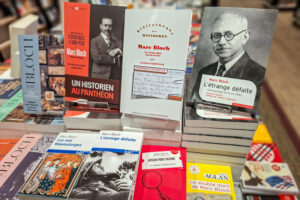
A new essay by historian Nicholas Mulder, titled "Total Historian" and published in The Ideas Letter, examines the enduring legacy of French historian Marc Bloch amid renewed European reflection on his life. Mulder’s analysis draws upon Peter Schöttler’s biographical scholarship to trace Bloch’s journey from a groundbreaking medieval scholar to an executed resistance hero.
Marc Bloch remains best remembered as the co-founder of the influential Annales school alongside Lucien Febvre in the interwar period. Together, they challenged conventional nineteenth-century historiography, which had long prioritized diplomatic treaties, royal reigns, and battlefield maneuvers over the lives of ordinary populations.
Central to Bloch’s scholarly revolution was the concept of "total history," or l'histoire totale. This methodology integrated sociology, geography, economics, and psychology to uncover long-term structural changes across centuries rather than isolated political episodes.
Bloch applied this expansive vision in landmark works on feudalism, rural history, and the psychological beliefs surrounding monarchical power. In texts such as "Feudal Society" and his study of royal healing rituals, he demonstrated how material conditions and mentalities intertwined across medieval Europe.
Beyond his academic output, Bloch’s trajectory was indelibly shaped by twentieth-century conflict. Having served with distinction as an infantryman in World War I, he returned to academia with a deepened skepticism of official narratives and an acute awareness of wartime psychology and rumor.
When France collapsed under German invasion in 1940, Bloch witnessed the military catastrophe firsthand as an older mobilization officer. His immediate post-mortem of the debacle, written in hiding and later published as "Strange Defeat," offered an unsparing indictment of institutional inertia, military complacency, and societal division.
As a Jewish scholar stripped of his university chair under the collaborationist Vichy regime, Bloch chose active defiance by joining the French Resistance in Lyon. Captured, interrogated, and tortured by the Gestapo, he was executed by firing squad alongside fellow resistance members in June 1944, just days after the Normandy landings.
Mulder’s essay highlights how Bloch’s life culminated in a rare posthumous honor: his entrance alongside his wife Simonne into the French Pantheon in Paris. This symbolic enshrinement marked the first time a professional historian received France’s highest secular civic tribute, cementing his status as a national emblem of intellectual integrity.
In re-evaluating Schöttler’s biographical work, Mulder emphasizes that Bloch’s model of total history offers vital lessons for contemporary scholarship and public discourse. In an era marked by geopolitical instability and rapid social transformation, Bloch’s insistence on rigorous archival evidence paired with deep structural analysis remains urgently relevant.
Looking ahead, the continuing engagement with Bloch’s intellectual legacy underscores the persistent tension between objective historical inquiry and civic commitment. As European cultural institutions and academic debates revisit the mid-twentieth century's darkest hours, Bloch stands as an enduring archetype of the scholar who refused to sever thought from action.
Primary source: Hacker News. Newzly rewrites and structures source reporting for clarity; verify critical details at the original.