Jensen Huang scandal sparks Nvidia probe and national security fears
Nvidia’s board has opened an independent inquiry after reports that CEO Jensen Huang had an affair with a woman U.S. intelligence believes was a Chinese spy, jolting the AI industry’s most valuable company.
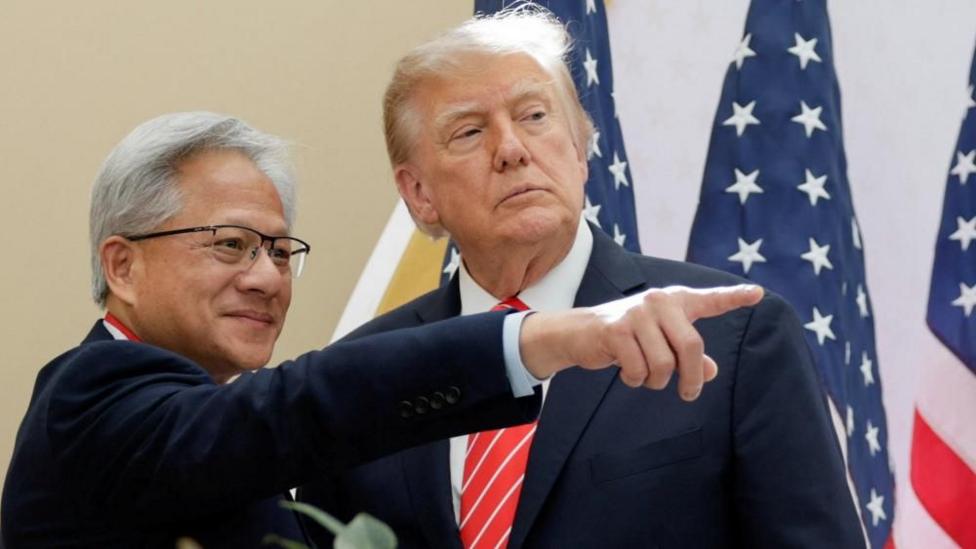
Nvidia chief executive Jensen Huang is at the centre of an unusual collision of personal scandal and national security after his company’s board opened an independent investigation into reports that he had a romantic relationship with a woman U.S. intelligence believes was gathering information for China. Huang, 63, long cast as the public face of the artificial intelligence boom, apologised in a statement for being unfaithful to his wife and said he would cooperate fully with the inquiry.
The New York Times first reported that Huang had a close relationship with Alice Huang, also known as Huang Le, a senior executive at Singapore data-centre firm Megaspeed. According to that reporting, U.S. officials concluded she had been recruited by China’s top intelligence agency. Surveillance reportedly showed communications with an American later identified as Jensen Huang through “unmasking.” It remains unclear what information, if any, she allegedly passed to Beijing, how valuable it was, or when any intelligence-gathering is said to have begun.
Nvidia’s board said it launched the probe “in light of recent reporting that founder and CEO Jensen Huang has been the target of a foreign intelligence effort.” The board said it prioritises U.S. national and economic security and has “no reason to believe that either national security or Nvidia secrets were compromised,” while pledging to examine all available information. It also expressed confidence in Huang and his leadership team.
In remarks shared with staff, Huang said: “I was unfaithful to my wife. My actions hurt her and our children. There is no excuse for what I did. I am deeply sorry.” He added that he supports the investigation, is committed to protecting Nvidia and America’s national security, and is “proud and grateful to be an American.” An Nvidia spokesperson told the BBC the company had not been aware of the intelligence concerns and trusted that Washington would have notified it of a genuine threat.
Alice Huang did not respond to the Times’s request for comment. Megaspeed had previously been suspected of helping divert Nvidia chips to China, a concern Nvidia says it investigated and debunked. China has rejected espionage allegations tied to the episode as groundless speculation meant to smear Beijing, according to Chinese foreign ministry comments reported by the BBC.
Huang’s stature helps explain why the story landed with such force. Born in Taiwan in 1963 and raised in the United States from age nine, he co-founded Nvidia in 1993 after studying electrical engineering at Oregon State University and Stanford. Once known mainly for graphics chips, Nvidia pivoted into AI hardware and is now valued at about $4.5 trillion. Huang’s fortune is estimated at roughly $155 billion by the Bloomberg Billionaires Index, and he has been dubbed the “Taylor Swift of tech” and “Daddy Huang” in Taiwan.
His personal life had been closely tied to that public image. He met his wife, Lori, as a lab partner at Oregon State; they married in 1985 and have two children, Madison and Spencer. Biographer Stephen Witt told the BBC that Huang has long presented himself as a family man, making the fallout especially damaging. The couple’s foundation, buoyed by Nvidia’s share price, is estimated to be worth more than $9 billion.
The episode also sits inside a sharper U.S.–China contest over AI. Since 2022, Washington has used export controls to keep leading chips out of China. Huang has said Nvidia’s China share fell from around 95% toward zero and has pressed for a path back into that market. President Donald Trump, who has appeared alongside Huang at White House AI events, said he had not spoken to him since the investigation news and called him “a fine person,” while adding, “you never know what’s going on.”
For markets and policymakers, the immediate question is less Huang’s private conduct than whether company secrets or broader security interests were exposed. Nvidia insists it has no evidence of compromise. Sources told the BBC that removing Huang appears unlikely for now, given how much value is tied to his leadership and the absence of a clear successor.
What happens next hinges on the independent inquiry and any further disclosures from U.S. authorities or Nvidia. Until investigators report what they find—and what they can substantiate—the scandal leaves the industry’s most influential chipmaker navigating reputational damage, geopolitical scrutiny, and uncertainty over one of Silicon Valley’s defining executives.
Primary source: BBC Technology. Newzly rewrites and structures source reporting for clarity; verify critical details at the original.