Nvidia CEO Jensen Huang Resigns Amid Congressional Scrutiny and Espionage Allegations
Jensen Huang has abruptly resigned as Nvidia chief executive following disclosures of personal misconduct that sparked national security concerns and prompted U.S. lawmakers to pursue formal congressional inquiries.
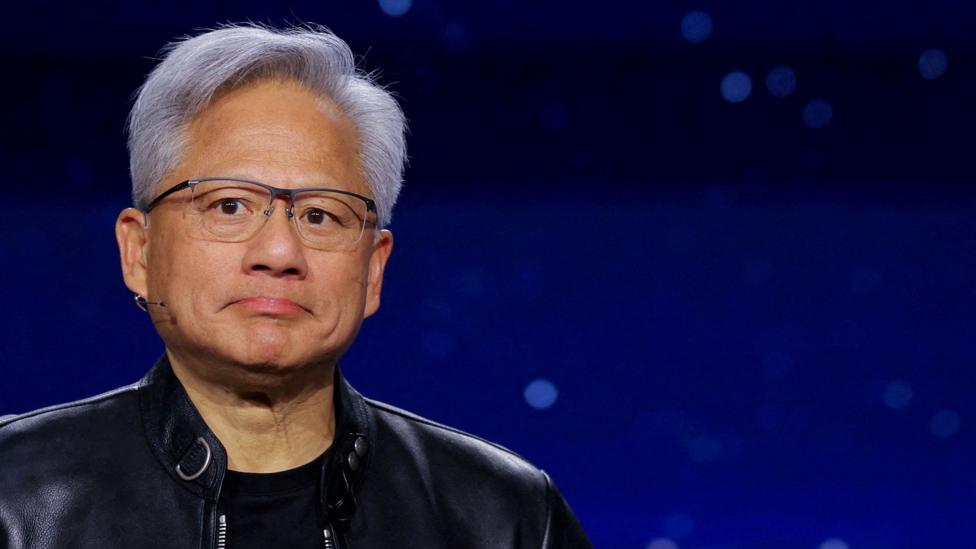
Jensen Huang has stepped down as president, chief executive officer, and board member of Nvidia, ending his more than three-decade tenure at the helm of the semiconductor powerhouse. His departure follows mounting scrutiny surrounding allegations involving his personal conduct and purported ties to an executive suspected of operating on behalf of Chinese intelligence. The abrupt leadership vacuum has sent shockwaves through the global technology sector and rattled financial markets.
The controversy intensified after reports emerged detailing Huang's personal relationship with Alice Huang, a Chinese national and former tech corporate executive. U.S. intelligence agencies identified the executive as a suspected operative linked to China's Ministry of State Security. While federal authorities noted there was no indication that Jensen Huang was aware of any espionage activity, the disclosure prompted immediate national security alarms across Washington.
Additional internal scrutiny within the company reportedly focused on broader ethics concerns, including separate relationships with employees. Following an internal board review and escalating public disclosures, Huang announced his resignation from all executive and governance positions. He issued a public statement acknowledging personal unfaithfulness and apologizing to his family, though governance questions quickly multiplied across the industry.
In the wake of Huang's immediate departure, Nvidia appointed Chief Financial Officer Colette Kress to serve as interim chief executive officer. Kress assumes corporate leadership during one of the most tumultuous periods in the firm's history, as the board initiates a formal search for a permanent successor. Company leadership faces the immediate challenge of stabilizing operations, reassuring jittery investors, and maintaining client trust.
Lawmakers in the United States Congress have already signaled plans to convene hearings and pursue formal inquiries into the matter. Congressional committees overseeing intelligence, commerce, and national security are preparing requests for briefings regarding potential vulnerabilities or intellectual property exposure. Lawmakers are particularly focused on determining whether sensitive design data, strategic roadmaps, or export-controlled artificial intelligence architectures were compromised during the interactions.
The fallout carries severe geopolitical and economic ramifications given Nvidia's central position in the global artificial intelligence landscape. As the premier designer of advanced graphics processing units that power state-of-the-art data centers, the company stands at the epicenter of international competition for computational supremacy. Any suggestion that national security protocols were skirted or that high-level executive access was exploited has heightened regulatory friction between Washington and Beijing.
Wall Street responded swiftly to the leadership shakeup, reflecting deep anxiety over the sudden loss of the visionary co-founder who steered Nvidia from specialized PC graphics to a multi-trillion-dollar valuation. Share prices retreated following the announcement, wiping out billions of dollars in market capitalization across subsequent trading sessions. Institutional investors have voiced apprehension over whether succession uncertainties could disrupt long-term customer partnerships and production schedules.
Legal challenges have compounded the operational crisis, with shareholders filing class-action litigation against the company and members of its board. The lawsuits allege fiduciary breaches and failures in corporate oversight, arguing that governance lapses damaged shareholder value and subjected corporate assets to acute security risks. Independent analysts caution that protracted litigation and regulatory investigations could distract management during a pivotal technological transition.
Looking ahead, federal investigators and congressional committees are expected to seek formal testimony from Huang and corporate officers in the coming weeks. At the same time, Nvidia must navigate heightened scrutiny from export control regulators, defense stakeholders, and international enterprise customers reliant on its hardware. Whether the interim leadership can swiftly insulate the company's core operations from the unfolding political drama remains the defining test for the silicon giant.
Primary source: BBC World. Newzly rewrites and structures source reporting for clarity; verify critical details at the original.