Odisha Puts Eight Districts on High Alert as Cyclone Akvan Approaches Coast
Odisha authorities have placed eight districts on high alert as Severe Cyclonic Storm Akvan advances across the Bay of Bengal, prompting school closures, rescue deployments, and evacuation preparations under a zero-casualty directive.
In this piece
The Odisha government has issued alerts across eight districts as Severe Cyclonic Storm Akvan approaches the coast from the Bay of Bengal. Emergency response…
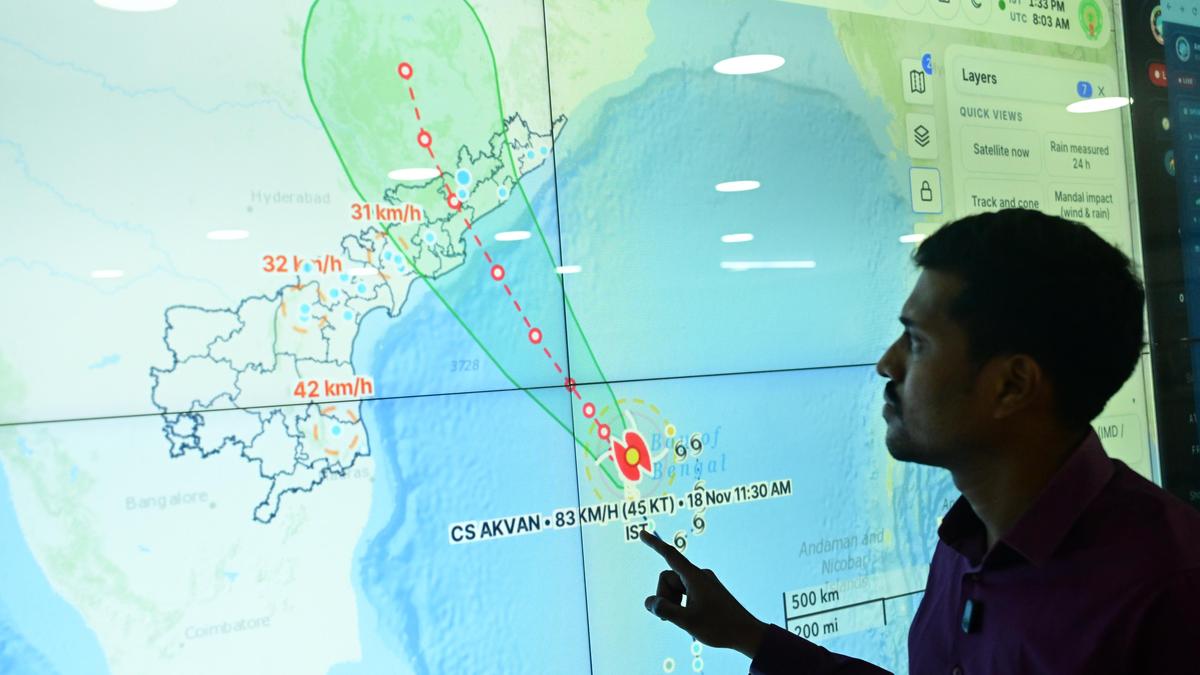
The Odisha government has placed eight districts on high alert as Severe Cyclonic Storm Akvan advances across the Bay of Bengal toward the eastern coast of India. Meteorological officials have warned of widespread heavy precipitation and gale-force winds as the storm system closes in on coastal regions.
According to updates from the India Meteorological Department, the cyclonic system has been tracking in a north-northwestward direction over maritime waters. Numerical forecast models indicate the storm will near the coastline between north Andhra Pradesh and south Odisha, with projections monitoring a corridor between Narsapur and Puri.
Meteorologists project maximum sustained wind speeds reaching 90 to 100 kilometers per hour, with localized gusts expected to peak at 110 kilometers per hour during the storm's approach. Sea conditions across the west-central and northwest Bay of Bengal have turned rough to phenomenal, prompting marine advisories that strictly instruct fishermen to suspend operations and remain ashore.
State disaster administrators have issued red and orange rainfall warnings across multiple southern and coastal jurisdictions. Key districts placed under heightened vigilance include Ganjam, Gajapati, Puri, Jagatsinghpur, Kendrapara, Kandhamal, Koraput, Malkangiri, and Rayagada, where downpours are expected to trigger localized waterlogging and rapid stream runoff.
In response to the deteriorating weather forecasts, district collectors across the vulnerable zones have ordered the precautionary closure of educational institutions and Anganwadi centers. The administrative shutdown aims to prevent student travel amid worsening conditions while making designated school buildings available for potential emergency use.
Disaster response agencies are operating under a state directive aimed at ensuring zero casualties across affected jurisdictions. Revenue and block-level teams have commenced shifting residents from low-lying coastal villages, thatched dwellings, and landslide-prone hill slopes into reinforced cyclone shelters supplied with dry rations and backup power.
Specialized rescue personnel have been pre-positioned throughout the southern and coastal belts to clear transport corridors and lead emergency responses. Units from the National Disaster Response Force, the Odisha Disaster Rapid Action Force, and state fire services have deployed equipped teams with motorized boats, heavy-duty chainsaws, and emergency medical kits.
To ensure continuity of public utilities, state departments have canceled routine leave for essential personnel and activated continuous district-level control rooms. Energy, healthcare, and water supply authorities have placed dedicated standby crews on alert to rapidly restore electric feeders, maintain hospital services, and distribute potable water following the storm.
The Bay of Bengal coastline along Odisha has historically experienced frequent tropical cyclonic systems, particularly during post-monsoon transition periods. Over several decades, the state has developed extensive early warning networks and community shelter infrastructure designed to mitigate large-scale casualties during major weather events.
As Cyclone Akvan continues its advance, disaster management officials are closely observing satellite and radar tracking to assess its landfall point and exact forward speed. Administrative authorities have reiterated calls for the public across coastal districts to follow official guidance, avoid unnecessary transit, and remain housed until conditions stabilize.
Primary source: Google News Odisha. Newzly rewrites and structures source reporting for clarity; verify critical details at the original.