Oregon Forest Road Fight Ignites Fierce Battle Over Public Lands
In Oregon's Blue Mountains, over 23,000 miles of forest roads have reignited a fierce battle over whether public lands should be opened to increased logging and motorized access or protected for wildlife and watersheds.
In this piece
A debate over more than 23,000 miles of roads in Oregon's Blue Mountains highlights competing visions for national forests. Federal efforts to expand logging…
A sprawling network of forest roads across northeastern Oregon’s Blue Mountains has emerged as the flashpoint in an intensifying battle over the core purpose of America’s public lands. Federal policy proposals aimed at expanding timber harvesting and mineral extraction have spurred fresh efforts to roll back roadbuilding bans and loosen motorized vehicle restrictions across three national forests. The contentious initiatives have brought long-simmering divisions over access, conservation, and local rural economies back to the forefront.
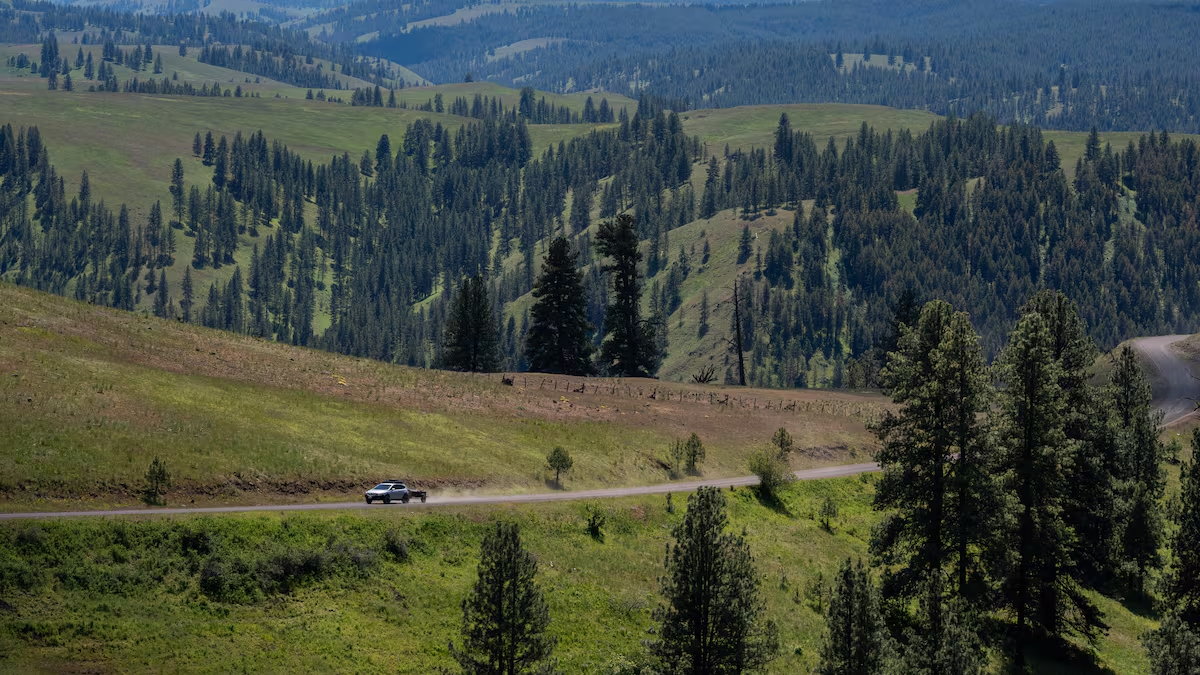
Covering roughly 5.5 million acres across the Malheur, Umatilla, and Wallowa-Whitman national forests, the Blue Mountains region already contains more than 23,000 miles of mapped roads. Originally constructed over decades to facilitate industrial logging, fire suppression, and mineral prospecting, these thoroughfares create one of the densest forest route networks in the Pacific Northwest. Today, federal land managers are weighing policies that could open previously protected roadless backcountry areas to new construction.
For timber operators, local resource-dependent communities, and motorized recreationists, maintaining and expanding this vast labyrinth of routes is considered essential to regional survival. Proponents emphasize that vehicle access sustains timber sales, supports logging and milling employment, and ensures firefighters can reach remote lightning strikes before blazes spread out of control. County officials and off-highway vehicle enthusiasts also argue that public lands belong to all taxpayers, who should retain the freedom to drive, camp, and explore remote terrain.
In contrast, conservation organizations and environmental scientists warn that the current road density is already inflicting severe damage on vulnerable ecosystems. Unpaved dirt and gravel roads channel silt and agricultural runoff directly into fragile mountain streams, degrading critical spawning beds for threatened salmon and steelhead trout. Heavy motorized traffic also breaks up intact forest canopies, accelerating soil erosion and allowing invasive weeds to penetrate once-pristine mountain meadows.
Wildlife biologists and sporting groups, including hunters and anglers, have voiced rising alarm over the impact of road networks on big-game herds. Research indicates that frequent vehicle traffic spooks Rocky Mountain elk and mule deer, driving them away from high-elevation summer pastures and public foraging grounds. When displaced from public forests, wildlife herds often seek refuge on private agricultural lowlands, where they damage fences and devour hay, sparking friction between hunters, landowners, and state wildlife managers.
The dispute intersects with contentious federal efforts to reconsider the landmark Roadless Area Conservation Rule, which has shielded undeveloped national forest lands from new roads since 2001. In the Blue Mountains, attempts to modernize the overarching forest plans have stalled for years amid sharp pushback against higher commercial timber quotas. Any regulatory shift that revokes roadbuilding restrictions could clear the way for road construction across hundreds of thousands of previously shielded acres.
The controversy highlights an enduring identity crisis across the interior American West, where former logging towns are navigating changing economic realities. While traditional commodity industries continue to push for resource development, newer residents and recreation businesses place greater value on quiet outdoor recreation and ecological preservation. Federal agencies find themselves caught in the middle, charged by Congress with balancing multiple uses while facing intense scrutiny from competing interest groups.
As federal planners continue working through revisions to the Blue Mountains forest management blueprint, legal and political challenges appear inevitable. Environmental watchdogs have signaled readiness to challenge any road expansions in federal court, citing potential violations of clean water and endangered species protections. Meanwhile, local communities and industry groups are pressing federal leaders to deliver promised economic relief and forest health treatments, ensuring the debate over public forest access will remain heated.
Primary source: Google News Oregon. Newzly rewrites and structures source reporting for clarity; verify critical details at the original.