Paraguay’s president resigns after banking collapse freezes millions of savings
Santiago Peña resigned Thursday after a crisis The Guardian says collapsed Paraguay’s banking system, with Ueno Bank’s rapid expansion and frozen savings at the center.
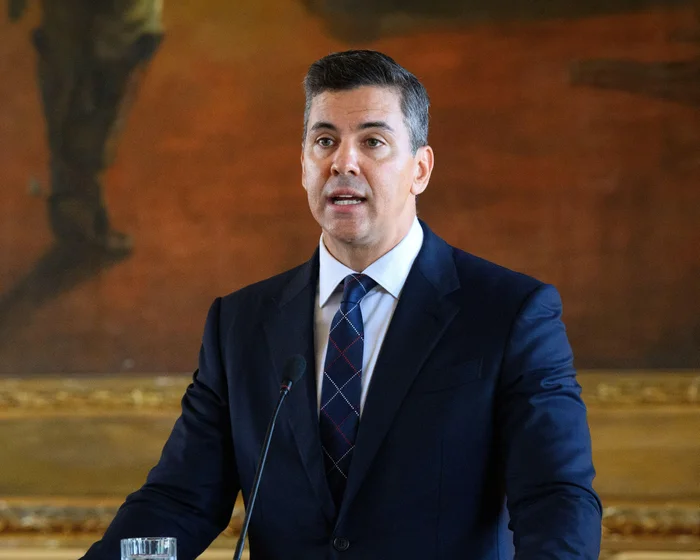
Paraguay’s president, Santiago Peña, resigned on Thursday after a political and financial crisis that, according to The Guardian, collapsed the South American country’s banking system in recent days. The departure follows the freezing of millions of people’s savings, placing his rightwing administration at the center of a national financial emergency.
The Guardian reported that the crisis is centered on Ueno Bank. Peña’s administration had authorized the lender to drastically expand its operations before the collapse, the newspaper said.
In just a few years under Peña, Ueno Bank went from an obscure digital bank to one of Paraguay’s largest lenders, The Guardian reported. The bank has claimed to have about 60 percent of the country’s adult population as customers, a reach that would mean the failure touches a very large share of households if the claim holds.
That claimed customer base is what turns a single-institution failure into a broader social shock. When deposits at a dominant retail lender are frozen, wages, small-business cash and ordinary payments can stall together, even before authorities finish sorting who is owed what.
The Guardian’s account describes both a political crisis and a financial one. The same government that oversaw the bank’s rapid expansion is the government now leaving office while savers remain locked out of their money.
Public detail beyond those points is limited in the report as circulated. The available account does not set out the precise trigger for the collapse, the total value of frozen balances, or the legal steps used to halt withdrawals.
For depositors, the immediate issue is access to savings. A freeze at a bank that presents itself as serving most adults can also shake confidence in the rest of the system, especially if customers cannot yet tell which institutions are still operating normally.
The authorization to expand, as described by The Guardian, is likely to dominate questions of accountability. Fast growth at a digital lender concentrates liquidity and supervisory risk, and the president’s resignation signals that the political cost of that growth has already arrived.
Outside observers will be watching whether The Guardian’s description of a collapsed banking system means a system-wide breakdown or a failure centered on Ueno that has frozen a huge share of retail savings. That distinction will shape how quickly payments and credit can resume, but the initial account does not resolve it.
What happens next is only partly visible. Peña has left office; the report does not name a successor, describe a caretaker arrangement, or give a timetable for unfreezing deposits. Any orderly reopening would depend on authorities who can both protect remaining funds and explain how a once-obscure digital bank became a pillar of household finance.
Until a fuller official accounting emerges, the established facts remain narrow. A rightwing president has resigned, millions of people’s savings are frozen, and Ueno Bank — authorized to expand drastically and claiming about 60 percent of adults as customers — sits at the center of a banking collapse The Guardian says unfolded in recent days.
Primary source: The Guardian World. Newzly rewrites and structures source reporting for clarity; verify critical details at the original.