Paraguay President Santiago Peña resigns after bank collapse
Paraguay’s president has resigned after a bank collapse and a lower-house vote to pursue an impeachment trial, according to BBC World reporting on the political fallout.
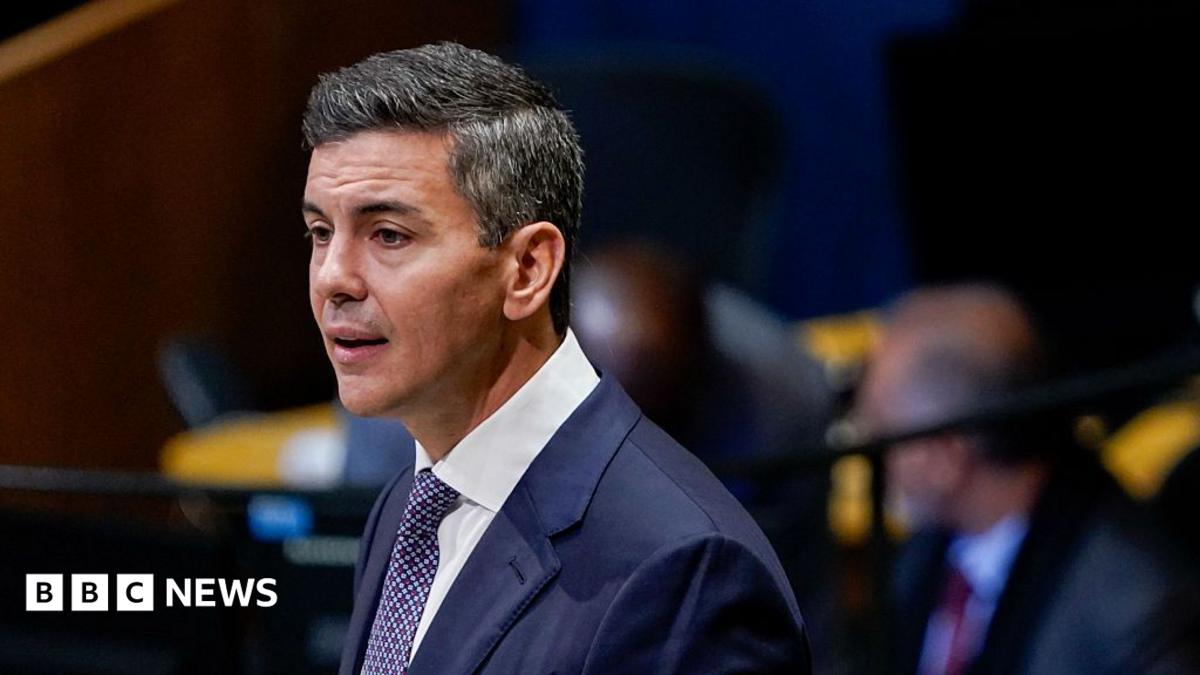
Paraguay President Santiago Peña has resigned, BBC World reported, in a move that followed a bank collapse and a vote in the lower house of congress in favour of pursuing an impeachment trial against him. The broadcaster framed the resignation as coming after those two developments rather than as a standalone personnel change.
The lower house’s decision to advance impeachment placed the presidency under formal legislative pressure. In Paraguay’s system, that chamber’s vote is the first step toward a trial that would then be handled according to constitutional rules in the Senate. BBC World did not publish, in the material available here, the tally of the vote, the precise charges, or the date of the session.
A bank collapse was cited as part of the sequence leading to Peña’s departure. The report did not name the institution, describe the scale of losses, or say whether depositors, counterparties, or the public finances were directly affected. Without those details, the financial event can be described only as a serious institutional failure that coincided with the impeachment push.
Peña had been serving as head of state when the crisis broke. The BBC item did not recount his earlier career, election, or policy record in the excerpt provided, and those elements are therefore not restated here as new facts. What the report establishes is that he left office after the bank failure and after deputies voted to send him toward an impeachment trial.
Impeachment in a presidential system is a political and legal process, not an automatic removal. A lower-house vote to pursue a trial signals that a majority of deputies believed there was a case to answer. Whether that case would have succeeded in a full trial is unknown; Peña’s resignation means the process as described may not run to a Senate verdict.
The combination of a banking failure and an impeachment vote is politically explosive because it ties questions of financial stability to questions of executive legitimacy. Markets, depositors, and foreign partners typically watch both the health of the financial system and the continuity of government. BBC World did not report market moves, emergency liquidity measures, or statements from the central bank in the copy supplied.
Why the story matters beyond Asunción is straightforward: Paraguay is a sovereign borrower and a regional trading partner, and an abrupt presidential exit after a bank collapse raises uncertainty about regulation, fiscal backstops, and the next administration’s agenda. None of those second-order effects were quantified in the BBC brief.
Succession and the fate of the impeachment file now sit with Paraguayan institutions. The BBC report did not name an acting or incoming president, did not say whether Peña conceded specific allegations, and did not quote him or congressional leaders. Those gaps should be treated as unreported, not as evidence that no such statements exist.
Further official accounts would be expected to clarify which bank failed, what triggered the collapse, how congress defined the impeachment case, and how power is transferred. Until those facts are on the record, the confirmed picture remains the one BBC World put on the wire: Peña resigned after a bank collapse and after the lower house voted to pursue an impeachment trial.
Primary source: BBC World. Newzly rewrites and structures source reporting for clarity; verify critical details at the original.