Pennsylvania Grassroots Mobilization Challenges Political Status Quo
Grassroots organizers across Pennsylvania are challenging conventional political wisdom, questioning whether establishment leaders will respond to growing voter pushback against economic precarity and institutional inertia.
In this piece
Voters and community organizers across Pennsylvania are increasingly challenging traditional party lines in favor of bottom-up economic demands. Drawing on…
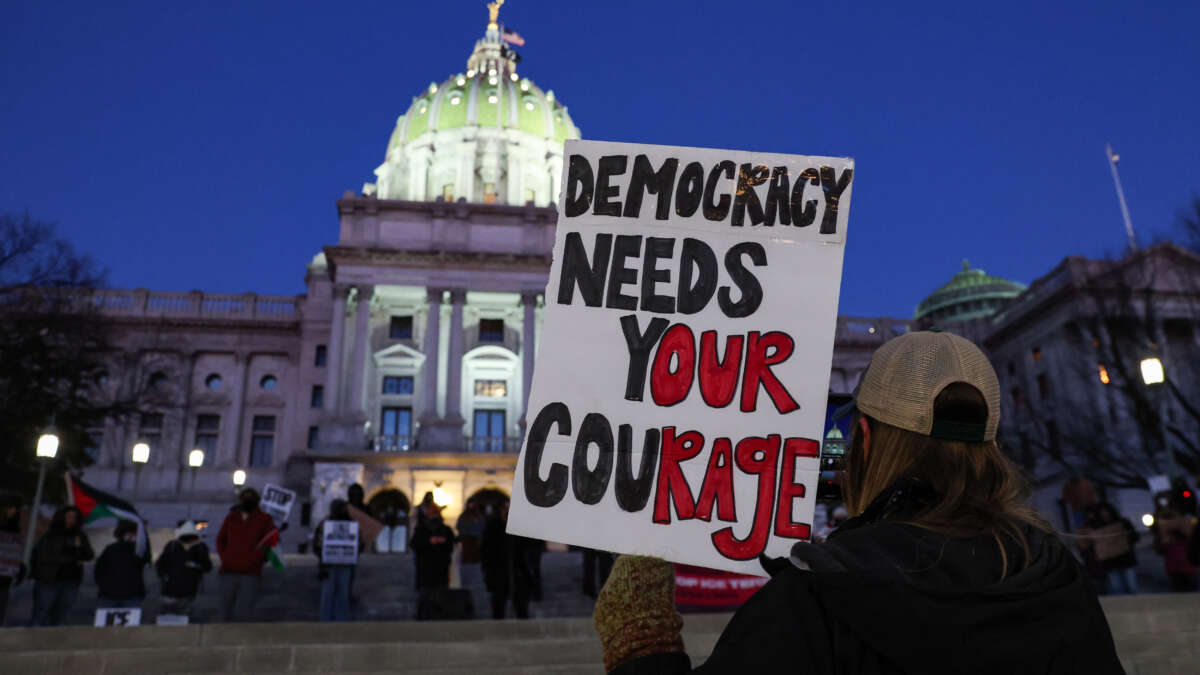
Voters and community advocates across Pennsylvania are voicing growing frustration with conventional establishment politics, questioning whether state and national leaders will genuinely respond to their demands. Reporting from Truthout and The Real News Network highlights how grassroots coalitions are challenging traditional partisan dynamics across diverse communities. Rather than relying on top-down party apparatuses, local organizers argue that working-class constituents are demanding tangible remedies for ongoing economic hardship.
The shifting political landscape reflects years of sustained community organizing, notably in competitive battlegrounds and historically conservative districts. Activists have steadily built neighborhood coalitions focused on fundamental economic security, including living wages, healthcare access, and quality public services. Recent local and legislative campaigns demonstrate that candidates speaking directly to kitchen-table concerns can gain substantial traction where standard party appeals have fallen short.
Organizers characterize this emergent dynamic as a bottom-to-top political realignment rather than a conventional left-versus-right contest. Frontline organizers stress that many residents view both major political establishments as beholden to corporate donors and entrenched special interests. By centering the material hardships of daily life, independent campaigns have worked to build coalitions across traditional geographic and cultural divides.
This trajectory draws upon groundwork laid in previous electoral cycles, including progressive insurgencies in places such as Lancaster County. The 2018 congressional campaign of Jess King in Pennsylvania's 11th District illustrated that unapologetically progressive economic platforms could engage disaffected voters in conservative strongholds. While challenging districts did not transform overnight, organizers emphasize that those efforts established enduring networks and tested mobilization tactics.
Those foundational efforts have begun translating into concrete legislative breakthroughs in municipal and state politics. In the Lehigh Valley, candidates supported by community organizations and groups like the Working Families Party have secured victories by prioritizing tenant rights, public education, and municipal accountability. Advocates view these wins as clear evidence that communities are prepared to support representatives who emerge directly from grassroots movements.
The deepening appetite for systemic change is underscored by persistent economic precarity felt throughout Pennsylvania's industrial towns, rural valleys, and urban centers alike. Rising costs for housing, utility bills, and basic necessities continue to strain household budgets across the commonwealth. For many voters, political rhetoric that fails to offer structural solutions has generated profound skepticism toward mainstream political discourse.
Despite localized victories, grassroots organizers continue to confront formidable institutional hurdles. Gerrymandered electoral boundaries, well-funded political action committees, and entrenched legislative hierarchies often blunt the impact of progressive momentum. Community leaders acknowledge that winning elections is only the preliminary hurdle, with the harder challenge lying in passing transformative policy through guarded legislative chambers.
The critical question highlighted by analysts is whether establishment officials in Harrisburg and Washington will recognize the underlying discontent driving these shifts. When political establishments dismiss working-class unrest or retreat into defensive posturing, they risk further alienating a volatile and exhausted electorate. Grassroots organizers maintain that ignoring these signals will leave institutional leaders increasingly isolated from voter sentiment.
Looking ahead, community coalitions across Pennsylvania plan to maintain pressure through ongoing civic education, union partnerships, and direct accountability campaigns. Organizers emphasize that their work does not begin or end on Election Day, but requires continuous community presence between voting cycles. Whether governing institutions adapt to this bottom-up pressure remains uncertain, but organizers assert that the public demand for meaningful accountability is unlikely to recede.
Primary source: Google News Pennsylvania. Newzly rewrites and structures source reporting for clarity; verify critical details at the original.