business·West Bengal·Paschim Medinipur District
PM Modi Urges IIT Kharagpur Students to Break Thinking Limits
Addressing the platinum jubilee of IIT Kharagpur, Prime Minister Narendra Modi urged students to overcome self-imposed boundaries and spearhead innovation, arguing that a nation realizes its potential only by expanding its ambitions.
In this piece
Prime Minister Narendra Modi addressed the 75th anniversary of IIT Kharagpur, calling on students to challenge limiting beliefs and accelerate indigenous…
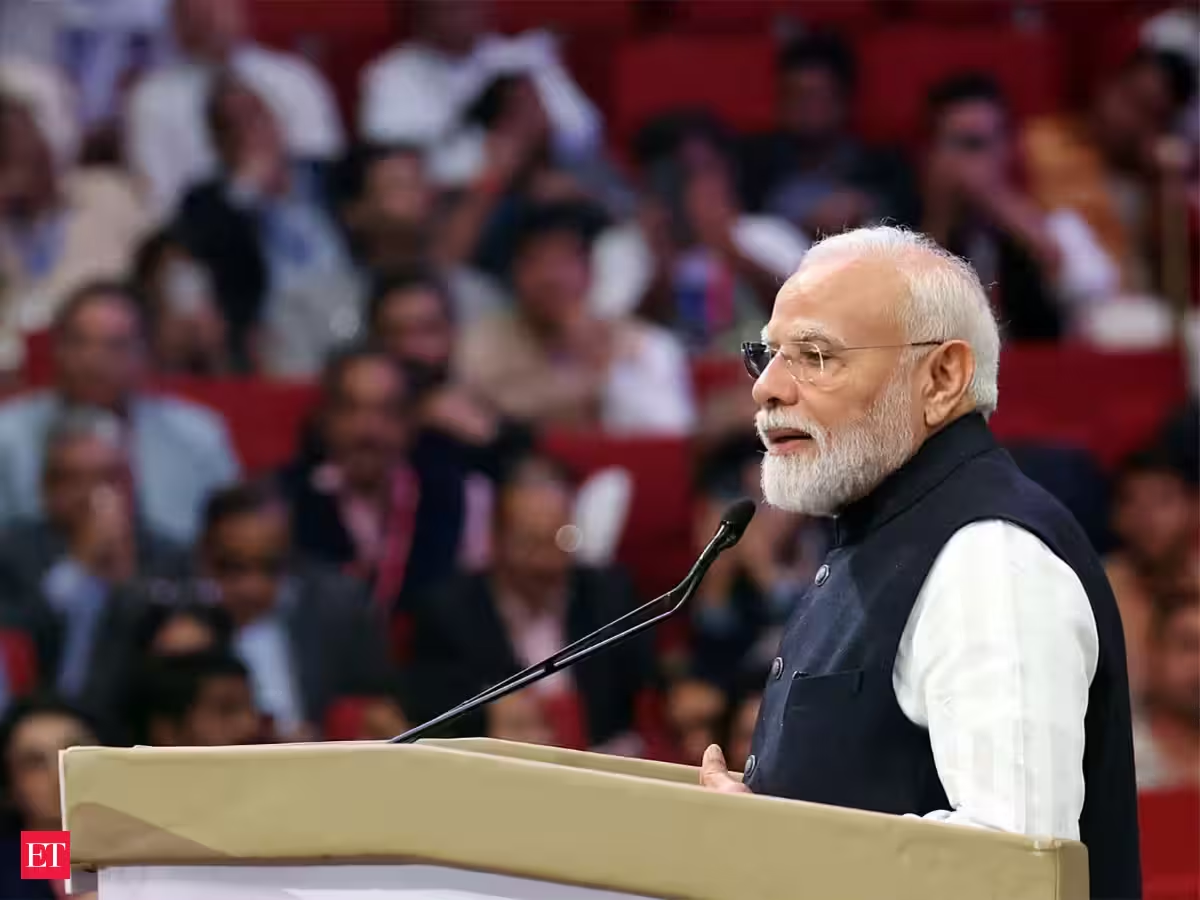
Prime Minister Narendra Modi urged students and young researchers at the Indian Institute of Technology Kharagpur to discard mental constraints and embrace bolder ambitions during his address at the institute's Platinum Jubilee celebrations. Speaking under the theme of breaking limits to unlock possibilities, Modi emphasized that technological self-reliance and national progress depend on the courage of young innovators to challenge existing boundaries. He called on the graduating cohort and faculty to spearhead the next generation of scientific breakthroughs.
In his keynote address, the Prime Minister argued that nations, much like individuals, achieve transformative progress only after shedding self-imposed restrictions. He observed that stagnant mindsets often curtail genuine potential far more than material constraints. Overcoming these inherited mental limits, he noted, has become an urgent prerequisite as India seeks to expand its footprint in high-value global industries.
The event marked the 75th anniversary of IIT Kharagpur, which was established in 1951 as the country's first Indian Institute of Technology on the site of the former Hijli Detention Camp. To commemorate the milestone, the Prime Minister released a special 75-year commemorative coin celebrating the institution's historic contributions to national engineering and scientific education. Campus leaders and faculty presented historical retrospectives highlighting the institute's role in building India's industrial backbone.
During his visit, Modi inspected an exhibition of indigenous deep medical technology innovations engineered by faculty and student research teams. He also engaged with students participating in the 75 Voices for Viksit Bharat initiative, an outreach campaign gathering youth perspectives on long-term national development goals.
Connecting institutional research with broader socio-economic development, Modi pointed to recent World Bank data indicating that roughly 50 crore citizens have emerged from poverty over the past 12 to 13 years. He attributed this shift to a departure from fatalistic administrative attitudes that historically treated poverty as an intractable reality. Replacing procedural delays with proactive policy delivery, he argued, demonstrates how altering mindset produces tangible social outcomes.
The Prime Minister pointed to recent advancements in frontier technologies as further evidence that challenging conventional skepticism delivers results. He cited the India Semiconductor Mission and reforms across the commercial space industry as proof that domestic manufacturing can compete internationally. These programs, he explained, moved forward despite initial doubts regarding whether the country possessed the technical infrastructure required for advanced fabrication and aerospace systems.
Modi specifically acknowledged the entrepreneurial achievements of IIT Kharagpur alumni, citing their leadership in private aerospace ventures such as Skyroot Aerospace. He noted that former students from the Kharagpur campus have demonstrated how domestic technical talent can build launch capabilities once reserved for state-run agencies. Such enterprises, he suggested, serve as models for students seeking to transition from traditional employment toward high-impact entrepreneurship.
The address placed university-level research directly within the strategic framework of Viksit Bharat 2047, the government's roadmap to establish India as a developed economy by the centenary of its independence. Modi emphasized that sustained economic growth requires academic institutions to align scientific inquiry with urgent domestic priorities, ranging from energy transition to advanced computing. Without domestic intellectual property and manufacturing capability, he cautioned, sustained economic leadership remains unattainable.
Looking ahead, IIT Kharagpur plans to expand interdisciplinary research hubs focusing on artificial intelligence, microelectronics, and sustainable energy systems. Government planners are increasingly looking to premier engineering campuses to provide practical, scalable solutions for public infrastructure and industrial competitiveness. As national initiatives demand higher domestic patent output, the pressure will remain on premier technical institutes to translate laboratory discoveries into commercial reality.
Primary source: Economic Times. Newzly rewrites and structures source reporting for clarity; verify critical details at the original.