Race to Replant Rescued Ancient Baobabs in South Africa After Export Intercepted
South African conservationists have launched an urgent operation to replant five centuries-old baobabs in a north-eastern reserve after authorities halted an unauthorized attempt to export the 20-tonne giants to Georgia.
In this piece
Environmentalists in South Africa are working against the clock to replant five ancient baobabs at the Timbavati Nature Reserve after intercepting an illicit…
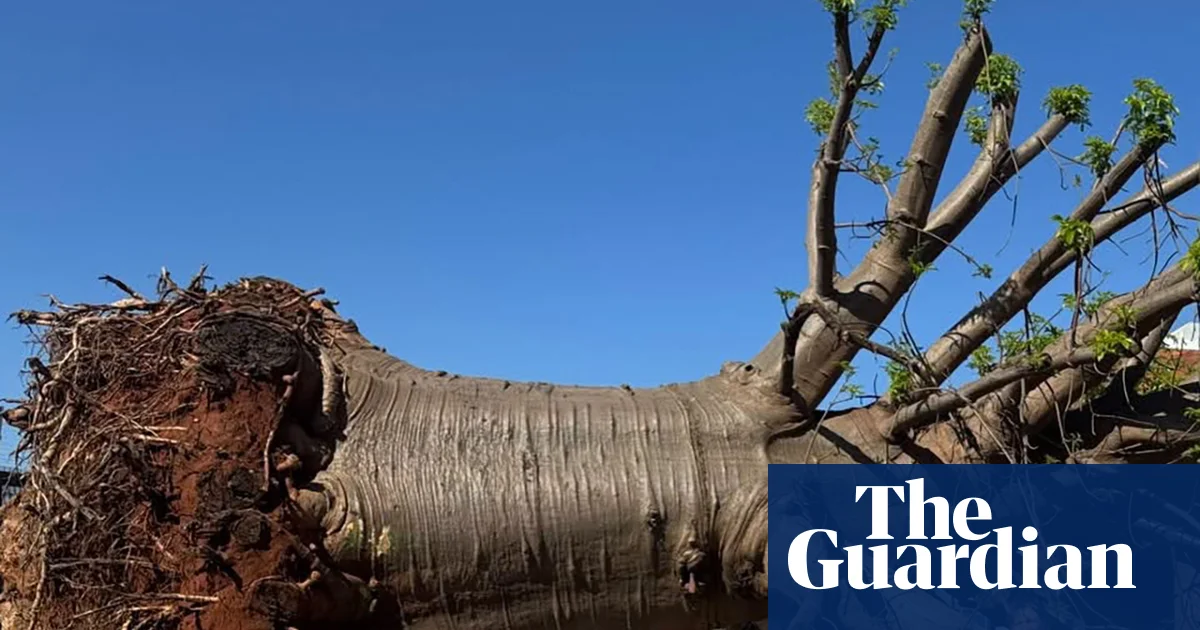
Conservationists in South Africa have launched an urgent operation to replant five ancient baobab trees that were intercepted during an unauthorized attempt to export them overseas. The massive specimens, estimated to be centuries old and weighing roughly 20 tonnes each, arrived this week at a nature reserve in the country's north-east. Teams on the ground are now racing against time to anchor the trees into the soil before the seasonal window for their survival closes.
The trees had been stranded since July at a commercial shipping warehouse in the coastal city of Durban. Border and environmental officials halted the shipment after discovering that the botanical giants had been uprooted and transported across the country without the mandatory permits. Left lying on their sides in a depot yard without earth for roughly four months, the trees suffered prolonged stress while legal and logistical hurdles were resolved.
Investigators revealed that the trees were dug up from their native habitat by a commercial landscaping operator. The planned destination was reportedly Georgia, where the specimens were intended for a private collection. A similar attempt in recent years to import mature baobabs from Kenya to Georgia drew widespread condemnation after the uprooted trees failed to survive the long overseas transit.
Baobabs, often referred to as the iconic upside-down trees of the African savanna, are strictly protected under national environmental regulations. The species can live for more than a thousand years, playing a vital role in local ecosystems by storing massive quantities of water and providing shelter for wildlife. Uprooting mature specimens causes severe root damage and disrupts fragile arid habitats that take centuries to recover.
The rescue mission to salvage the Durban trees required extraordinary engineering and financial resources. Specialists arranged heavy-duty flatbed trucks and specialized cranes to transport the multi-tonne trunks nearly nine hundred kilometers across the country to the Timbavati Nature Reserve. The relocation operation alone cost over one million rand, funded largely through emergency conservation contributions.
Time is a critical factor in whether the rescued trees will take root and survive. With the arrival of the southern spring, baobabs emerge from their dormant winter state and begin drawing large amounts of water and nutrients to produce new foliage. Because the trees were deprived of soil during their dormancy, arborists must immediately re-establish moisture around their root balls to prevent internal tissue collapse.
At the Timbavati reserve, ground crews are carefully positioning each tree upright using industrial cranes. Technicians are anchoring the towering trunks with heavy steel cables to maintain stability against high winds while subterranean roots begin the slow process of regeneration. Workers are also constructing specialized electric fencing around the replanting perimeter to shield the vulnerable bark from damage by resident elephants.
South African authorities have simultaneously initiated legal action against the landscaping contractor responsible for digging up the baobabs. A criminal case has been registered over the unlawful harvesting and transport of protected indigenous flora, with court hearings currently proceeding. Wildlife protection groups are monitoring the prosecution closely, urging the judiciary to impose stringent penalties to deter future international trafficking attempts.
Ecologists emphasize that while the replanting effort represents a rare victory for wildlife enforcement, long-term recovery remains uncertain. Monitoring teams will track the baobabs over several growing seasons to look for vital signs of leaf development, sap circulation, and structural stability. For now, conservationists remain cautiously optimistic that the centuries-old giants can regain their footing in their native soil.
Primary source: The Guardian World. Newzly rewrites and structures source reporting for clarity; verify critical details at the original.