Recount Nearly Finalized in North Carolina's 5th Congressional District Race
A districtwide recount in North Carolina's 5th Congressional District is nearing completion, affirming Democratic challenger Chuck Hubbard's razor-thin victory over veteran Republican incumbent Rep. Virginia Foxx after machine retallies across local election boards.
In this piece
Election officials across North Carolina's 5th Congressional District are concluding a formal recount petitioned by Republican Rep. Virginia Foxx. The machine…
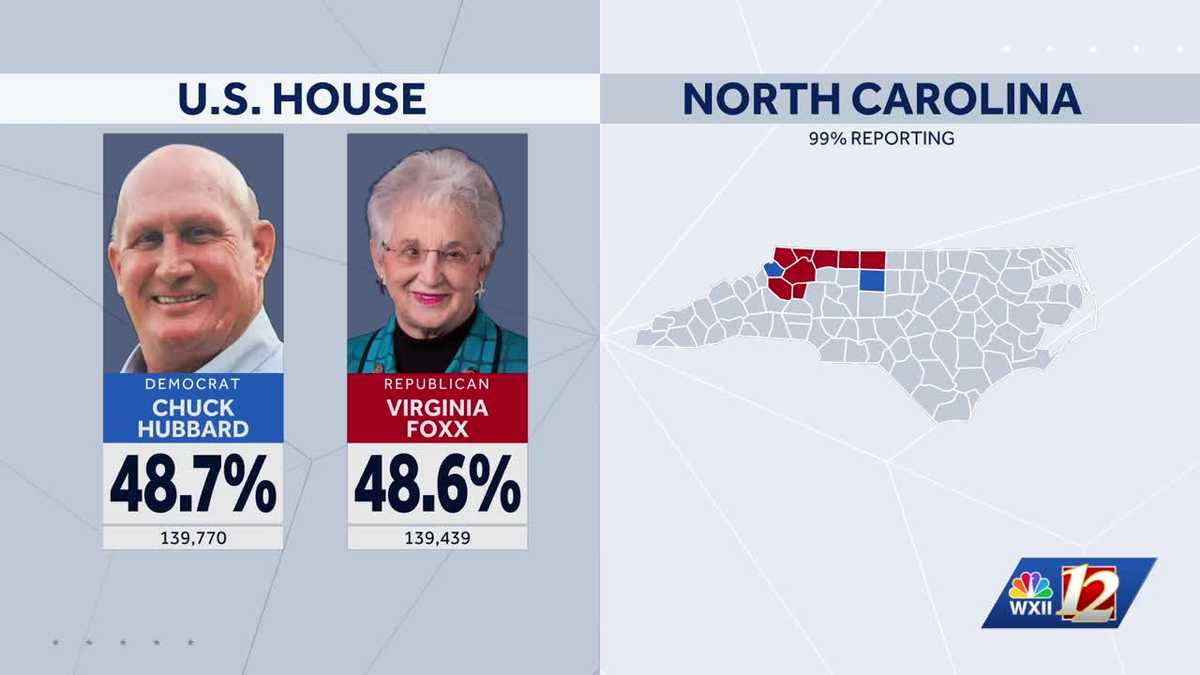
A comprehensive recount across North Carolina's 5th Congressional District is reaching its final stages, cementing the results of one of the closest and most closely watched federal races in the state. Local election workers across several counties have completed or are finishing machine retallies of ballots cast in the contest between Republican incumbent Rep. Virginia Foxx and Democratic challenger Chuck Hubbard. According to local reporting from WXII and regional election authorities, the recount has held steady without significant changes to the initial canvassed totals.
Under North Carolina election statutes, a candidate in a non-statewide race may demand an official recount if the margin of victory is within 1 percent of the total votes cast. Foxx formally petitioned for the retally after county canvasses showed her trailing Hubbard by approximately 330 votes out of nearly 287,000 ballots counted. With the margin separating the two candidates representing only a tiny fraction of a percent, election boards prepared for exhaustive districtwide verification.
The recount required election staff across the district to run tens of thousands of paper ballots back through high-speed optical scanners to verify vote tallies. Bipartisan teams of poll workers and county board members monitored the procedure in public sessions to ensure strict chain-of-custody protocols. Officials reported that the machinery functioned as designed, identifying only negligible fluctuations typical of standard high-volume recounts.
As individual counties submitted their finalized retabulations, the updated numbers confirmed Hubbard maintaining his narrow advantage over the long-serving incumbent. The final machine counts showed Hubbard with 139,769 votes to Foxx's 139,436 votes, resulting in an advantage of 333 votes. Bipartisan election officials noted that the minor shifts observed during the retally reflected standard optical reconciliation rather than procedural errors or systemic discrepancies.
The certified result marks a dramatic conclusion to the tenure of Virginia Foxx, who has represented the district in the U.S. House of Representatives since 2005. During her two decades on Capitol Hill, Foxx established herself as an influential conservative voice, notably chairing the House Committee on Education and the Workforce. Her bid for a 12th congressional term faced an unexpectedly competitive challenge from Hubbard, a local journalist and political newcomer.
Hubbard ran a campaign focused on economic revitalization, healthcare access, and pragmatic representation for rural and mountainous communities across northwestern North Carolina. The district had undergone redistricting adjustments ahead of the general election cycle, slightly altering its demographic composition and regional boundaries. Despite the district's historical leaning toward conservative candidates, Hubbard managed to assemble a competitive coalition that kept the race virtually tied.
The razor-thin outcome carries notable implications for the broader political landscape and the narrow balance of power within the House of Representatives. In an era where congressional majorities are determined by a handful of seats, every competitive contest draws national scrutiny and party resources. The result demonstrates how targeted local campaigning can alter traditional electoral assumptions, even in districts previously regarded as comfortable holds for incumbents.
State and local election directors emphasized that the smooth completion of the recount reinforces public confidence in North Carolina's voting infrastructure. The paper-ballot system, backed by routine audits and transparent recount protocols, allowed bipartisan boards to quickly verify hundreds of thousands of individual choices. Observers from both party organizations monitored each stage of the recount, documenting the orderly handling of materials.
With county-level recounts concluding, the North Carolina State Board of Elections is scheduled to review the certified county results to grant final administrative approval. Once the statewide body formally issues its certificate of election, Hubbard will prepare to transition into the federal office ahead of the congressional swearing-in ceremonies. Representatives for the campaigns and local officials indicated that the process has proceeded transparently as the district prepares for its first congressional change of representation in two decades.
Primary source: Google News North Carolina. Newzly rewrites and structures source reporting for clarity; verify critical details at the original.