Kimpa Vita, the 18th-Century Kongolese Prophet Burned at the Stake, Celebrated as Africa's Joan of Arc
More than three centuries after she was condemned as a heretic and executed, 18th-century prophet Dona Beatriz Kimpa Vita is gaining renewed global recognition as a foundational spiritual reformer and anti-colonial symbol.
In this piece
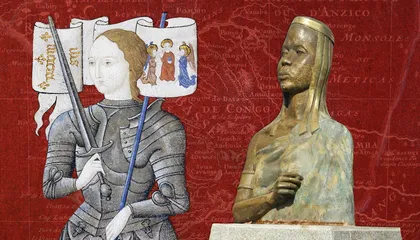
Three hundred and twenty years after her execution, Dona Beatriz Kimpa Vita is increasingly honored as the Kongolese Joan of Arc. In the early 1700s, she led a…
More than three centuries after she was condemned and executed, the 18th-century prophet Dona Beatriz Kimpa Vita is drawing renewed international attention as one of Central Africa's most consequential historical figures. Modern historians and cultural commentators increasingly celebrate her as the "Kongolese Joan of Arc" for her bold defiance of European colonial authority and local political fracture. Her life and legacy, revisited in a recent Smithsonian retrospective, highlight how an Indigenous spiritual uprising challenged established orthodoxies in the Kingdom of Kongo.
Born into the Kongolese nobility in the late 17th century, Kimpa Vita came of age during a period of intense civil strife and foreign meddling. After surviving a severe illness in her early twenties, she declared that she had died and been reincarnated with the spirit of Saint Anthony of Padua. She soon embarked on a public preaching mission across the divided realm, calling for spiritual renewal and political reconciliation.
At the center of Kimpa Vita’s message was a transformative and localized interpretation of Christianity, which had been present in Kongo since Portuguese missionaries arrived in the late 15th century. She taught that Jesus Christ, the Virgin Mary, and the apostles were native to the Kingdom of Kongo rather than the distant lands of the Roman Empire or Europe. By rooting Christian teachings in Central African geography and culture, she sought to strip away the European racial hierarchies imposed by foreign clerics.
Her preaching quickly galvanized thousands of followers into what historians refer to as the Antonian movement. Unlike foreign priests who frequently allied with rival factions, Kimpa Vita positioned herself as a neutral, divine mediator determined to end decades of destructive civil war. Her followers gathered in the ruined capital of Mbanza Kongo, seeking to rebuild the ancient city and restore a single, legitimate ruler to the throne.
The rapid growth of the Antonian movement posed a severe threat to both local claimants to the crown and European Catholic clergy, particularly Italian Capuchin missionaries. These foreign friars viewed her Africanized Christian theology as dangerous heresy and actively sought her downfall. At the same time, regional warlords feared her immense popular influence could undermine their own political power and control over lucrative transatlantic trade routes.
In 1706, after giving birth to a child, Kimpa Vita was captured by forces loyal to King Pedro IV, one of the primary contenders for the Kongolese throne. Pressured by European missionaries, the royal court conducted a summary trial that found her guilty of heresy and sorcery. On July 2, 1706, at roughly twenty-two years of age, she was burned at the stake alongside her partner and infant son in the town of Ewo.
Though her life was cut short, Kimpa Vita’s legacy resonates far beyond the borders of early modern Central Africa. Scholars now recognize her movement as one of the earliest recorded examples of organized ideological resistance against European colonial and religious dominance on the continent. Her teachings anticipated later African Independent Church movements by centuries, demonstrating the profound agency of African religious thinkers in reshaping imported faiths.
In contemporary Angola, the Democratic Republic of the Congo, and the Republic of the Congo, Kimpa Vita has transformed into an enduring symbol of national pride and feminist courage. Universities, civic monuments, and academic treatises bear her name across the region, honoring her as a protector of Kongo heritage. Her enduring title as the Kongolese Joan of Arc underscores her parallel role as a young woman whose faith and patriotism briefly united a divided kingdom.
As historical scholars continue to examine archives from the Kingdom of Kongo, Kimpa Vita's story is steadily reaching wider audiences outside the African continent. Retrospectives by institutions such as the Smithsonian contribute to a broader global reckoning with forgotten anti-colonial pioneers and female leaders in world history. Her enduring memory serves as a testament to the resilience of Indigenous thought in the face of political and cultural suppression.
Primary source: Smithsonian History. Newzly rewrites and structures source reporting for clarity; verify critical details at the original.