Report says people now speak about 338 fewer words
A Divya Bhaskar magazine item says recent research finds people speak roughly 338 fewer words than they once did, linking the drop to how technology has reshaped everyday talk.
In this piece
Divya Bhaskar magazine reports that newer research finds people now speak about 338 fewer words than they used to. The item presents the decline as a result of…
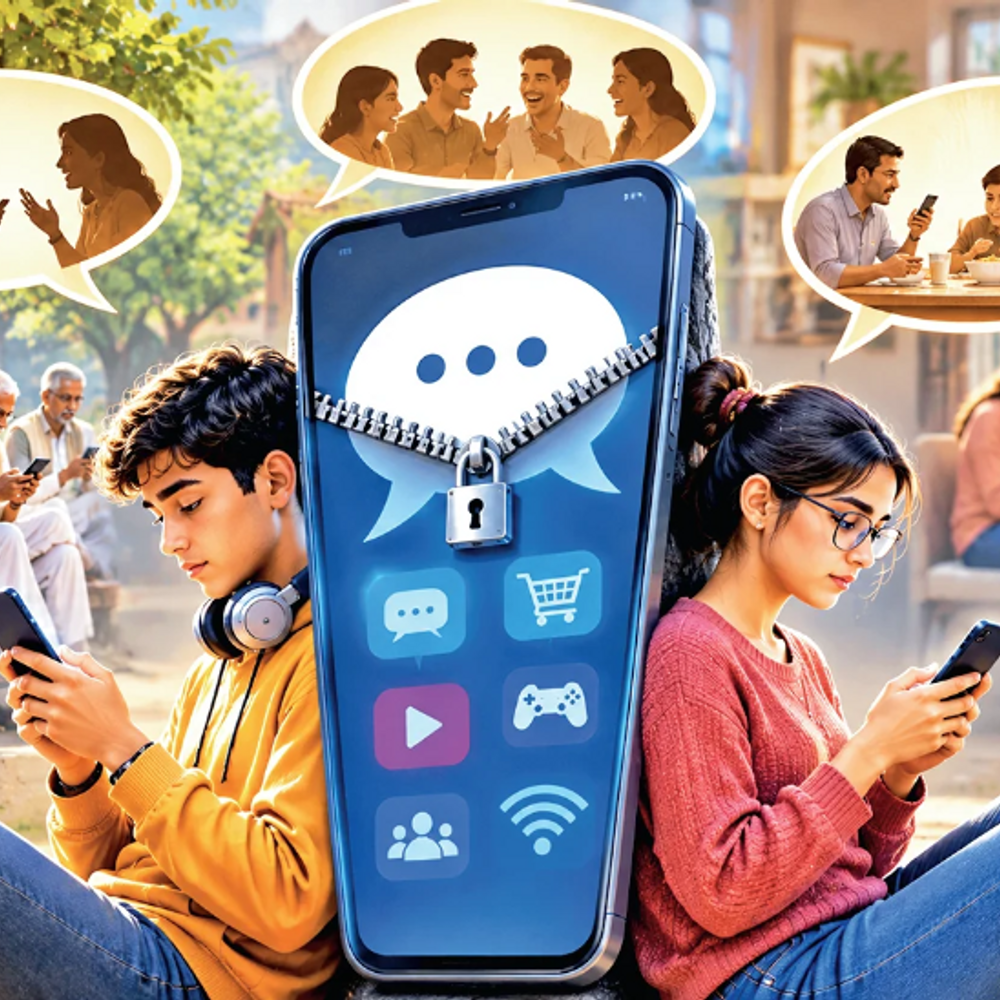
People speak about 338 fewer words than they once did, according to research cited by Divya Bhaskar magazine. The Gujarati-language item frames the figure as the latest finding on how technology has changed human speech, and it asks whether digital habits have effectively made people stop talking as much as they used to.
The magazine presents the 338-word gap as a comparison with earlier patterns of speech, rather than as a count of words lost in a single conversation. Beyond that comparison, the published item does not describe the size of the sample, the countries covered, the years being compared, or the method used to tally spoken words.
The report’s central claim is that technology sits behind the decline. It does not, in the material available here, name particular devices, platforms, or age groups, and it does not quote researchers explaining the mechanism. The suggestion is broader: as more communication moves onto screens, the amount of speech in daily life has fallen.
That framing fits a wider public debate about conversation in a connected world, but the magazine item itself does not supply new evidence on messaging apps, social media, or remote work. Any link between those tools and fewer spoken words remains the interpretation offered by the report, not a finding spelled out with supporting data in this source.
The headline treats the result as both a research update and a social question. By asking whether technology has stopped people from talking, Divya Bhaskar places a numerical claim inside a cultural worry: that convenience in communication may come with less spoken exchange among family, friends, and colleagues.
Readers should treat the 338-word figure as attributed reporting, not as a fully documented study summary. The item does not identify the authors, the journal, or whether the research has been peer reviewed. Those omissions limit how far the number can be weighed on its own.
If the underlying measurement is of words spoken per day, a reduction of a few hundred words would be a modest slice of a typical day’s talk, though still large enough to notice in short exchanges. The source does not say whether the count is daily, weekly, or tied to a specific setting, so the practical size of the change cannot be judged from the item alone.
The story matters because speech is how many people build relationships, settle disagreements, and pass on detail that text often compresses. A reported drop in spoken words, if it holds under closer scrutiny, would speak to habits rather than to a loss of the ability to talk. The magazine does not claim that people have become unable to speak, only that they speak less than before.
What happens next depends on whether the research behind the headline is published in enough detail for others to test the 338-word claim. Until authors, methods, and the period of comparison are available, the figure remains a single reported result. Divya Bhaskar’s account puts the question in front of readers; it does not close it.
Primary source: Divya Bhaskar Magazine. Newzly rewrites and structures source reporting for clarity; verify critical details at the original.