Russia Targets Kyiv River Crossings in Major Aerial Assault
Russian forces unleashed one of their largest aerial bombardments yet against Ukraine, targeting critical bridge crossings in Kyiv days after a Ukrainian strike damaged the strategic Crimean Bridge connecting Russia to the occupied peninsula.
In this piece
Russia launched one of its heaviest aerial attacks against Ukraine to date, striking key river crossings and infrastructure in the capital of Kyiv. The barrage…
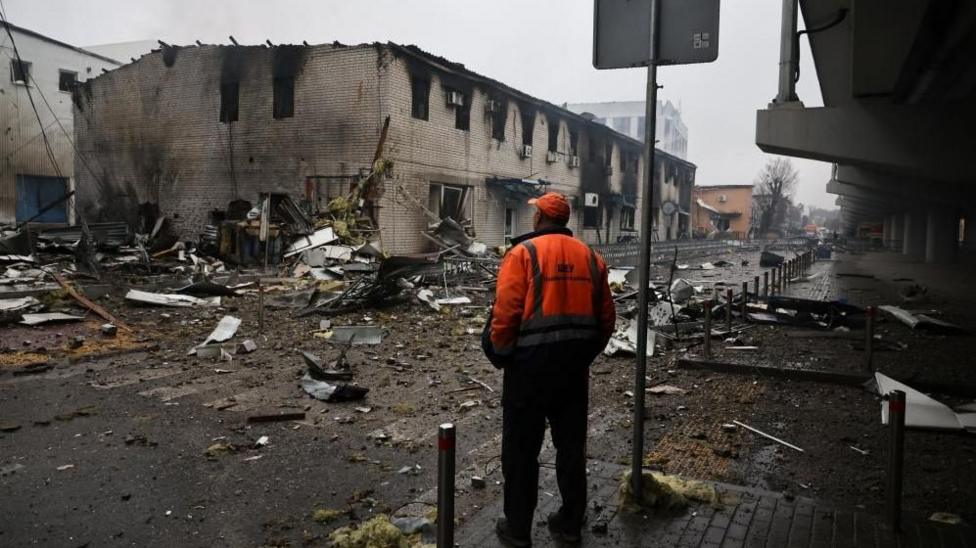
Russian military forces launched one of their most extensive aerial bombardments against Ukraine, targeting vital river crossings and infrastructure across the capital city of Kyiv. The overnight assault involved a significant wave of incoming projectiles aimed at disrupting central transportation arteries that span the Dnipro River. Local authorities and monitoring reports indicated that multiple transit corridors sustained impacts, triggering emergency responses and immediate disruptions across the metropolitan area.
The strikes came only days after Ukrainian forces successfully targeted the strategic Crimean Bridge, delivering a notable blow to Moscow's critical logistics network and symbolic connectivity to the occupied peninsula. That earlier Ukrainian operation caused substantial damage to key road and rail links used by Russian forces to move supplies toward southern frontlines. The subsequent assault on Kyiv's crossings appeared to represent a direct and swift retaliatory escalation by Moscow against Ukrainian infrastructure.
In Kyiv, the impact on river crossings created immediate logistical difficulties between the city's left and right banks. Bridges over the Dnipro River serve as indispensable links for civilian movement, public transit, and emergency services. Municipal repair crews were dispatched to evaluate the structural integrity of the impacted crossings, while city officials urged residents to limit non-essential travel across the river during ongoing safety assessments.
Beyond the transportation network, the barrage targeted broader urban and utility infrastructure in and around the capital. Explosions and intercepted debris caused disruptions to municipal utility grids, prompting emergency work to stabilize power supplies and civil services. Air defense units across the region remained active for hours as successive waves of ordnance entered the airspace surrounding the capital.
The military escalation unfolded alongside hardened rhetoric from Moscow regarding future diplomatic arrangements. Russian officials explicitly dismissed and rejected the prospect of international security guarantees for Ukraine, framing such arrangements as unacceptable to the Kremlin. The dual development underscores Moscow's determination to maintain military pressure while simultaneously closing off diplomatic frameworks proposed by Kyiv and its international partners.
Targeting urban crossings represents an alarming escalation in the operational scope of Russian air attacks. While previous sustained campaigns largely centered on energy grids and electrical substations, striking internal transportation routes inside the capital directly threatens municipal mobility and emergency logistics. Observers note that degrading inner-city transit networks can paralyze supply movement, complicate troop redeployments, and strain local civil governance.
The focus on Kyiv's bridges also carries profound symbolic resonance following the Ukrainian attack on the Kerch Strait crossing. Moscow has historically responded to strikes on high-profile territorial assets with retaliatory strikes designed to demonstrate its capacity to reach deep into Ukraine's center of government. For residents in the capital, the strikes serve as a stark reminder of their continued vulnerability despite formidable air defense installations.
The exchange highlights the acute strain placed on both nations' air defenses and strategic stockpiles. Ukraine continues to appeal to Western allies for additional air defense interceptors and long-range systems capable of protecting critical population centers. Conversely, the scale of Russia's latest barrage demonstrates a continued expenditure of precision weaponry to enforce military pressure on civilian and dual-use logistical nodes.
As engineers and local officials continue to inspect the affected bridges in Kyiv, Ukrainian authorities remain on elevated alert for potential follow-up strikes. The rejection of security guarantees by the Kremlin signals that fighting and long-range infrastructure attacks are likely to persist without near-term diplomatic breakthrough. International partners are closely monitoring the fallout, with renewed calls to bolster Ukraine's air defense capabilities to safeguard vital civilian transport links.
Primary source: BBC World. Newzly rewrites and structures source reporting for clarity; verify critical details at the original.