Scotland’s household recycling rate falls to 42.8%, BBC reports
Scotland’s household recycling rate fell to 42.8% in 2025, according to a BBC report citing Sepa, reversing the previous year’s improvement and taking the measure to a five-year low.
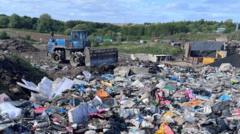
Scotland’s household recycling rate fell to its lowest level in five years in 2025, according to a BBC report citing the Scottish Environment Protection Agency, Sepa. Households recycled 42.8% of their waste, compared with 44.3% the previous year, the report said.
The figures represent a decline of 1.5 percentage points and would reverse the improvement recorded in 2024. However, the regulator’s official household waste publication pages reviewed for this article still listed 2024 as the latest annual release, so the reported 2025 result could not be independently confirmed there.
The distinction between the reporting year and publication year is important. Sepa published its figures covering January to December 2024 on 28 October 2025, confirming a household recycling rate of 44.3%. Those statistics describe waste generated during 2024, rather than the year in which the results were released.
The BBC summary supplied for this report does not explain what drove the reported decline. It contains no breakdown of waste quantities, individual council results or changes in the materials collected for recycling, leaving the reasons for the movement unclear.
A recycling percentage measures the share of household waste recycled, rather than the total quantity recovered. A lower rate alone therefore does not establish whether households recycled fewer tonnes, generated more waste overall, or experienced a combination of changes. The underlying tonnage figures are needed to distinguish those possibilities.
Sepa’s household waste series provides that wider framework. Its annual reports cover waste generated and managed by or on behalf of Scottish local authorities, recording quantities and percentages recycled and composted, diverted from landfill through other routes, and sent to landfill. These categories help explain changes that a headline rate cannot capture.
The regulator’s statement accompanying the 2024 results highlighted the continuing presence of recyclable material in general household bins. Citing research by Zero Waste Scotland, Sepa said around 52% of that residual waste consisted of materials typically recyclable through kerbside collections, including food, paper, cardboard and plastic.
That finding illustrates why the recycling rate matters beyond the annual comparison. Materials placed in general waste remain outside recycling collections even where a suitable service exists. Sepa’s stated approach is to prevent waste first, increase recycling and use energy recovery for the waste left over.
Recycling performance also needs to be distinguished from reductions in landfill use. Waste diverted from landfill is not necessarily recycled: Sepa separately records other treatment routes, including incineration. A change in disposal methods therefore cannot, by itself, demonstrate an improvement in the household recycling rate.
The next step in assessing the reported fall is to reconcile the BBC’s 2025 figure with Sepa’s corresponding annual tables and methodology. Those details would establish the scale of any change in recycled tonnage and its distribution across councils. Until then, the reported decline is clearer than its causes.
Primary source: BBC Science. Newzly rewrites and structures source reporting for clarity; verify critical details at the original.