Shinkula Tunnel to Forge All-Weather Link Between Ladakh and Himachal Pradesh
Construction on the high-altitude Shinkula Tunnel is advancing to deliver all-weather connectivity between Ladakh’s Zanskar Valley and Himachal Pradesh, eliminating winter isolation while bolstering national border logistics.
In this piece
Work is progressing on the strategic 4.1-kilometer Shinkula Tunnel beneath the Zanskar Range, intended to establish year-round transit between Himachal Pradesh…
Construction on the high-altitude Shinkula Tunnel is advancing to establish direct, all-weather connectivity between the remote Zanskar Valley in Ladakh and Himachal Pradesh. Spearheaded by the Border Roads Organisation, the strategic engineering project aims to pierce beneath the formidable Shinkula Pass to eliminate harsh seasonal blockades. Once completed, the twin-tube passageway will provide an uninterrupted overland link across the rugged northern mountain ranges.
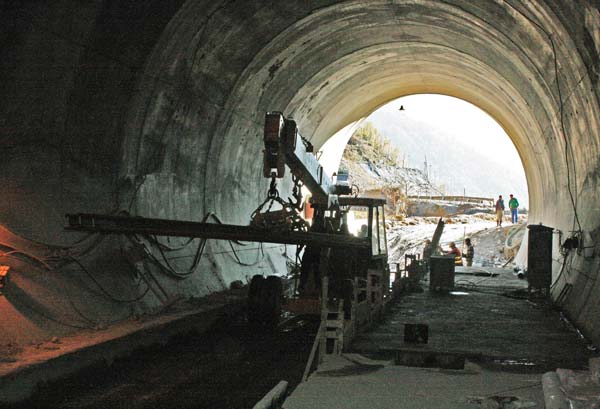
The project centers on a 4.1-kilometer tunnel situated at an elevation of more than 15,000 feet, making it one of the highest subterranean transit corridors in the world. Engineering teams and contracted builders are executing subterranean excavation and structural reinforcement beneath steep granite slopes. The dual-tube layout is designed to accommodate two-way vehicular flow while integrating specialized ventilation, drainage, and emergency response mechanisms tailored to extreme sub-zero alpine conditions.
Historically, the Zanskar region has remained intensely isolated for nearly half of every year as heavy snowfall chokes existing high-altitude mountain routes. The conventional crossing over the Shinku La pass typically becomes impassable from late autumn until late spring, cutting off local settlements from essential supplies. This chronic geographical vulnerability has long complicated emergency medical evacuations, educational travel, and regional trade for resident communities.
The underground bypass forms a core pillar of the broader Nimmu-Padum-Darcha corridor, an alternative transit axis connecting Himachal Pradesh directly to central Ladakh. By integrating with existing road enhancements along the Lahaul Valley and northern approaches, the alignment significantly streamlines travel across the border territory. Planners note that the finished route will shave roughly 100 kilometers off the journey between Manali and Leh compared to legacy paths.
Beyond civilian transit, the subterranean crossing holds substantial strategic importance for India's border defense posture. The all-weather corridor provides security forces with a reliable, sheltered logistics supply route toward Kargil, Leh, and forward posts along the Line of Control. Because the alignment traverses deeper mountain interiors that are less susceptible to adverse winter weather and surveillance, military planners view it as an indispensable national security asset.
Executing large-scale underground excavation at such extreme altitude presents severe physical and technical hurdles for construction crews. Workers contend with thin air, sub-zero temperatures dropping well below minus 10 degrees Celsius, and frequent winter blizzards. Heavy machinery and support systems require specialized low-temperature fluids and winterization protocols to maintain round-the-clock operations in the inhospitable alpine environment.
For the local populations of Zanskar and Lahaul, permanent overland connectivity is expected to reshape socioeconomic life. Consistent year-round vehicular access will foster winter tourism, lower the cost of hauled freight, and ensure steady supplies of fuel, food, and medical essentials. Regional administrators anticipate that the stabilized highway will stimulate local hospitality enterprises and curb seasonal out-migration from high-altitude hamlets.
Construction authorities have established a completion target around 2027, with ongoing shifts maintaining boring, rock-bolting, and slope stabilization milestones. Project overseers continue to monitor geological conditions along the subterranean fault lines to adapt tunneling methodologies as excavation deepens. When fully commissioned, the Shinkula Tunnel will cement an enduring link across the Great Himalayas, transforming regional accessibility and northern border connectivity.
Primary source: Google News Himachal Pradesh. Newzly rewrites and structures source reporting for clarity; verify critical details at the original.