Smithsonian’s 2026 History Book Picks Focus on Overlooked Stories
Smithsonian History frames its selection of the year’s ten best history books around overlooked stories and the forces that shaped the United States, though the supplied excerpt does not identify the titles.
In this piece
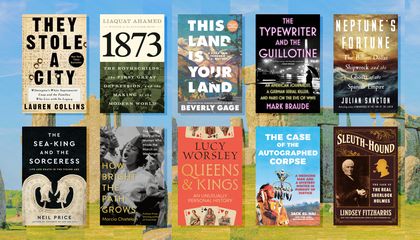
Smithsonian History’s “The Ten Best History Books of 2026” highlights works about overlooked histories and how the United States reached its present…
Smithsonian History is highlighting overlooked histories and the roots of contemporary America in an article titled “The Ten Best History Books of 2026.” Its brief description presents the selection as a collection of favorite titles that recover neglected stories and examine how the United States arrived at its current circumstances.
The supplied material contains the headline and a single descriptive sentence, repeated as the article’s summary and content. It does not identify any of the ten books or their authors, so the selection’s individual recommendations cannot be established from the excerpt. Nor does it provide the publication’s assessments of particular works.
The description nevertheless sets out two connected editorial priorities: bringing less familiar histories into view and using historical writing to understand the present. That framing places the emphasis on what books can reveal about the past, rather than simply announcing a list of notable releases. The available text does not explain how those priorities informed each choice.
The phrase “overlooked histories” suggests an interest in subjects that have received less attention, but the excerpt leaves those subjects unspecified. It names no communities, historical figures, events or periods. Assigning the selection to any particular movement or area of historical scholarship would therefore go beyond the information provided.
The second theme is more explicitly national: examining how the United States ended up where it is today. That gives the list a contemporary point of reference without establishing which aspects of American life the books address. The description does not say whether the selections concentrate on politics, society, economics, culture or a combination of subjects.
For readers, the distinction between that broad framing and the actual recommendations matters. A thematic introduction can explain a publication’s interests, but it cannot substitute for the titles and reviews needed to judge which books might suit a particular reader. Those details are absent from the material available here.
The headline’s “ten best” formulation is accompanied by a description calling the books the publication’s favorites of the year. The supplied excerpt offers no selection criteria, eligibility rules or explanation of whether the books are ranked. It supports describing the article as an editorial selection, not as a comprehensive measure of the year’s historical publishing.
The central takeaway is consequently the selection’s stated approach: pairing the recovery of overlooked stories with an inquiry into America’s present through its past. The full list and accompanying commentary would be needed to assess how the ten choices deliver on that approach. Until those details are available, specific recommendations and conclusions about the books remain unverified.
Primary source: Smithsonian History. Newzly rewrites and structures source reporting for clarity; verify critical details at the original.