Sonia Gandhi Recalls Grief After Rajiv's Death and Early Fear of Indira Gandhi at Memoir Launch
Speaking at the launch of her memoir in New Delhi, Sonia Gandhi revealed how her children supported her after Rajiv Gandhi's assassination and reflected on her early fear of Indira Gandhi.
In this piece
Congress leader Sonia Gandhi launched her memoir, Belonging: A Journey of Love, in New Delhi, sharing deeply personal reflections on grief and resilience. She…
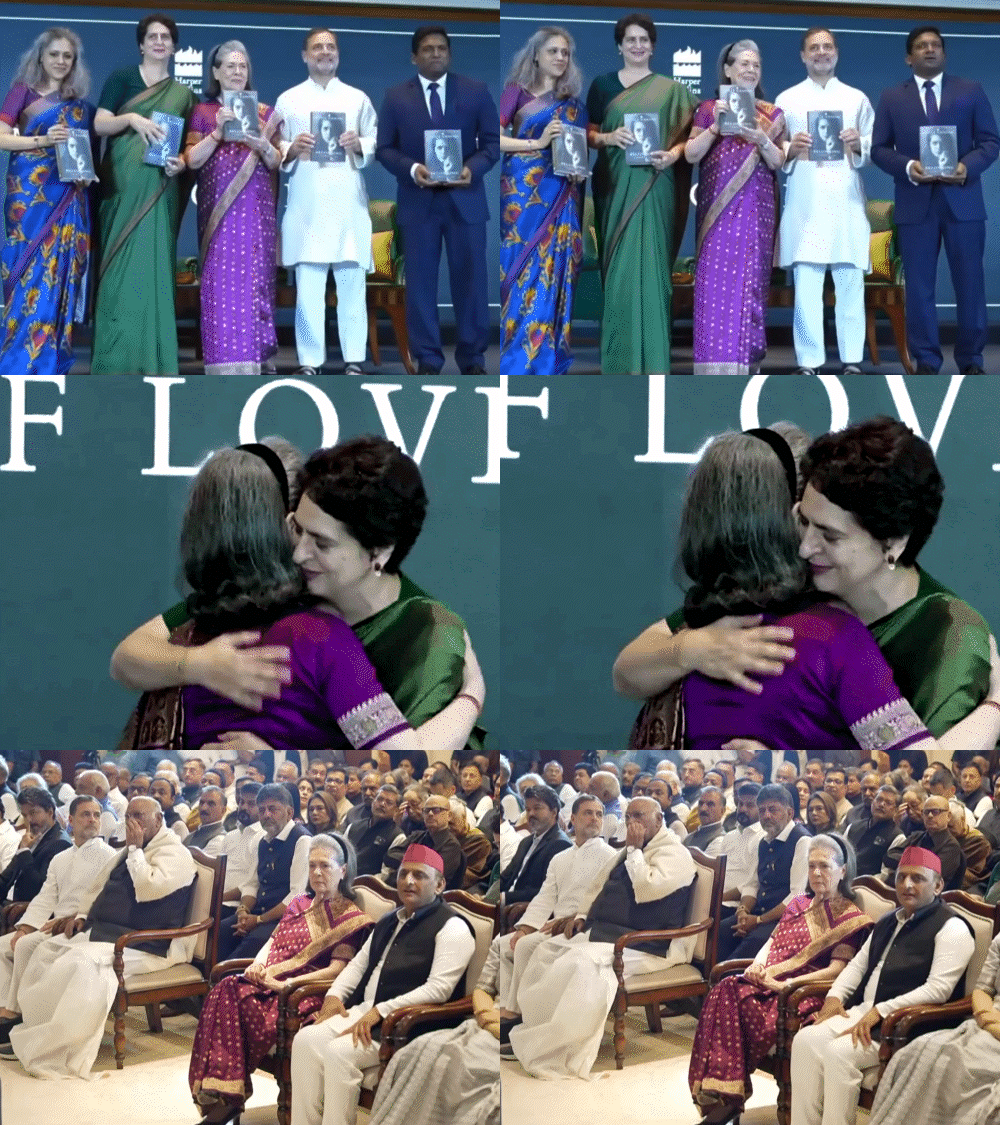
Congress Parliamentary Party chairperson Sonia Gandhi opened up about personal grief, family resilience, and her decades in public life during the launch of her memoir, Belonging: A Journey of Love, in New Delhi. Speaking before an audience of political colleagues and family members, Gandhi reflected on how her children, Rahul Gandhi and Priyanka Gandhi Vadra, helped sustain her through her darkest personal crisis following the assassination of her husband, former prime minister Rajiv Gandhi.
Recalling the devastating impact of Rajiv Gandhi's assassination in 1991, Sonia Gandhi explained that she was completely shattered by the loss. In that period of profound grief, she said her children reversed roles and stepped up to care for her emotionally, offering constant support and guidance at a time when she struggled to cope.
The former Congress president also offered candid reflections on her early years in India and her initial interactions with her mother-in-law, former prime minister Indira Gandhi. Gandhi revealed that she was initially intimidated and frightened of Indira Gandhi when she first arrived from Italy, before gradually forming a deep, affectionate bond with her over the years.
Addressing the origins of the 544-page memoir published by HarperCollins India, Gandhi admitted she had long hesitated to share her private life and emotions publicly. She credited persistent encouragement from Rahul Gandhi, Priyanka Gandhi Vadra, and close associates for convincing her to document her experiences in her own words.
A central motivation behind writing the book, Gandhi noted, was to address numerous inaccurate narratives and portrayals of her family that have circulated over the decades. She emphasized that much of what has been published about Indira Gandhi, Rajiv Gandhi, and her children diverged significantly from reality, making it necessary to present an authentic first-person account.
The memoir chronicles her transition from her youth in Italy to adapting to an entirely new culture, language, and public existence in India. Gandhi detailed the quiet private life the family sought to maintain before sudden national tragedies propelled them into the center of the country's political arena.
Beyond its literary focus, the book launch served as a notable political gathering in the national capital, drawing senior figures from across the opposition INDIA alliance. Leaders including Congress president Mallikarjun Kharge, Samajwadi Party chief Akhilesh Yadav, and other prominent regional leaders attended the unveiling, reflecting Gandhi's enduring influence in Indian politics.
The memoir also touches upon significant milestones in modern Indian political history, including her reluctant formal entry into politics in the late 1990s and her leadership of the Congress party during pivotal national elections. It provides her perspective on landmark decisions, including coalition building and the nomination of Manmohan Singh as prime minister in 2004.
The publication of the memoir offers historians, political observers, and the public a rare view into the life of one of India's most private political figures. Observers note that Gandhi's willingness to discuss vulnerability and family trauma adds personal context to decades of high-stakes political governance.
As the memoir reaches readers nationwide, the disclosures are anticipated to generate sustained discussion regarding the Gandhi family's legacy in contemporary Indian public life. The reflections highlight the close emotional bonds that continue to shape the family's approach to ongoing political developments.
Primary source: Divya Bhaskar National. Newzly rewrites and structures source reporting for clarity; verify critical details at the original.