SpaceX Starship Blasts Off in Texas but Falls Short of Double Catch
SpaceX launched its 407-foot Starship rocket from south Texas on Flight 15, aiming for an ambitious double catch at Starbase that ultimately fell short during the test mission.
In this piece
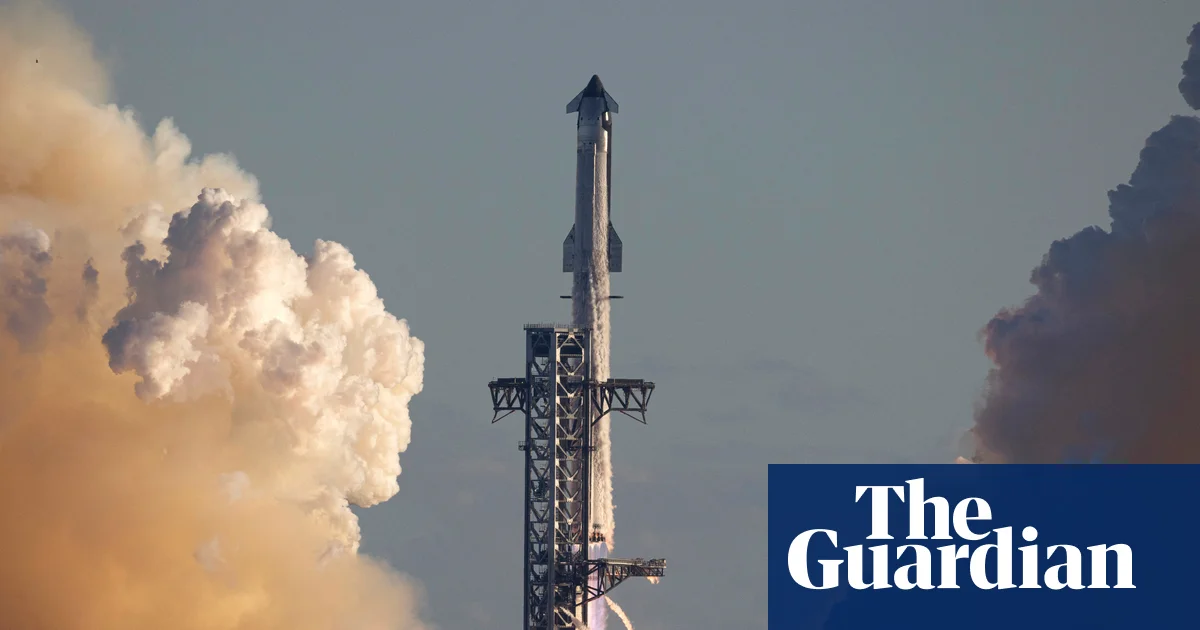
SpaceX launched its 407-foot Starship megarocket on Flight 15 from Starbase in south Texas on Friday. The company aimed for a historic double catch of the…
SpaceX launched its towering Starship megarocket from south Texas on Friday afternoon in a highly anticipated orbital test flight. The aerospace company aimed to achieve a historic technical breakthrough by attempting an unprecedented double catch of its reusable rocket components. However, mission operations ultimately fell short of securing the double recovery milestone during the mission.
The test mission, designated as Flight 15, represents another major developmental iteration for the heavy-lift launch system. Standing at 407 feet, Starship holds the distinction of being the largest and most powerful rocket ever constructed. Engineers designed the flight profile to push the vehicle through rigorous operational regimes beyond previous short-duration trials.
According to the mission flight plan, the vehicle was slated to circle Earth approximately 14 times over an extended 22-hour operational window. This protracted duration in space was intended to provide flight controllers with extensive opportunities to assess onboard systems across multiple complete orbits. The ambitious itinerary underscores SpaceX’s push toward operational orbital endurance.
The launch took place from Starbase, the aerospace venture’s expansive manufacturing and flight test complex located in south Texas. Ground teams at the facility prepared specialized pad infrastructure to oversee the afternoon ascent and monitor the complex maneuvers associated with rocket recovery. The south Texas coast has served as the focal point for all primary Starship orbital attempts to date.
Achieving routine reusability is considered the core objective of the entire Starship testing program. Rather than discarding costly booster stages and upper vehicles into ocean waters, SpaceX has focused on capturing returned hardware directly at the launch site. If fully mastered, recovery at the launchpad could drastically compress turnaround schedules between subsequent launches.
Despite falling short of the intended double catch, such aggressive engineering objectives are characteristic of SpaceX's iterative development strategy. Flight tests frequently push mechanical boundaries to identify operational tolerances under real atmospheric and orbital stresses. Engineers routinely treat unfulfilled catch objectives as vital data-gathering opportunities rather than complete operational setbacks.
Operating a 407-foot vehicle through 14 full orbital revolutions presents significant logistical and aerodynamic challenges. The planned 22-hour duration requires the rocket's structural frames, guidance systems, and propulsion units to perform reliably across alternating temperature and orbital conditions. Telemetry collected across these phases remains essential for validating future long-duration missions.
The sheer physical scale of the rocket magnifies the precision required for launchpad capture operations. Catching a vehicle of this magnitude requires millimeter-level alignment between descending stages and ground-based recovery apparatus. Falling short during this attempt highlights the extreme aerodynamic and mechanical hurdles inherent to catching massive spaceflight hardware.
Following the completion of its orbital phases, Starship's flight profile was planned to conclude with recovery operations at the Starbase launchpad in south Texas. Teams will now analyze telemetry and performance logs from Flight 15 to understand the factors surrounding the catch shortfall. The findings will directly inform engineering modifications as the company prepares for subsequent Starship launch iterations.
Primary source: The Guardian Science. Newzly rewrites and structures source reporting for clarity; verify critical details at the original.