Spanish Transport Minister Resigns Following Deadly Train Collision South of Madrid
Spain's transport minister has stepped down days after a train collision south of Madrid killed at least 69 people and injured dozens, as scrutiny over railway safety and government oversight escalates.
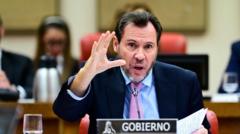
Spain's transport minister has resigned in the wake of a catastrophic train crash south of Madrid that left at least 69 people dead and dozens more injured. The departure marks the most significant political consequence yet from one of the nation's deadliest rail tragedies in recent years. The announcement came just days after the deadly collision, as public anger and demands for institutional accountability intensified across the country.
The disaster unfolded south of the Spanish capital when a collision resulted in widespread devastation along the tracks, killing at least 69 passengers and injuring dozens of others. First responders and emergency medical crews were dispatched to the scene in an urgent effort to treat survivors and recover the deceased from the wreckage. Regional emergency services worked through difficult conditions to stabilize the injured and transport them to nearby medical facilities.
In the immediate aftermath of the tragedy, government officials faced mounting pressure over the state of rail infrastructure and operational oversight. Public scrutiny quickly focused on the transport ministry, which bears ultimate responsibility for the safety, regulation, and maintenance of the national rail network. Lawmakers and civic groups called for an immediate accounting of the circumstances that permitted such a severe collision to take place.
The minister's decision to step down reflects the immense political gravity of the incident and the rapid erosion of confidence in the ministry's leadership. While resignations after major transportation accidents are not unprecedented, the speed of this departure highlights the acute vulnerability felt within the government. By stepping aside, the transport minister sought to assume political responsibility as the nation enters a period of mourning.
Technical investigations into the root causes of the collision are continuing under the supervision of judicial and transportation safety authorities. Inquiries of this nature typically scrutinize signaling systems, mechanical maintenance, speed monitoring devices, and operational communications between train crews and traffic controllers. Officials have emphasized that establishing a definitive timeline and identifying any procedural failures will be essential to preventing future disasters.
Hospitals and healthcare facilities across the region south of Madrid have remained focused on treating the dozens of people who suffered critical and non-critical injuries. Support centers were established to assist grieving families arriving to identify loved ones and seek updates on missing passengers. The sheer scale of casualties has drawn expressions of solidarity from across Europe and the international community.
The disaster has also reignited broader debates concerning public investment and modernization across passenger transit systems. Transport unions and commuter advocacy organizations frequently highlight the need for stringent safety redundancies, especially along heavily traveled corridors. Analysts note that restoring faith in public rail transit will require not only political accountability but also transparent reporting on systemic risks.
With the transport portfolio now vacant, the government faces the immediate challenge of appointing new leadership to manage the crisis. The incoming administration of the ministry will be tasked with coordinating relief measures, cooperating fully with independent investigators, and addressing workforce concerns. Political leaders will also face intense questioning in parliament regarding oversight lapses and the timeline of emergency responses.
As judicial reviews and forensic assessments proceed south of Madrid, the rail sector faces an extended period of scrutiny. Official preliminary reports are expected to provide the first formal answers regarding the mechanical or human factors involved in the crash. For a mourning nation, the focus remains firmly on accountability, comprehensive safety reforms, and justice for the dozens of victims and their families.
Primary source: BBC World. Newzly rewrites and structures source reporting for clarity; verify critical details at the original.