technology·Texas·Cameron County
Starship Flight 15 Reaches Orbit, Setting Up Weekend Catch Attempt
SpaceX launched its 15th Starship test flight into low Earth orbit, advancing payload deployment capabilities while setting the stage for an ambitious upper-stage tower catch attempt this weekend.
In this piece
SpaceX successfully propelled its Starship Flight 15 upper stage into low Earth orbit from Texas, deploying 26 Starlink satellites. While the booster catch was…
SpaceX's Starship rocket completed its 15th integrated test flight from Starbase in South Texas, successfully sending the upper-stage spacecraft into low Earth orbit. The milestone marks a major step forward for the heavy-lift launch system, demonstrating sustained orbital flight capabilities.
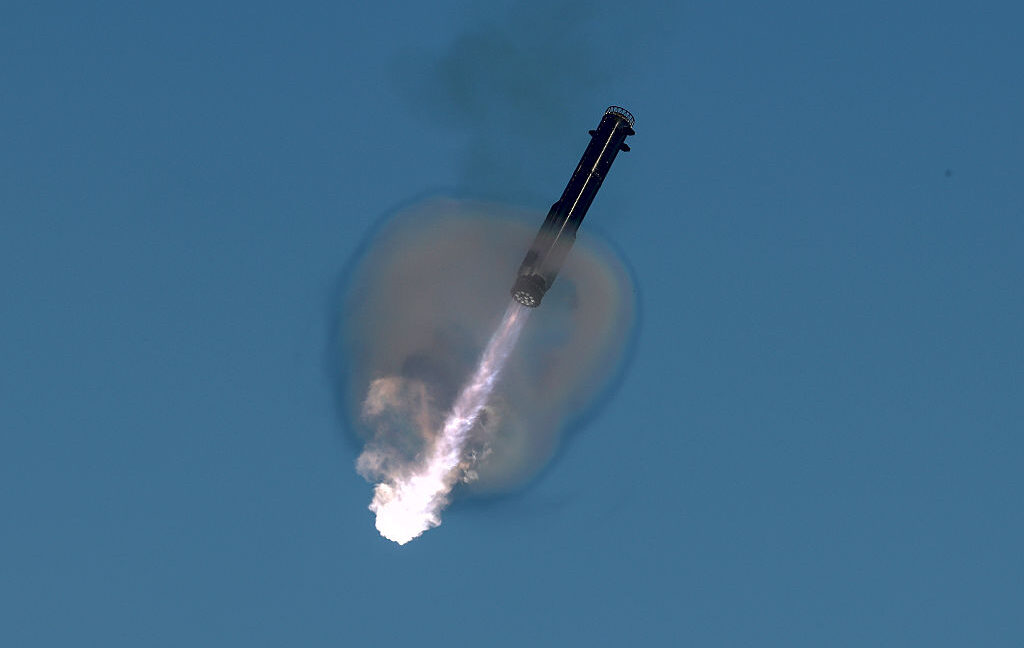
While the upper stage achieved orbit, the mission brought mixed outcomes for hardware recovery. The Super Heavy booster was originally slated to attempt an ambitious return to the launch pad for a mid-air catch by the launch tower arms. However, automated safety criteria forced an abort of the catch attempt, diverting the booster into the Gulf of Mexico.
During its descent over the water, the Super Heavy booster performed a controlled ocean landing before its automated flight termination system activated. SpaceX officials noted that while a tower catch was the primary recovery target, offshore diversion remains the standard fail-safe protocol to protect pad infrastructure.
In orbit, the upper stage, designated Ship 42, continued its scheduled test sequence without incident. The spacecraft successfully deployed a payload of 26 next-generation Starlink V3 satellites, demonstrating commercial payload deployment capabilities. The deployment marks an essential demonstration for SpaceX's expanding satellite network.
The orbital insertion clears the way for an unprecedented upper-stage recovery demonstration scheduled for Saturday. Flight controllers are monitoring telemetry and vehicle health as Ship 42 circles the globe in preparation for an attempted atmospheric reentry and catch. SpaceX aims to capture the upper stage using the same mechanical tower arms at the Starbase launch facility.
Catching an orbital spacecraft at the pad represents one of the most challenging maneuvers in modern aerospace engineering. Unlike the booster, which separates at lower altitudes and suborbital speeds, the Starship upper stage must endure extreme atmospheric heating before decelerating to a vertical hover. Achieving a controlled tower capture would validate the company's full-system reusability concept.
Previous Starship test campaigns focused on incremental milestones, from controlled ocean splashdowns to initial booster catch trials. Each iterative flight has yielded critical telemetry on heat shield tile durability, raptor engine relights in vacuum, and aerodynamic control surfaces. Flight 15 builds directly upon data collected during earlier suborbital and orbital attempts.
The Starship architecture plays a central role in both commercial launch manifests and broader exploration programs. NASA has selected Starship as the Human Landing System for its Artemis program, requiring rapid cadence, orbital refueling, and proven orbital reliability. Success across long-duration orbital coasting and controlled recovery is vital for satisfying those mission requirements.
Looking ahead to Saturday, SpaceX engineers are reviewing telemetry to determine whether atmospheric entry corridors and surface weather conditions meet stringent catch criteria. Should any technical threshold fail to clear safety margins, controllers retain the option to divert the spacecraft to a safe ocean landing. The forthcoming catch attempt will test the limits of launch recovery systems as Starship inches closer to operational service.
Primary source: Ars Technica. Newzly rewrites and structures source reporting for clarity; verify critical details at the original.