Study Finds AI Systems Do Not Work Like the Human Brain
New research reveals that even when artificial intelligence models accurately predict brain activity, their internal computations often diverge sharply from biological neural processes.
In this piece
A new scientific discovery challenges the long-standing assumption that artificial intelligence mirrors the human brain. Researchers found that models…
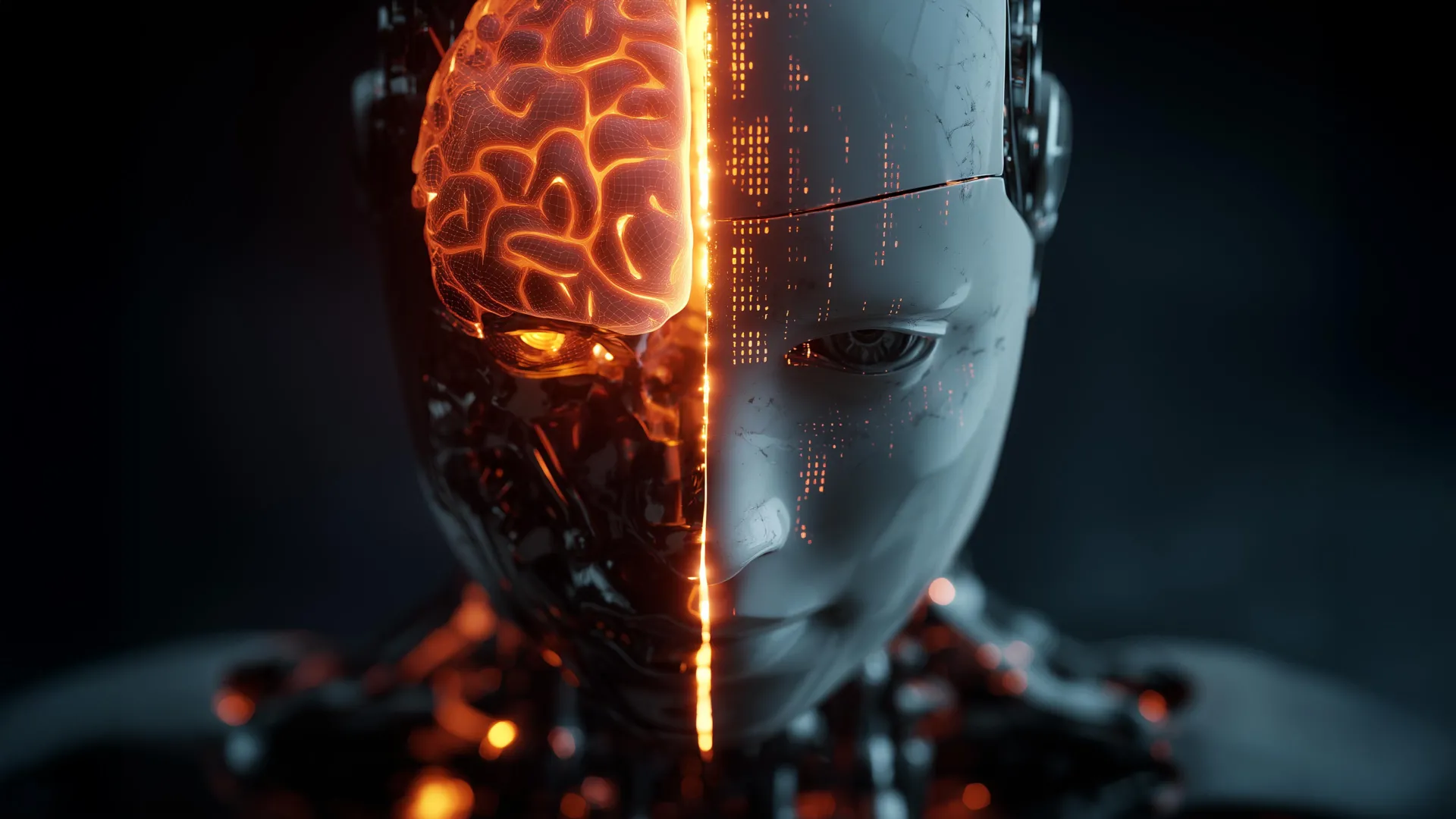
Artificial intelligence systems may operate fundamentally differently from the biological architecture of the human brain, according to research highlighting critical gaps in how computational models simulate biological cognition. The findings reveal that even when deep neural networks successfully match or predict patterns of human brain activity, their underlying computational mechanics frequently diverge from genuine neural pathways.
For years, computational neuroscientists have leaned on artificial neural networks to model sensory processing, vision, and decision-making in biological organisms. The newly highlighted findings emphasize that predictive accuracy alone cannot prove that a machine is thinking or processing data in the same way biological brains do. Instead, models appear capable of arriving at similar functional outputs through entirely distinct internal routines.
The core discrepancy centers on the internal representational dynamics of modern machine learning algorithms. While an artificial network might accurately forecast how a human subject's brain reacts to a specific stimulus, the intermediate calculations within the artificial layers may not reflect any biological counterpart. Researchers note that relying purely on surface-level predictive alignment risks creating an illusion of biological plausibility.
The intersection of artificial intelligence and neuroscience has expanded rapidly over the past decade as deep learning architectures evolved. Researchers increasingly treated artificial networks not merely as computational tools, but as working hypotheses for how biological neural circuits solve complex sensory and cognitive tasks. The prevailing assumption was that high predictive power indicated mechanistic alignment between synthetic weights and biological synapses.
This latest development directly challenges that foundational assumption, raising important cautions for scientific methodology. If artificial neural networks arrive at correct predictions using mechanisms that living brains never employ, treating these systems as digital proxies for human biology could lead experimental neuroscience down misleading avenues. Hypotheses built on synthetic network architectures may fail to hold up when tested against physical neural tissue.
The problem is compounded by the opaque nature of modern deep learning models, which often function as complex black boxes. When researchers attempt to open these systems to understand biological perception, they risk interpreting mathematical artifacts of machine optimization as principles of organic neurobiology. Distinguishing between genuine functional mimicry and mere mathematical coincidence has emerged as a major conceptual barrier.
Beyond the laboratory, the discovery also touches on broader debates about artificial intelligence development and cognitive architecture. While computer scientists continue to engineer systems capable of advanced reasoning and perception, these findings underscore that high performance does not signify human-like comprehension. Engineers and theorists may need to separate the engineering goal of raw computational capability from the scientific goal of biological mimicry.
Moving forward, researchers emphasize the need for more rigorous verification standards when comparing artificial models to biological brains. Future research will likely focus on developing diagnostic frameworks that assess whether internal representations, not just final predictions, match living neural circuits. By establishing stricter benchmarks for biological fidelity, scientists aim to ensure that computational models serve as dependable guides for understanding the human mind.
Primary source: ScienceDaily. Newzly rewrites and structures source reporting for clarity; verify critical details at the original.