Tamil Nadu unlikely to see major impact from severe Bay of Bengal cyclone
The Hindu reports that a severe cyclonic storm forming over the Bay of Bengal is not expected to affect Tamil Nadu in a significant way. Track, timing, and rainfall details were not in the available summary.
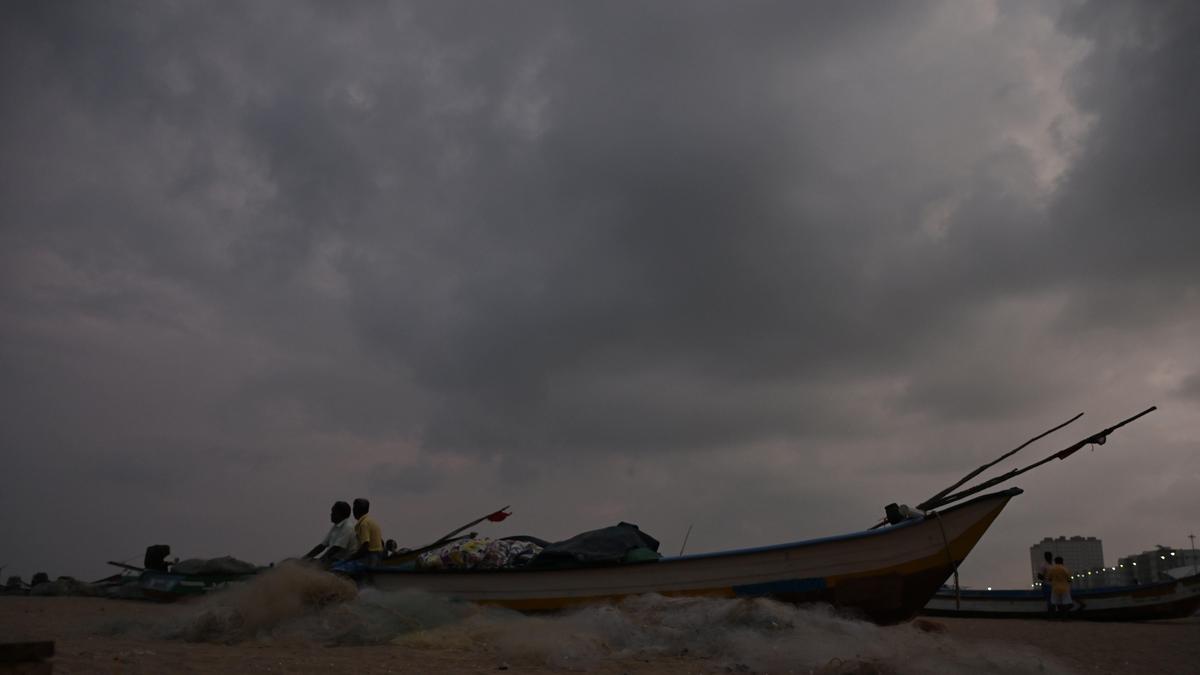
In this piece
A report in The Hindu says Tamil Nadu is unlikely to see a significant impact from a severe cyclonic storm developing over the Bay of Bengal. The available…
A severe cyclonic storm brewing over the Bay of Bengal is unlikely to have a significant impact on Tamil Nadu, according to a report published by The Hindu. The account frames the system as still developing, rather than as a storm already over the state. No landfall point, wind speed, or rainfall figure was included in the material available for this article.
The headline carries the claim now in circulation: as relayed by The Hindu, the cyclone’s main effects are not expected to reach Tamil Nadu in a substantial way. The story identifies the system as a severe cyclonic storm, a formal intensity label used in Indian cyclone bulletins for a mature tropical cyclone, above a cyclonic storm and below the very severe and extremely severe categories. This article does not independently confirm the intensity or name the office that assigned it, because those details were not in the source text provided.
Tamil Nadu occupies India’s southeastern coast and faces the Bay of Bengal, so any cyclone in that basin is watched closely even when a projected track stays offshore or bends toward another shoreline. Coastal stretches, ports, and low-lying areas can still see peripheral weather, including rougher seas, gusty winds, or scattered rain, when a storm passes at a distance. The Hindu’s assessment, as summarized, is that such effects are not expected to be significant for the state. Which districts, if any, the full report discussed is not stated in the summary used here.
The Bay of Bengal is among the more active tropical-cyclone basins, particularly in the post-monsoon period and, to a lesser extent, ahead of the southwest monsoon. Warm sea surface water and the shape of the bay can allow disturbances to organize quickly. Storms that form there may curve toward the Indian east coast, toward coasts farther east, or weaken over open water. None of those possible tracks is established for this system in the material at hand. The only location claim that can be stated is that the storm is described as brewing over the Bay of Bengal.
Because the underlying article was available here only as a headline and a short syndication line, several facts that usually anchor a cyclone story remain unknown. The summary does not name the storm, give a date of formation or closest approach, quote the India Meteorological Department or another agency, or list warnings for fishermen. Treating those items as known would go beyond the source. The line that Tamil Nadu is unlikely to see a significant impact should be read as The Hindu’s published assessment, not as a new forecast produced for this piece.
Even a limited-impact outlook matters for a coastal state. Families, transport operators, and local administrations often change plans at the first mention of a severe cyclone, sometimes before the track is stable. A public statement that Tamil Nadu is unlikely to take a significant hit can limit unnecessary disruption if it holds, while a later shift in the track can reverse that message quickly. The value of the report is therefore as an early signal, not as a final all-clear.
Cyclone forecasts are updated as new satellite imagery and model guidance arrive. A system described as brewing can intensify, stall, or recurve over a short period. Whether a state sees significant wind, rain, or storm surge depends on its distance from the center and on the storm’s size, not only on the category name. The Hindu’s current reading is that Tamil Nadu stays largely outside the zone of significant impact. That reading can be revised in later bulletins, and this article has no subsequent update to report.
In past Bay of Bengal events, authorities have used staged advisories for fishermen, coastal hamlets, and districts expected to lie near the track, while telling other areas to keep monitoring. Nothing in the available summary says whether such advisories have been issued for Tamil Nadu or for neighboring coasts. The absence of that information in this source should not be read as confirmation that no advisory exists.
A storm over the bay can matter to more than one coastline at once. If Tamil Nadu is assessed as unlikely to see significant impact, attention often turns to wherever the center is heading. This summary does not identify another landfall area, another Indian state, or an island. Any claim naming a different coast would be speculation and is not made here.
What happens next depends on updated tracking from the meteorological agencies that monitor the bay and on follow-up reporting. The Hindu’s account, as headlined, is that Tamil Nadu is unlikely to see a significant impact from the severe cyclonic storm now brewing. Until a fuller bulletin is published, with a named system, a track, and stated warnings, the prudent reading stays narrow: on this report, the state is not expected to bear the storm’s main effects, and the forecast remains subject to change.
Primary source: Google News Tamil Nadu. Newzly rewrites and structures source reporting for clarity; verify critical details at the original.