Thanksgiving Travel Forecast: Best and Worst Driving Days in Northern California
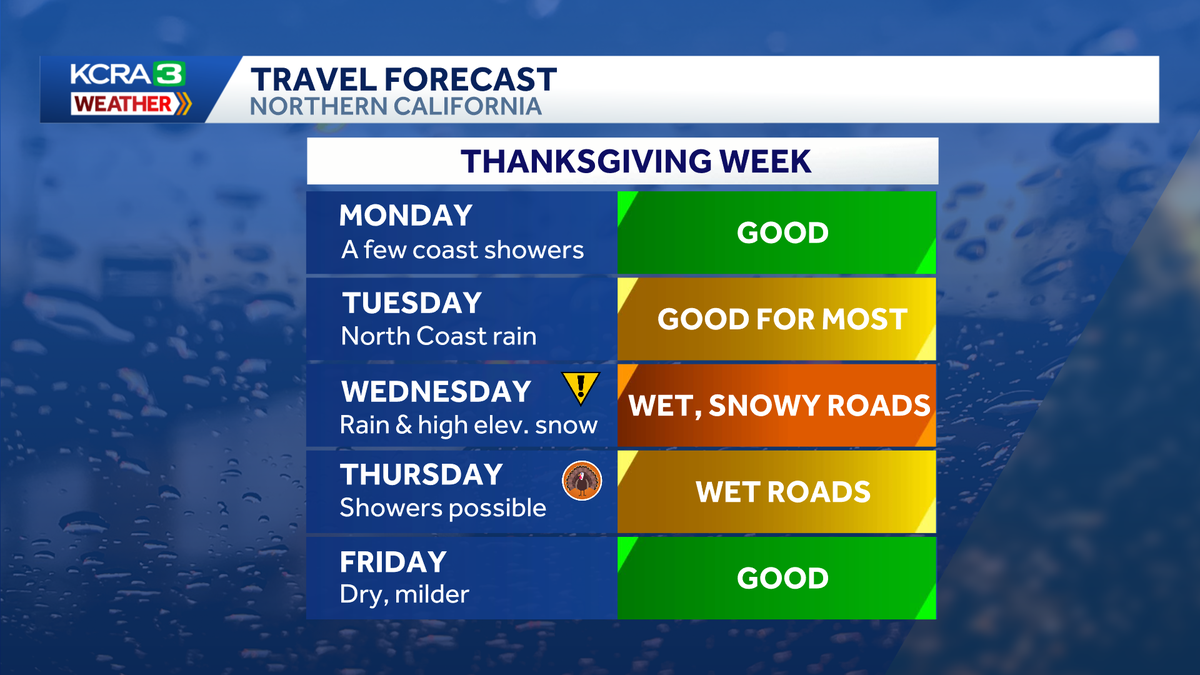
Northern California drivers face mid-week rain and mountain snow ahead of Thanksgiving, making Tuesday and Wednesday the most difficult travel days while holiday morning offers the clearest roads.
In this piece
Northern California meteorologists warn that early-week storms will bring valley rain and Sierra snow ahead of Thanksgiving. Tuesday and Wednesday are projected…
Northern California motorists preparing for Thanksgiving travel are facing an unsettled holiday week as regional meteorologists outline the best and worst windows to hit the road. Forecasts indicate that early-week storms could bring rain to central valleys and snow across the Sierra Nevada, complicating journeys along major transportation arteries. Travelers who plan around peak storm windows will find substantially smoother conditions than those departing during peak congestion.
According to regional weather outlooks from KCRA and transportation authorities, Tuesday and Wednesday are expected to present the most significant travel hurdles. A combination of incoming precipitation and concentrated holiday volume creates prime conditions for highway bottlenecks and sudden slowdowns. Commuters attempting to depart on Wednesday afternoon will likely encounter the highest levels of road congestion and adverse weather.
Drivers traversing high-elevation corridors such as Interstate 80 over Donner Pass and U.S. Route 50 toward Lake Tahoe face the most severe risks. Lower snow levels associated with early-season systems frequently lead to mandatory chain controls, reduced visibility, and periodic highway closures. Highway officials warn that even moderate snowfall in mountain passes can quickly cascade into multi-hour gridlock during holiday periods.
In the lower elevations across the Sacramento Valley and surrounding foothills, persistent rain is forecast to cause slick roadway surfaces and localized ponding. Wet pavement during peak commuting hours routinely increases collision rates, multiplying delays across heavily traveled sections of Interstate 5 and Highway 99. Forecasters advise drivers to reduce speeds and allow extra stopping distance throughout the wettest segments of the week.
For those seeking the smoothest routes, meteorologists point to early morning departures and Thanksgiving Day itself as the optimal travel windows. Driving early on Wednesday morning before mid-day traffic builds allows motorists to navigate key transit corridors before gridlock sets in. Traffic volumes traditionally drop sharply on Thanksgiving morning, offering relatively open roads across most regional thoroughfares.
Holiday travel patterns across California consistently show high sensitivity to weather disturbances because millions of residents take to the roads simultaneously. With transportation networks operating near capacity, even brief localized downpours or freezing conditions can strain emergency response teams and towing services. State highway agencies regularly mobilize maintenance crews ahead of major storm windows to clear drainage paths and preposition snowplows.
Return travel later in the week presents its own set of timing challenges as travelers begin heading home over the weekend. Sunday afternoon and Monday evening typically see heavy return flows, which can compound if lingering weather systems leave residual moisture on mountain roads or valley highways. Travelers planning to head home across mountain passes are urged to monitor freezing levels and check highway clearance reports before departing.
Motorists embarking on regional trips are encouraged to equip vehicles with winter emergency essentials, including tire chains, extra blankets, water, and fully charged mobile devices. Caltrans and California Highway Patrol officials routinely reiterate that drivers should never attempt mountain travel without verifying active chain requirements and vehicle readiness. Checking road conditions prior to leaving can prevent drivers from becoming stranded during unexpected pass closures.
Weather specialists note that while mid-week storms represent the primary travel hazard, exact storm tracks and precipitation totals remain subject to shift as the systems approach. Regional forecasts are expected to be updated frequently throughout the holiday week, providing more precise timelines for mountain snow accumulation and valley rainfall. Drivers are advised to stay tuned to local meteorological updates and maintain flexible travel schedules to navigate changing road conditions safely.
Primary source: Google News California. Newzly rewrites and structures source reporting for clarity; verify critical details at the original.