The Enduring Legacy of the Historic 504 Sit-In for Disability Rights
Director Siân Heder's upcoming film dramatizes the historic 26-day federal building occupation led by Judy Heumann, which secured the first civil rights protections for disabled Americans.
In this piece
A new film by director Siân Heder chronicles the historic 504 Sit-In, the longest peaceful occupation of a federal building in American history. Led by…
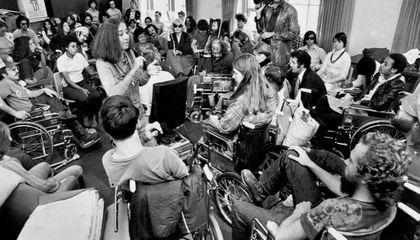
Director Siân Heder is bringing one of the most pivotal moments in American civil rights history to the screen with "Being Heumann," a new film dramatizing the historic 504 Sit-In. The production revisits the remarkable 26-day demonstration led by disability rights advocates who peacefully occupied a federal building to demand legal protections. According to an account highlighted by Smithsonian History, the demonstration stands as the longest peaceful occupation of a federal building in American history.
At the center of the movement was organizer Judy Heumann, who alongside fellow activists sought to hold federal officials accountable to the disability community. The demonstrators mobilized to pressure government leadership into implementing landmark rules prohibiting discrimination against people with disabilities. Their collective action underscored the urgency of treating disability access and dignity not as a matter of charity, but as a fundamental civil right.
The demonstration emerged around the enforcement of the first federal legislation designed to protect disabled Americans from civil rights violations. While statutory language had been drafted, government officials stalled on enacting the robust regulations required to make those protections functional across public institutions. Organizers recognized that without enforceable federal guidelines, legal promises of equality would remain unfulfilled on paper.
The resulting occupation tested the endurance and resolve of the participating advocates over nearly four continuous weeks. For 26 days, protesters remained inside the federal facility, maintaining discipline and unity despite logistical hardships and resistance from authorities. The sustained demonstration demonstrated an unprecedented level of grassroots coordination within the disability community.
The prolonged peaceful occupation became a defining showcase of nonviolent resistance within modern American protest traditions. Activists created an interdependent community inside the federal building, relying on mutual aid and shared determination to sustain their presence. By refusing to leave until officials agreed to sign and implement the regulations, the demonstrators forced national leaders to confront systemic exclusion directly.
The successful resolution of the 504 Sit-In marked a watershed victory for the broader disability rights movement in the United States. By securing the formal enactment of civil rights protections, the activists established an essential precedent that reshaped federal policy and set the groundwork for future accessibility legislation. Judy Heumann and her fellow organizers proved that disabled citizens could build potent political leverage through organized collective action.
Director Siân Heder's cinematic adaptation seeks to introduce this transformative episode to contemporary audiences who may be unfamiliar with the scale of the protest. By dramatizing the human drama and strategic brilliance behind the sit-in, "Being Heumann" highlights the personal sacrifices required to dismantle entrenched systemic barriers. Film historians and cultural observers note that popular media plays a vital role in preserving civil rights struggles that have frequently been marginalized in mainstream retellings.
Renewed focus on the 504 Sit-In also arrives at a time when questions surrounding disability inclusion and accessibility remain central to public discourse. The legacy of Judy Heumann continues to inspire new generations of community organizers fighting for full social, educational, and economic participation. Revisiting the historic demonstration serves as a reminder of how collective perseverance can alter the trajectory of national policy.
As "Being Heumann" prepares to share this historic campaign with broader audiences, cultural chroniclers like Smithsonian History emphasize the enduring relevance of the demonstrators' achievements. The film aims to ensure that the 26-day occupation retains its rightful place alongside the nation's most impactful civil rights victories. For viewers and historians alike, the story of the 504 Sit-In remains a powerful testament to what determined citizens can accomplish in the pursuit of justice.
Primary source: Smithsonian History. Newzly rewrites and structures source reporting for clarity; verify critical details at the original.