THSC Convenes Government, Industry and Academia at SkillSync Uttarakhand 2026
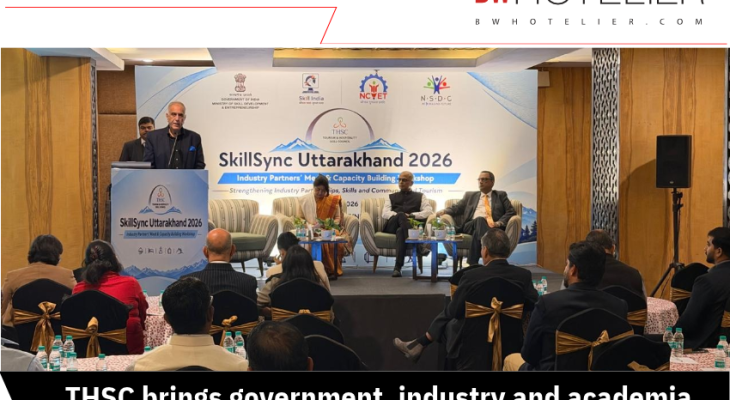
The Tourism and Hospitality Skill Council brought together government officials, industry leaders, and educators at SkillSync Uttarakhand 2026 to align workforce training with the state's growing tourism economy.
In this piece
The Tourism and Hospitality Skill Council held the SkillSync Uttarakhand 2026 conclave, uniting government, industry, and academic stakeholders. The initiative…
The Tourism and Hospitality Skill Council convened government officials, hospitality executives, and academic leaders at the SkillSync Uttarakhand 2026 forum, according to a report by BW Hotelier. The multi-stakeholder gathering was organized to bridge persistent gaps between classroom instruction and the commercial hospitality sector. Through this collaborative initiative, organizers aimed to chart a comprehensive roadmap for regional workforce readiness and long-term talent retention across the Himalayan state.
The summit established an interactive dialogue among policymakers, vocational training providers, and hospitality brands operating across northern India. Delegates examined operational challenges faced by regional businesses, including difficulties in sourcing qualified frontline staff during peak tourism cycles. By uniting key stakeholders in a shared forum, the event sought to synchronize educational outcomes directly with dynamic market requirements.
Operating under the aegis of the Ministry of Skill Development and Entrepreneurship and the National Skill Development Corporation, the Tourism and Hospitality Skill Council is responsible for establishing industry-aligned competency standards across India. The council regularly facilitates regional conclaves to translate national occupational frameworks into localized training interventions. These efforts are designed to ensure vocational programs meet rigorous quality benchmarks while addressing the distinct geographic and cultural profiles of individual states.
Uttarakhand represents a cornerstone of Indian domestic and international travel, anchored by major spiritual pilgrimage circuits, eco-tourism reserves, wellness centers, and mountain adventure corridors. The steady expansion of hospitality infrastructure across both prominent urban districts and remote valleys has accelerated demand for skilled labor. Industry operators have consequently stressed the need for capable talent across lodging operations, culinary management, front-office logistics, and specialized expedition guidance.
A central focus of the SkillSync discussions centered on rectifying the structural divide between theoretical education and real-world hospitality service. Industry representatives noted that many conventional curricula lack adequate exposure to digital property management systems, contemporary customer service standards, and practical guest interactions. Aligning academic programs with industry-designed qualification packs allows students to gain immediate operational competence before entering commercial work environments.
Beyond conventional hotel staffing, the initiative underscored the transformative potential of skilling for local communities and micro-entrepreneurs across Uttarakhand. Standardized training and formal certifications offer valuable avenues for homestay operators, regional drivers, and local trekking guides to enhance service quality. Equipping residents with verified credentials helps distribute tourism revenue more broadly across hill districts and mitigates economic migration among educated youth.
Private industry delegates emphasized the expanding importance of workplace apprenticeships and institutional mentorship programs. By integrating structured on-the-job training directly into degree and diploma coursework, hospitality employers can cultivate dependable talent pipelines tailored to their specific operational footprints. Speakers also highlighted how modern hospitality calls for heightened awareness of environmental sustainability, waste management, and regional heritage preservation.
Government representatives and skilling officials noted that synchronized public-private frameworks are essential to maximizing state infrastructure investments. As road and air connectivity to mountain destinations continues to expand, localized workforce development ensures that regional tourism assets deliver high-quality visitor experiences. Coordinated policies also enable vocational centers to access public funding mechanisms and standardized assessment rubrics across the state.
Following the conclusion of SkillSync Uttarakhand 2026, participating organizations are expected to formalize collaborative frameworks and launch targeted pilot programs. Educational institutions and private hospitality chains plan to intensify faculty development initiatives and co-create practical training modules. Stakeholders expressed optimism that sustained collaboration between state authorities, commercial operators, and academic leaders will build a resilient and professionalized tourism workforce for years to come.
Primary source: Google News Uttarakhand. Newzly rewrites and structures source reporting for clarity; verify critical details at the original.