world·Wisconsin·Des Moines County
Trump Orders Army to Halt Planned Lead Azide Detonation in Iowa
President Donald Trump has directed the U.S. Army to pause its planned controlled detonation of nearly five tons of degraded lead azide in southeastern Iowa, following mounting public health concerns and pending federal court proceedings.
In this piece
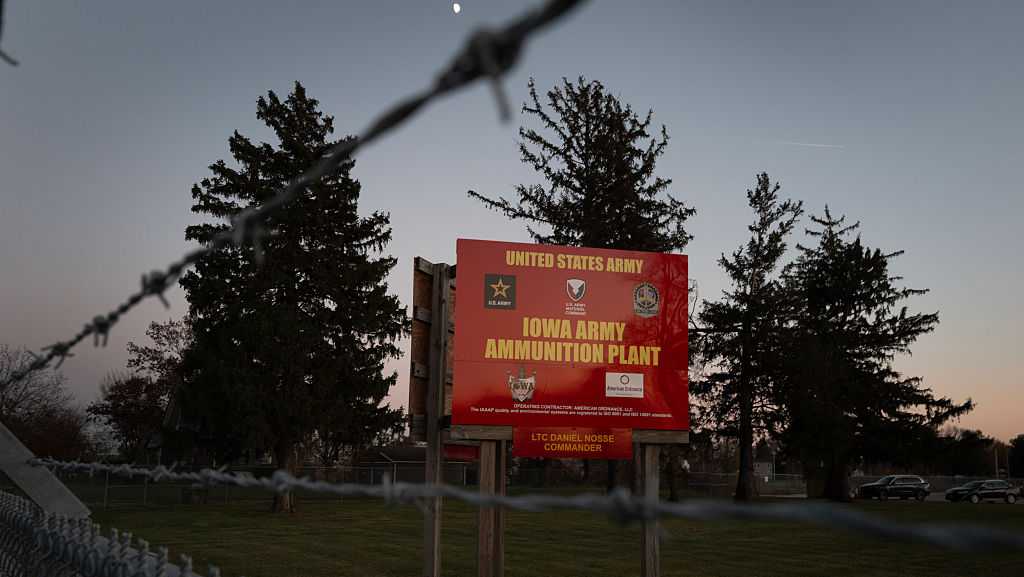
President Donald Trump has ordered the U.S. Army to halt a planned open-air detonation of degraded lead azide at the Iowa Army Ammunition Plant in Middletown.…
President Donald Trump has ordered the U.S. Army to pause its scheduled open-air detonation of nearly five tons of degraded lead azide at the Iowa Army Ammunition Plant in Middletown, Iowa. The directive temporarily suspends an operation that had triggered intense regional backlash, high-profile legal challenges, and mounting anxiety over potential hazardous airborne contamination.
In a statement detailing the decision, Trump said he instructed military leadership to stand down until the 8th U.S. Circuit Court of Appeals issues a formal ruling on legal challenges brought against the plan. He maintained that military experts view a controlled blast as the safest method to eliminate unstable munitions, but emphasized that any future steps will also require the concurrence of Iowa Governor-elect Rob Sand.
The controversy centers on 68 storage drums containing approximately 9,600 pounds of lead azide, a primary explosive compound traditionally used in bomb detonators and fuses. Decades of storage at the facility caused the chemical to recrystallize, rendering it exceptionally sensitive to friction, static electricity, and temperature shifts, which officials warned could provoke an unintended catastrophic blast.
The Army had sought an emergency authorization from the U.S. Environmental Protection Agency to conduct open-air burns and detonations, bypassing conventional permitting procedures to neutralize the hazard swiftly. That maneuver drew sharp resistance from local residents, healthcare professionals, and conservation organizations who argued that outdoor detonations would release dangerous quantities of toxic lead dust into neighboring communities.
The Iowa Environmental Council and the Sierra Club spearheaded a federal lawsuit seeking an injunction against the emergency disposal permit, arguing the government failed to evaluate less hazardous alternatives. Although the 8th Circuit recently lifted a temporary stay to permit disposal preparations, broader appellate litigation over the environmental waiver remains active and undecided.
The operation also stoked widespread fears across state lines, prompted in part by unofficial dispersion maps circulating across social media platforms. Emergency management officials in Wisconsin moved quickly to reassure the public, clarifying that official meteorological and atmospheric modeling confirmed the state was never in the projected plume path.
Technical analyses conducted by military specialists indicated that any particulate dispersion from the proposed detonation would remain localized to Des Moines County and adjacent portions of southeastern Iowa, with potential drift limited to narrow corridors in western Illinois. Wisconsin Emergency Management reiterated that residents faced no credible exposure risk and advised the public to rely on validated emergency bulletins rather than speculative internet graphics.
The dispute highlights the recurring conflict between military safety protocols and civilian environmental protections near legacy defense installations. Lead exposure poses severe and permanent risks to public health, particularly for children and pregnant women, intensifying public scrutiny whenever federal agencies propose thermal treatment or open detonation for hazardous munitions stockpiles.
With the presidential directive in place, the volatile stockpile remains secured in specialized storage bunkers under continuous monitoring while federal judges review the emergency permit. Federal and state authorities have not set a revised timetable for disposal, leaving the long-term fate of the munitions dependent on upcoming court determinations and state leadership consensus.
Primary source: Google News Wisconsin. Newzly rewrites and structures source reporting for clarity; verify critical details at the original.