US Army Reschedules Detonation of Volatile Explosives at Iowa Ammunition Plant
The U.S. Army has rescheduled the open detonation of five tons of degraded lead azide at its Iowa facility amid intense public backlash and legal battles over potential toxic fallout.
In this piece
The U.S. Army has postponed and rescheduled the open-air detonation of roughly 9,500 pounds of unstable lead azide at the Iowa Army Ammunition Plant in Des…
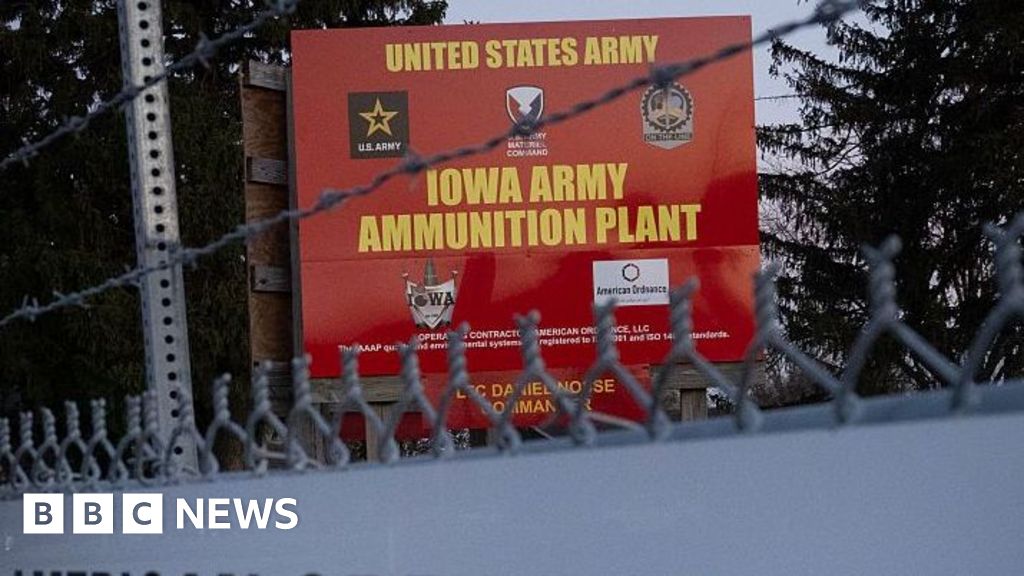
The U.S. Army has rescheduled the controlled open-air detonation of roughly five tons of volatile, degraded explosives at the Iowa Army Ammunition Plant in Middletown. Military officials postponed the controversial operation following legal challenges and widespread public concern over potential toxic lead contamination in nearby communities. The blast, originally slated for mid-November, is now targeted for late November pending favorable meteorological conditions and ongoing judicial reviews.
The material scheduled for destruction consists of approximately 9,500 pounds of lead azide stored in 68 drums at the southeastern Iowa facility. Lead azide is a shock-sensitive primary initiating chemical frequently used in military detonators, artillery primers, and fuses. Over years of storage, the stockpile underwent recrystallization and chemical degradation, transforming the compounds into an extraordinarily hazardous state susceptible to spontaneous ignition.
Defense officials and the U.S. Environmental Protection Agency determined that the compound is too precarious to transport over public roads or neutralize with conventional chemical treatments. Representatives from the Army stated that physical disturbance of the drums could trigger an immediate and catastrophic explosion, placing facility workers and emergency responders at severe risk. As a result, federal regulators concluded that an in-place, open detonation remains the only viable method to eliminate the immediate threat.
The planned open-air blast has nonetheless ignited intense backlash from residents, health advocates, and local leaders across southeastern Iowa and neighboring western Illinois. Opponents fear the massive blast will release an airborne plume containing fine lead particulate that could disperse across residential areas, farmland, and waterways. Public health agencies have repeatedly emphasized that lead is a potent neurotoxin with no known safe level of exposure, especially for young children and pregnant individuals.
Under an emergency Resource Conservation and Recovery Act permit granted by the EPA, the Army must implement specific safeguards before and during the demolition. The permit mandates extensive pre-blast background sampling along with real-time air and soil monitoring to track particulate dispersal across designated containment boundaries. Technicians are also required to position mitigation barriers around the detonation site to dampen the blast radius and suppress upward particulate propulsion.
Meteorological criteria have played a decisive role in the repeated schedule revisions. Technicians require stable atmospheric conditions, including specific wind speeds, ceiling heights, and humidity levels, to avoid thermal inversions that could push particulate plumes toward populated centers. Any adverse shift in local weather immediately prompts a postponement to prevent unmonitored chemical dispersion toward neighboring towns such as Burlington.
Environmental organizations and community coalitions have pursued emergency legal injunctions in federal court to pause the operation. The litigation challenges the EPA's emergency permitting process, arguing that regulators failed to adequately explore contained thermal destruction or other advanced abatement technologies. While judicial rulings have previously placed temporary administrative freezes on the demolition, military planners have maintained operational readiness while federal judges review the emergency petitions.
The Iowa Army Ammunition Plant, spanning thousands of acres in Des Moines County, has produced munitions and military hardware since World War II. Portions of the sprawling site have undergone environmental remediation for decades under federal oversight to address historical soil and groundwater contamination. For longtime residents, the impending detonation highlights longstanding tensions between military defense manufacturing operations and regional environmental stewardship.
Moving forward, military personnel and regulatory inspectors continue preparations while coordinating closely with local emergency management agencies and court officials. Surrounding municipalities remain on standby to receive real-time notifications once all safety checklists and legal hurdles are resolved. While Army authorities emphasize that disposing of the unstable stockpile is essential to prevent an unintended catastrophe, community stakeholders vow to scrutinize post-detonation environmental monitoring reports.
Primary source: Google News Iowa. Newzly rewrites and structures source reporting for clarity; verify critical details at the original.