Trump says Alaska voters chose wrong Dan Sullivan; evidence not supplied
Donald Trump says Alaska voters chose the wrong Dan Sullivan, according to a BBC headline. The supplied news excerpt contains no election figures or findings that establish whether his claim is supported.
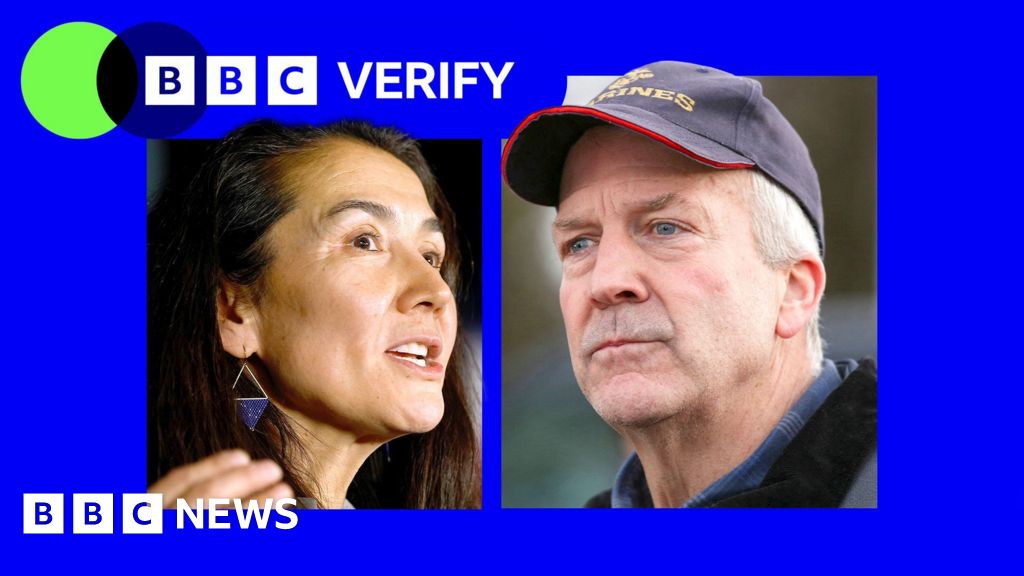
In this piece
A BBC headline raises questions about Donald Trump’s claim that Alaska voters chose the wrong Dan Sullivan. However, the supplied material includes only the…
Donald Trump says Alaska voters chose the wrong Dan Sullivan, according to a BBC headline questioning what the data shows. The material supplied for this report does not include the BBC article’s text, election results or an explanation of the circumstances behind his assertion.
The distinction is important because the headline presents both a political claim and a question about its evidentiary basis. It does not itself answer that question, and it cannot establish whether the BBC’s reporting supports, contradicts or qualifies Trump’s account. A conclusion about the claim would therefore go beyond the available source material.
The item appears in a Google News feed labeled Alaska and identifies the BBC as the publisher. Its summary and content fields repeat the same linked headline rather than provide additional reporting. They contain no direct quotation from Trump beyond the headline’s characterization of what he said.
The available excerpt does not specify which election Trump was discussing, when he made the statement or which candidates he intended to distinguish. It also provides no vote totals, margins or geographic breakdowns. Those omissions prevent a reliable reconstruction of the contest or an assessment of the scale of any alleged voter confusion.
A central issue in evaluating such an assertion is the difference between recorded votes and voter intent. Election totals can establish how ballots were counted, but a claim that people selected someone other than their intended candidate requires additional evidence. No such evidence is included in the supplied excerpt, so it would be premature to describe confusion as an established explanation for an outcome.
A fuller assessment would need to identify the relevant candidates and contest before examining the results and any evidence concerning voters’ choices. It would also need the context of Trump’s remarks to determine precisely what he was alleging. These are requirements for evaluating the claim, not findings that can be drawn from the headline alone.
The BBC headline indicates that its report examines the data, but the supplied feed item does not reproduce that analysis. Consequently, no numerical finding or verdict can responsibly be attributed to the broadcaster on the basis of this material. Equally, the absence of evidence in the excerpt should not be mistaken for proof that the full article contains none.
The unresolved question is therefore whether the underlying reporting provides evidence connecting the election outcome to mistaken identity. Until the full article and relevant records can be examined, Trump’s assertion remains unverified in the material available here. The headline establishes the subject of the dispute, not its resolution.
Primary source: Google News Alaska. Newzly rewrites and structures source reporting for clarity; verify critical details at the original.